
Miticide Resistance detected in Qld and NSW:
What Beekeepers need to know!

by Sarah Hickman
QLD DPI
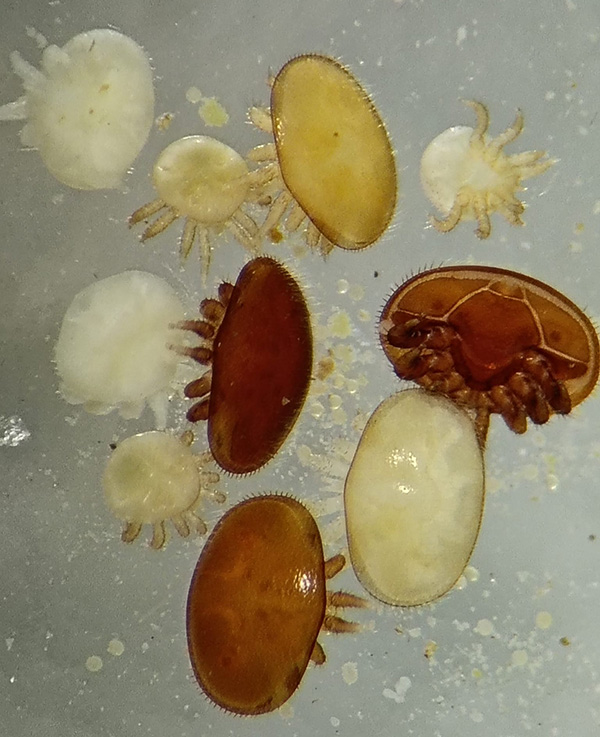
Since the arrival of varroa mite in Australia, beekeepers and government departments have been working closely together to manage its spread and reduce its impact on honey bee colonies. Chemical treatments remain one of the key tools available for controlling mite populations, however their long-term effectiveness depends on responsible use and integrated pest management (IPM).
Around the world, varroa mites have developed resistance to several commonly used miticides after repeated exposure to the same chemical groups. Monitoring for early signs of resistance is therefore an important part of Australia’s varroa management strategy.
Synthetic pyrethroid resistance in varroa mites was first confirmed in New South Wales on 5 February 2026. It is the first time miticide resistance has been found in Australia. As of 9 March, 8 apiaries across southeast Queensland have confirmed synthetic pyrethroid resistance to commonly used products such as, Bayvarol and Apistan. While detections are currently limited to specific locations, this highlights the importance of understanding how resistance develops and how management practices can influence its spread.
How resistance occurs?
Chemical resistance occurs when a small number of pests survive exposure to a treatment that would normally kill them. In varroa mites, resistance is linked to genetic mutations that allow some individuals to survive exposure to a particular chemical group. When these surviving mites reproduce, they pass the resistance trait on to their offspring, gradually increasing the number of resistant mites in the population.
Resistance can develop more quickly when mites are repeatedly exposed to the same chemical mode of action or when treatments are not used according to label instructions. This can occur when the same chemical group is used too frequently, not rotating Modes of Action (MOA) or when treatments are applied incorrectly. Examples include leaving treatments in hives beyond the approved treatment period, not completing the full treatment course, using lower or higher doses than prescribed, mixing miticides incorrectly, applying treatments improperly, incorrect storage of chemicals or using expired products. Over time, these situations can allow resistant mites to survive and reproduce, reducing the effectiveness of the treatment.
Resistance can develop more quickly when mites are repeatedly exposed to the same chemical mode of action or when treatments are not used according to label instructions. This can occur when the same chemical group is used too frequently, not rotating Modes of Action (MOA) or when treatments are applied incorrectly. Examples include leaving treatments in hives beyond the approved treatment period, not completing the full treatment course, using lower or higher doses than prescribed, mixing miticides incorrectly, applying treatments improperly, incorrect storage of chemicals or using expired products. Over time, these situations can allow resistant mites to survive and reproduce, reducing the effectiveness of the treatment.
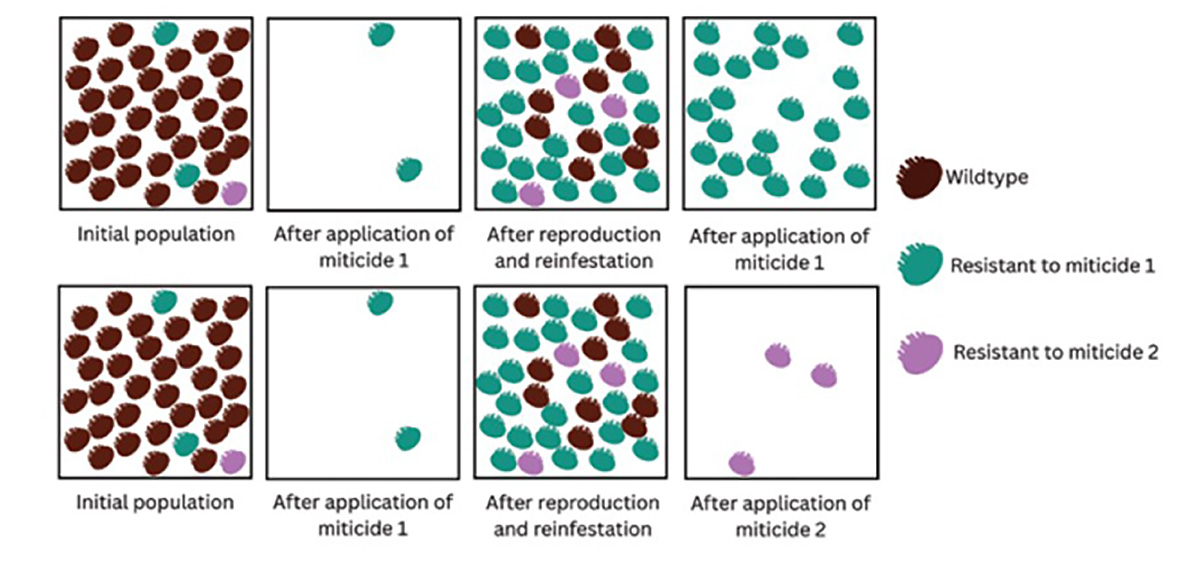
Diagram: Showing the effect of using the same miticide repeatedly (top) and rotating miticides with a different mode of action (bottom). Credit: Nadine Chapman - National Varroa Mite Management Program
Why This Matters
The detection of resistance in Queensland and NSW, highlights the importance of rotating chemical treatments with different modes of action (MOA) and adopting integrated pest management (IPM) strategies. Chemical treatments should not be relied upon as a single solution. Instead, they should be used as part of a broader management approach that includes regular monitoring, correct treatment use, and non-chemical control methods where possible.
While resistance does not mean treatments immediately stop working everywhere, repeated use of the same chemical group can increase the risk of resistant mites becoming more widespread. By rotating chemical modes of action and implementing IPM practices, beekeepers can help slow the development and spread of resistance and maintain the effectiveness of available treatments into the future.
What Beekeepers Should Do
Biosecurity Queensland is urging beekeepers to remain vigilant and adopt best-practice varroa and apiary management, including:
- Monitor mite levels before and after treatments to confirm treatments are working.
• Use vendor declarations when buying or selling hives with bees, download from Biosecurity - Australian Honey Bee Industry Council - Implement strict decontamination and barrier systems across apiaries, always come clean and go clean.
• Do not mix hives from apiaries experiencing colony collapse with apiaries that are still responding to treatment and remaining healthy.
• Rotate chemical modes of action (MOA) and always follow label instructions and permit conditions.
• Report treatment failures or unusual mite activity immediately to your state government body
• Maintain clear and accurate apiary records, including hive movements and chemical use.
• Use the varroa surveillance map to inform decisions about hive placement and movements.
Early reporting is critical for helping biosecurity agencies understand the distribution and spread of resistant mites.
By rotating chemical modes of action and implementing IPM practices, beekeepers can help slow the development and spread of resistance and maintain the effectiveness of available treatments into the future. Protecting these tools relies on the key principles of monitor, report and rotate.
Looking After Beekeeper Wellbeing
Managing varroa can be stressful and challenging. If you or someone you know needs support, confidential services are available 24 hours a day:
Beyond Blue
www.beyondblue.org.au
1300 22 4636
Lifeline
www.lifeline.org.au
13 11 14
More support services are available at:
www.mentalwellbeing.initiatives.qld.gov.au/support