
Issue: November 2026

We want you to join the TAB team.
At every level TAB is a great communication platform. Every month thousands of beekeepers read TAB. For its long term sustainability it needs more than the current two people to help produce it.
What we are looking for, is people who are passionate about bees, like working in a collaborative team and are not afraid to bring their ideas to the table.
Read More:
And the Winners Are?
You will have to click through the article to find out which club won the 2026 40th Anniversary Colonel Pulling Award and which club won the Bruce White Award.
Deformed wing virus in imported honey: Reducing the risk to our bees.
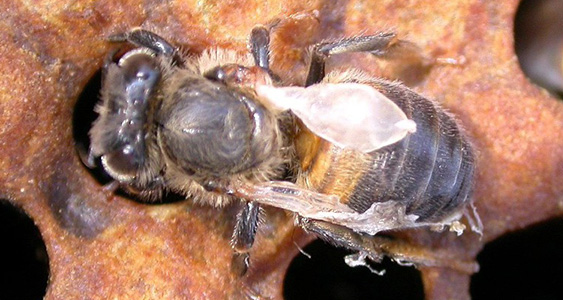
The risk of deformed wing virus (DWV) entering Australian bee colonies through imported honey is low, but not impossible. An AgriFutures research project detected DWV in nine of 15 imported honey samples, all of which were raw or minimally processed. However, in these samples, DWV detection appears to be below or near the required levels for consistent virus transmission to honey bees. Read More:
Colonel Pulling Photo Competition Entries
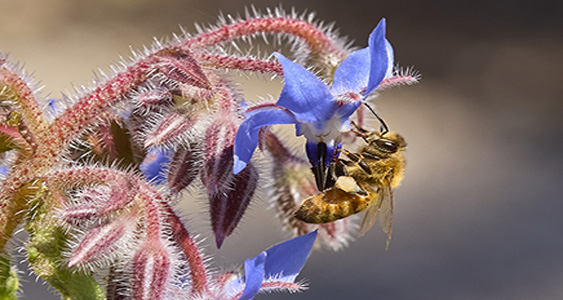
This year's photographic competition had a very high standard. The image used here is called Forage on Borage by Martin Ratcliff of Cumberland Beekeepers. Click through to see a gallery of all the entries.
Read More:
The 2026 40th Anniversay Colonel Pulling Quiz
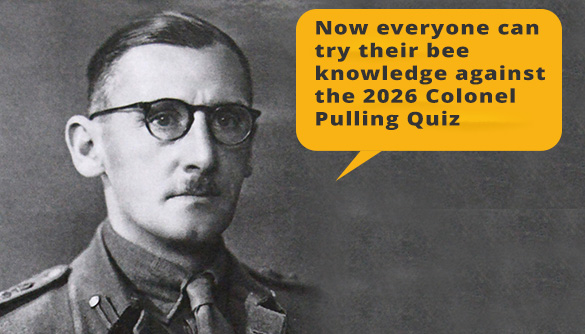
Historically the questions and answers to each years Colonel Pulling Quiz were published in TAB in the months following the actual competition. There has been a lapse in this tradition for a few years. We are pleased to provide the 2026 Colonel Pulling Quiz in an interactive form to celebrate the 40th Anniversary of the Award and Quiz.
Read More:
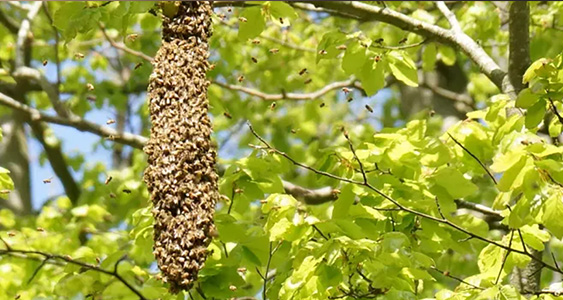
A honey bee colony can be viewed as a superorganism.
A new study looked at honey bee colonies as superorganisms. The study seeks to challenge the conventional view of a honey bee colony. By viewing colonies as superorganisms, the fundamental biology of the honey bee colony is redefined. These insights may have implications for modern beekeeping, particularly in how we view swarm behavior.
Read More:
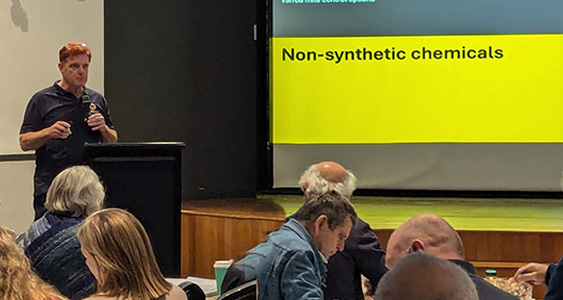
Mike Allerton says Farewell, but Not Goodbye
As I write this, my five years serving on the committee of Amateur Beekeepers Australia are drawing to a close. Under our constitution, committee members may serve a maximum of five consecutive terms, and my time is up. It seems only yesterday that I joined the committee, yet looking back, it's extraordinary how much has changed in Australian beekeeping during those five years.
Read More:
Fire Ant Eradication - How and Why Beekeepers Should Help
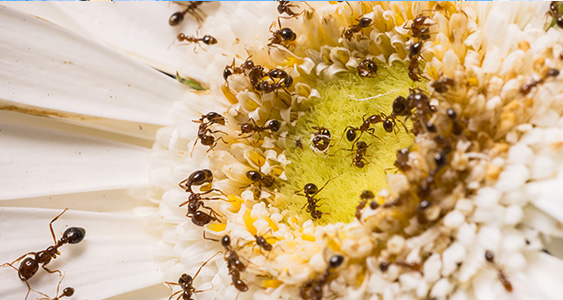
First detected in Queensland in 2001, fire ants pose a serious threat to our health, environment, economy, and outdoor way of life. They also pose a significant risk to bees and other pollinators, attacking hives and feeding on vulnerable life stages such as larvae and pupae, which can weaken colonies and, in severe cases, lead to hive collapse.
Read More:
Cues and Clues of the Beehive
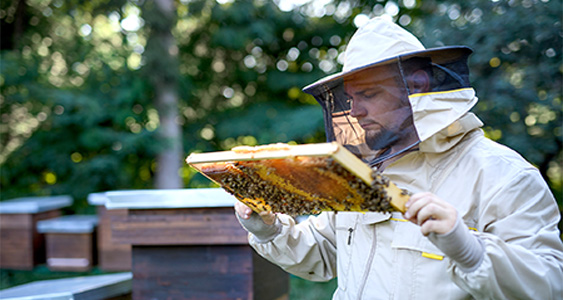
Arthur Garske talks about how important it is to observe your bees with all your senses. Understanding what you are seeing, hearing and smelling will tell you a lot about the health and happiness of your hives.
Read More:
The 2026 Australian Colony Loss Survey is back!
The Australian Colony Loss Survey established in 2025, provides empirical data to support Australian beekeepers to make informed business decisions, particularly regarding the management of honey bee pests and diseases. The results of the survey are used to facilitate national extension efforts and peer-to-peer learning and knowledge transfer from beekeeper to beekeeper.
Read More:
Start Your Own Beekeeping Club
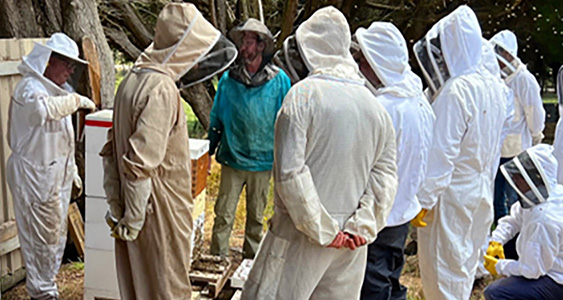
You like beekeeping, and you like where you live. Where you live is a nice, peaceful place out in the countryside. There’s just one problem – you wouldn’t mind having other people around you to talk bees. You could talk over how you’re all mutually dealing with the local conditions, assist each other when someone needs a hand, and share beekeeping knowledge. That would be nice …
Read More:
The Hawk at the Hive Door
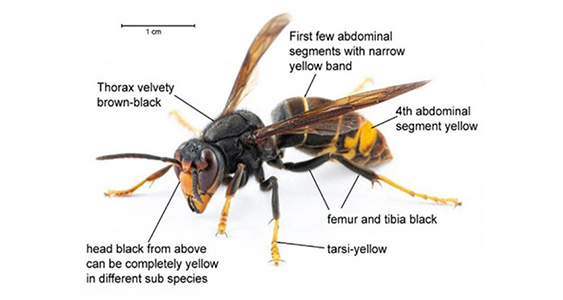
Yellow-legged hornet, Vespa velutina, will this be the next problem we have to deal with in Australia? Vespa velutina is native to Southeast Asia. The subspecies that spread in Europe, V. v. nigrithorax, is believed to have arrived in southwestern France around 2004, most likely as a founding queen hidden in a shipment of pottery or other goods from China. The entire European population is thought to descend from very few individuals, which makes its success all the more striking. Let’s just think about that for a moment… it’s possible a single queen has been able to colonise Europe. Read More:

The Awards have been won for 2026, the ABA AGM is Coming Soon and Varroa Numbers are on the Rise
The Colonel Pulling and Bruce White Awards are over for another year. Which means it's time to get started on preparation for next year. The ABA AGM is coming up on 9th November. It is an all online event and you must register to attend.
Most importantly with spring weather, brood numbers jump and so potentially do Varroa numbers. Now is the time to make sure your monitoring is done frequently.