
Are you keeping up with miticide resistance?
Fiona Fernie
TAB Editor
Miticide resistant Varroa destructor is with us and much sooner than anyone expected. From what we understand, this is a separate incursion of V.destructor and it leaves beekeepers with a huge headache. The treatments that we know are at risk are, Apistan, Bayvarol, Apitraz and Apivar.
What are our options? IPM will buy us a little time, possibly the brood break option. In terms of chemical treatments, we will rely more heavily on Api-Bioxal and Aluen Cap, both of which may be used with honey supers on. Formic Pro, also can be used with honey supers on, and has the advantage that Varroa is killed under the cappings. This is a much harsher chemical and to say the least, the bees do not like it. Formic Pro is an effective treatment, but it is hard on the bees.
There are efficient Thymol based treatments, but they can only be used with honey supers off. Thymol taints honey with an unpleasant flavour.
All the current advice is that if you need to buy a queen, be careful from where you source her. Check if there are resistant mites in the area. Do your homework and buy carefully. Report your findings of resistant mites and fill that map with known locations.
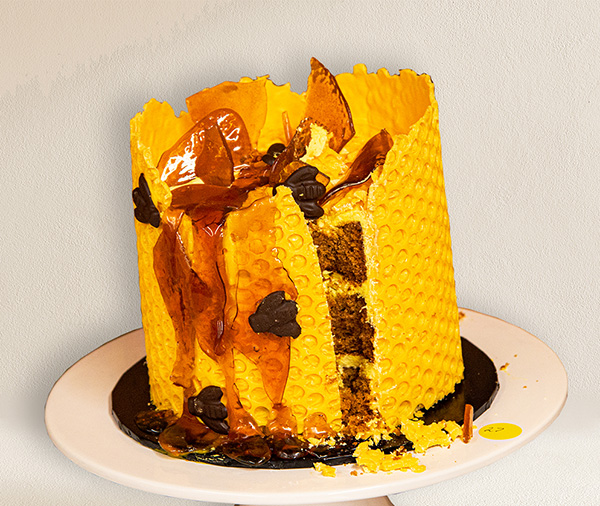
Col. Pulling and Bruce White Shield competitions are in the very near future, so look out those prize-winning honey cake recipes and use your camera to find those stunning photographs, honey bees on flowers! Candle making skills need to be brought out of retirement and boning up on Honey bee general knowledge is a task for these cold nights. And, who can resist the taste of mead? This is the clubs’ opportunities to show off their talents, as well as the friendly rivalry of competing against one another. Remember last year’s honey cake – what a stunner!
Whilst we do not want your magazine to be solely about Varroa destructor but there is research being done in some universities to combat Varroa in several different ways. If you get the chance, sign up for any contributions you can make. This may be to supply V.destructor for RNA sequencing or other research options.
There are fun sides to beekeeping. Field days and social gatherings – beekeepers love to talk about bees. Keep this up, you learn so much from other beekeepers. Put the Tocal Field Day in your diary or your iPhone. Saturday 10th October at Tocal College.
Details of competition entry submissions in the next issue of TAB.
Please be extra careful with potential Varroa treatments. Home-made treatments are discouraged for very good reasons. Do not place foreign material in the hive. Think of the quality of your honey; you do not want it to be tainted with any chemical or plant residues. Our bees work so hard producing a high-quality product, pure Australian honey. There are products tainted with sugar syrup and products tainted with residues; Australia should stand for the best pure honey there is. Our bees deserve nothing less!