
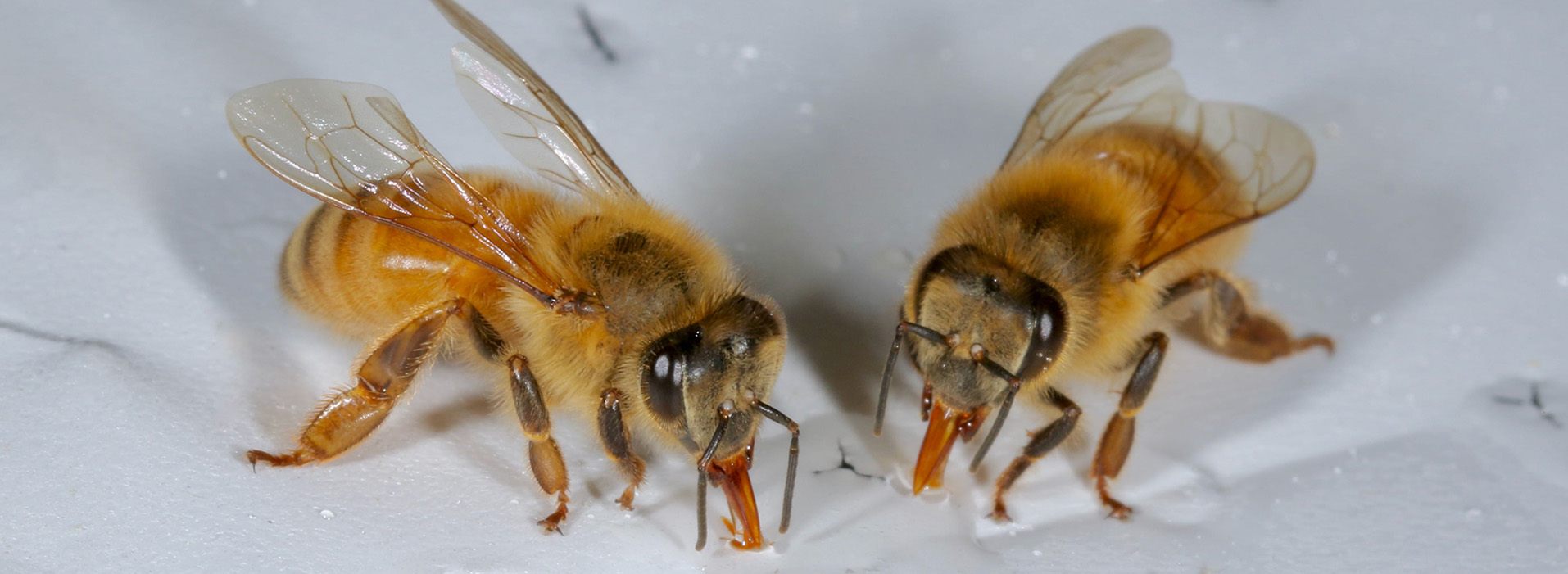
Bees drinking syrup containing dsRNA for Varroa mite control
A new RNA-based biopesticide for Varroa control
by Phil Lester*
School of Biological Sciences, Victoria University of Wellington, Wellington, New Zealand.

The ideal pest-control product is highly selective, targeting pests without harming beneficial species, people, or other animals. It should break down quickly in the environment, be inexpensive, effective at low doses, safe to handle, and unlikely to drive the evolution of resistance.
A new biopesticide for controlling Varroa mites appears to meet many of these goals.
What is a biopesticide?
Biopesticides are pest-control products derived from natural materials. One new biopesticide approach uses a process called gene silencing. Gene silencing is a natural biological process that cells use to switch specific genes off. When a gene is silenced, less of the protein produced by that gene is made. This process occurs naturally in almost all plants and animals, including honey bees and Varroa mites.
One of the main ways gene silencing occurs is through molecules called double-stranded RNA (dsRNA). RNA (ribonucleic acid) helps translate the genetic instructions stored in DNA into the proteins needed for life. Gene silencing uses RNA to reduce the production of a specific protein.
Importantly, gene silencing does not change an animal's DNA. Instead, it temporarily reduces the production of a particular protein. For gene silencing to work, the RNA must closely match the target gene.
Targeting Varroa mites
Over the past decade, my research group in New Zealand has been studying gene silencing as a way to control Varroa mites. One of the genes targeted is called calmodulin, which is important for normal mite development and reproduction. We can produce dsRNA molecules that reduce the expression of this gene in Varroa.
When Varroa mites are exposed to the dsRNA, the mites themselves survive, but they lay few or no viable offspring. Rather than killing mites directly, the technology suppresses their ability to reproduce.
How is the RNA delivered?
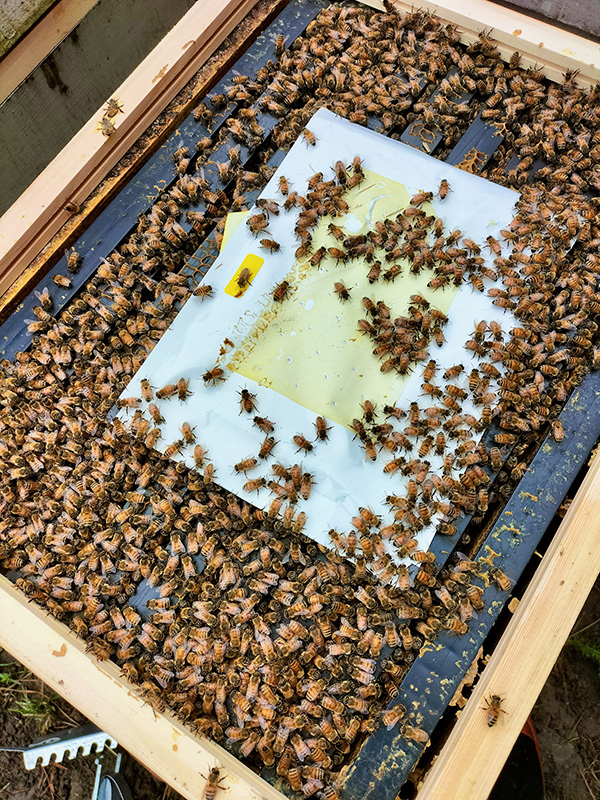
GreenLight Biosciences Inc., a US-based company, has developed the technology into a commercial product called Norroa™. The product is supplied in a pouch containing approximately 500 mL of sugar syrup mixed with dsRNA. The pouch is placed inside the hive, where bees consume the syrup and distribute it throughout the colony. Varroa mites are then exposed to the dsRNA while feeding and reproducing within brood cells.
Testing the technology
Our early work involved small laboratory colonies containing around 300 honey bees and known numbers of larvae and Varroa mites. These studies confirmed that mite reproduction could be greatly reduced while the bees remained healthy.
We also investigated whether the dsRNA might affect other organisms. One approach was to compare the RNA sequence with the genes found in other species, including honey bees, butterflies, beetles, and humans. The results showed that the dsRNA sequence is highly specific to Varroa. Based on both sequence comparisons and experimental testing, it is expected to have minimal effects on other organisms.
Many animals, including humans, also possess natural barriers that prevent dietary RNA from influencing their cells. We consume RNA every day when we eat fruits, vegetables, meat, and other foods, yet that RNA has no effect on our genetic function.
What about honey bees?
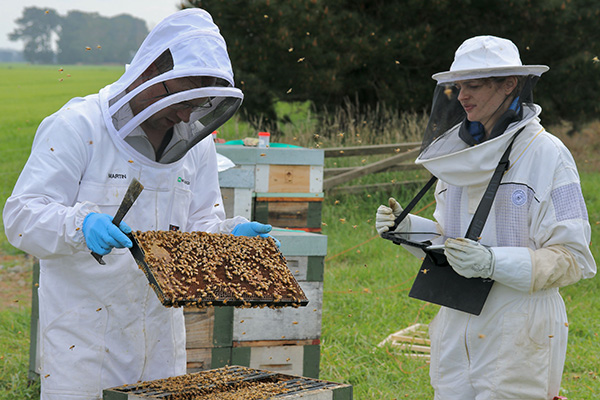
The most important question for beekeepers is whether the product helps colonies remain healthy. We have tested the biopesticide on wax moths, honey bee foraging behaviour, and in large-scale experiments involving hundreds of colonies. The results have been encouraging.
Colonies treated with Norroa™ generally perform better than untreated colonies with Varroa infestations. Treated colonies show improved survival and increased foraging activity because Varroa populations are kept under better control.
Advantages and limitations
One attractive feature of RNA-based biopesticides is their specificity. Conventional miticides can affect non-target organisms and may eventually encounter resistance problems. RNA-based products offer a different approach because they are designed to target a single pest species.
Another advantage is that the dsRNA breaks down naturally in the environment and does not persist for long periods.
Like any control method, however, Norroa™ has limitations. In my view, the product is likely to be most useful for preventing low mite populations from increasing. It is less suited to rapidly reducing very high Varroa infestations. Rather than acting as a "knock-down" treatment, it appears better suited for maintaining low mite numbers over time.
No resistance has yet been reported in Varroa populations exposed to the product. However, continued monitoring will be important if the technology becomes widely adopted.
Looking ahead
GreenLight Biosciences has registered and is selling Norroa™ in the United States. The company is also investigating regulatory approval in Europe and Australia. RNA-based biopesticides represent a fundamentally new way of controlling pests. Rather than poisoning a pest directly, they use the pest's own biology to disrupt critical processes such as reproduction.
For beekeepers, this technology offers another potential tool for integrated Varroa management. While it is unlikely to replace all existing treatments, it may become a valuable addition to the toolbox for managing one of beekeeping's most significant pests.
More information about Norroa™ is available from GreenLight Biosciences, at https://norroa.com
For readers interested in more detail on the science we’ve done behind this RNA-based biopesticide and Varroa control, an open-access review paper is available at Lester et al. (2026).
Reference
Lester, P.J., et al. (2026). RNA-based biopesticides for control of Varroa destructor. Frontiers in Insect Science 6:1814622. DOI: 10.3389/finsc.2026.1814622
* Phil Lester is a Professor of Biology and researcher at Victoria University of Wellington, in New Zealand. A key strand of his research involves the development of safe and effective control options for pest species such as the parasitic mite Varroa destructor. He works on next-generation approaches that include immunotherapy and the potential of double-stranded RNA for highly targeted mite control.