
The Case of the Disappearing Pollen Substitute
by Emily Noordyke,
NSW DPIRD

Have you ever wondered where pollen substitutes go when they disappear from a hive or feeder? A collection of studies from the University of Florida Honey Bee Research and Extension Lab and Tocal College funded through AgriFutures Australia have explored this question.
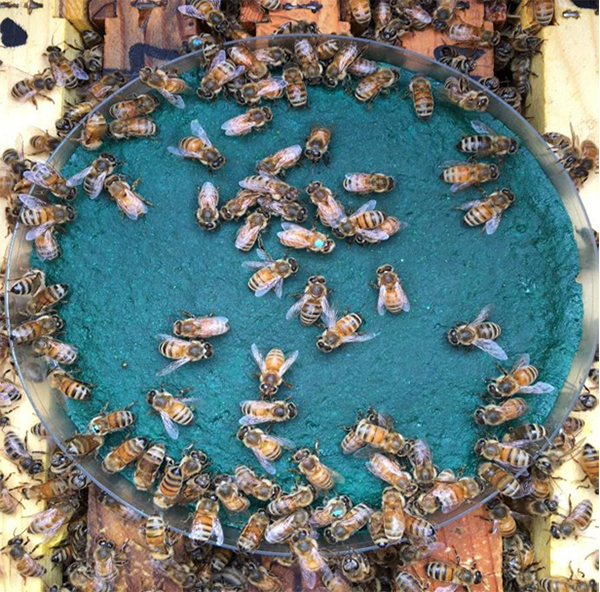
We dyed a variety of commercially available pollen substitutes without natural pollen and traced the diets through colonies in the field. This article briefly summarises our findings.
Q: Where do pollen substitute patties go?
A: Patties were consumed by a proportion of adult workers. They were neither stored as bee bread (Noordyke et al., 2021; Kratz, 2022), nor fed directly to larvae (Noordyke et al., 2021).
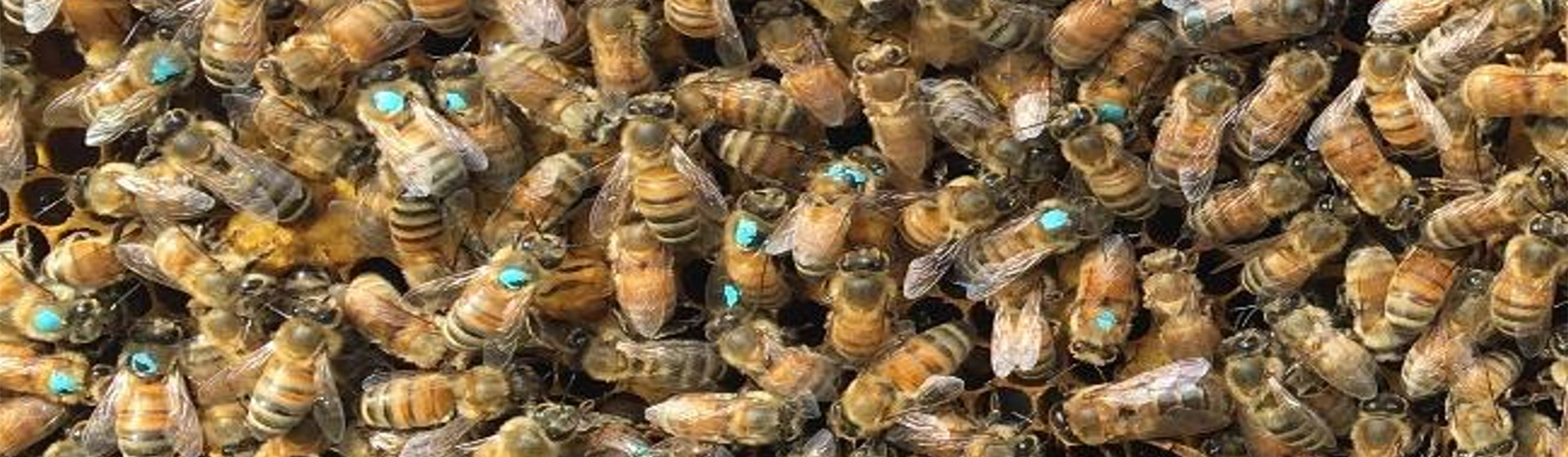
Dyed pollen substitute patties ended up in the guts of only a proportion of adult workers within colonies (<50% of sampled workers across three different commercial diets). In contrast, the dye from fondant patties (pure sugar), which we used as a positive control, ended up in most adult workers sampled from the colonies. We also found the dye from fondant patties in 99% of larval guts and 16% of the bee bread stores (presumably they used fondant like they do nectar to cap bee bread). Collectively, this evidence caused us to ask another question…
Q: Is there a specific age cohort of bees that consumes pollen substitute patties?
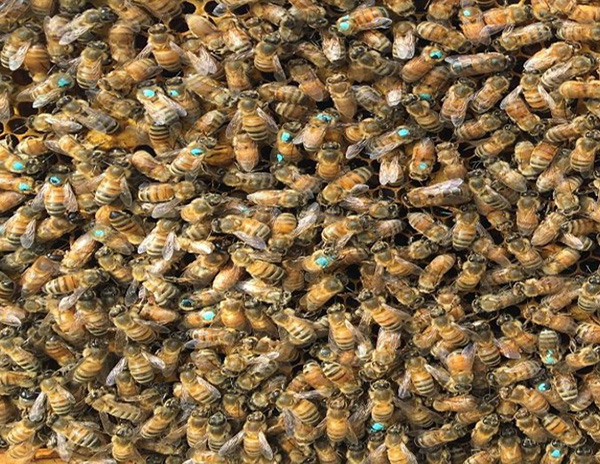
A: Yes, pollen substitute patty use peaked in older workers aged 18-22 days old (Kleckner et al., 2026).
You might think that nurse bees (aged 0-11days) would be the primary users of pollen substitute patties because they eat most of the pollen in the colony for brood rearing. If this were the case, pollen substitute
use would likely peak around day 9-10 post emergence when pollen consumption is naturally the highest (Crailsheim et al., 1992). Instead, we observed that pollen substitute patty consumption gradually increased as bees aged and peaked at resource handling age (pollen packers and foragers). We did not test natural pollen patties or dry feeds in this study which may be used by bees of different ages. Older worker bees could be attracted to patties as a source of sugar.
Q: Do honey bee colonies use dry pollen substitutes offered in feeders outside the hive differently than patties provided inside the hive?
A: Yes, dry pollen substitutes offered in powder form outside of the hives were found to be collected by forager bees and stored in comb (Kratz, 2022).
Foragers were observed collecting dyed dry pollen substitute from feeders, packing it onto their hindlegs, and bringing it back to their hives. The dry pollen substitute was then packed in the comb for storage like bee bread. It’s possible that the bees stored the powder because it was collected by foragers like natural pollen.
Why does any of this matter to me as a beekeeper?
This research can improve diet development and inform our management decisions. The commercial pollen substitute patties tested in these studies did not get used like natural pollen does in the hive. They may be beneficial when colonies face severe nutritional stress (Noordyke & Ellis, 2021), but they don’t fully replace the role of natural pollen.
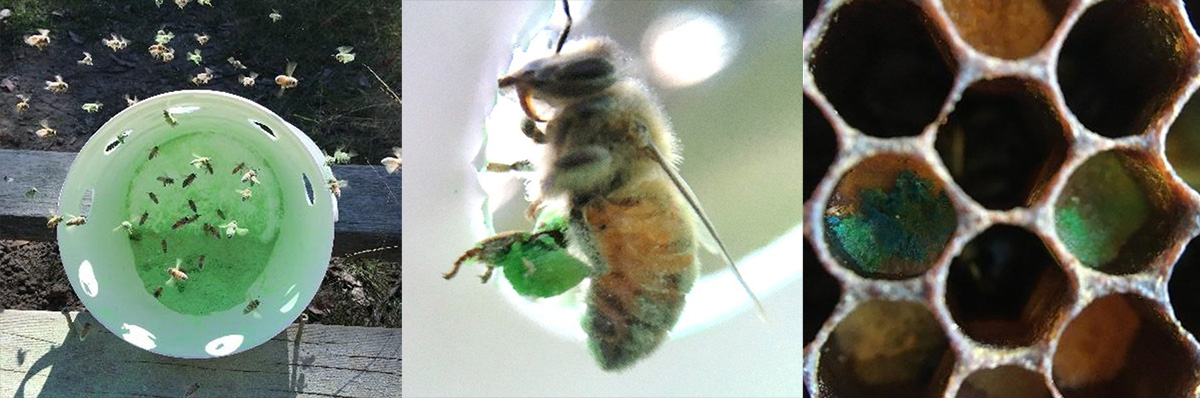
A pollen substitute was dyed green to observe how bees use the substitute powder when provided in the open. photo: M. Kratz
Colonies seem to use open fed, dry pollen substitutes more like natural pollen than patties. However, one disadvantage is that colonies must compete for the powder provided in the open so uptake may be uneven across an apiary, whereas patties or dry feed (pollen or substitute) inside the hive can be delivered evenly or to the colonies that need feeding most. You still might consider feeding dry pollen substitutes outside of your hives if you want the feed to be stored for long-term use, but keep in mind that bees will prefer to collect pollen over substitute when available.
Nutritional quality, cost-benefit, and practicality of a pollen substitute should also be considered before you invest. Although we still have many questions about honey bee nutrition and supplementary feeding, these studies give us a few more answers about how to feed our honey bees.
Reviewed by Dr Madlen Kratz and Dr Nadine Champan
References:
Crailsheim, K., Schneider, L. H. W., Hrassnigg, N., Buhlmann, G., Brosch, U., Gmeinbauer, R., & Schoffmann, B. (1992). Pollen consumption and utilisation in worker honey bees (Apis mellifera carnica): Dependence on individual age and function. J. Insect Physiol, 38(6), 40–59.
Kleckner, K., Noordyke, E. R., Prouty, C., & Ellis, J. D. (2026). Not the nurses: old honey bee workers of resource-handling age primarily interact with and consume pollen substitute patties. Journal of Economic Entomology, 1–0. https://doi.org/10.1093/jee/toag155
Kratz, M. (2022). Palatability and utilisation of protein supplements. AgriFutures Australia, 22–072.
Noordyke, E. R., & Ellis, J. D. (2021). Reviewing the Efficacy of Pollen Substitutes as a Management Tool for Improving the Health and Productivity of Western Honey Bee (Apis mellifera) Colonies. In Frontiers in Sustainable Food Systems (Vol. 5). https://doi.org/10.3389/fsufs.2021.772897
Noordyke, E. R., Van Santen, E., & Ellis, J. D. (2021). Tracing the Fate of Pollen Substitute Patties in Western Honey Bee (Hymenoptera: Apidae) Colonies. Journal of Economic Entomology, 114(4). https://doi.org/10.1093/jee/toab083