
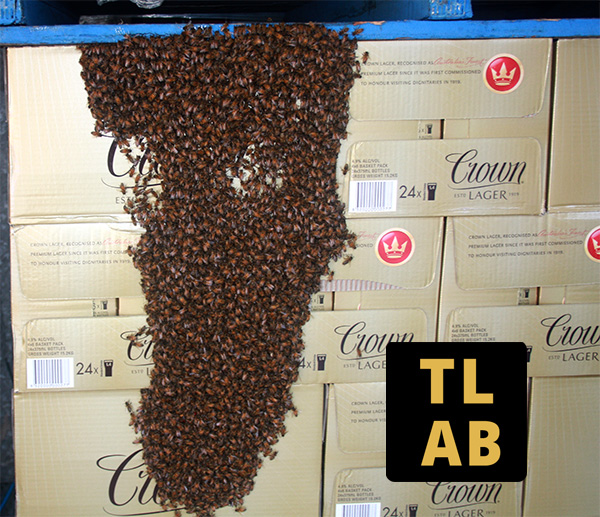
Management to Reduce Swarming

by Bruce White Cumberland and Illawarra clubs
Swarming is the natural means by which honeybee colonies increase, the original queen leaving with about half of the colony’s bees and clustering until they are all gathered together. All of those bees are called a swarm. Bees from that swarm are looking for a new home, in a chimney or a cavity in a tree, where they will set up a new hive.
The beekeeper, not taking steps to reduce swarming results in the loss of about half of the bees in the original colony The knock-on effect is a loss of the honey crop. Now that Varroa is present in four states, the risk is that the swarm becomes feral and a breeding ground for Varroa, infecting managed colonies until it dies out. Feral colonies are, at this stage, showing no resistance to Varroa.
With spring approaching colonies that have wintered in a strong condition are likely to swarm. The main reason colonies swarm is overcrowding in the hive and I will concentrate on this issue, by giving options you can use to increase the hive size or remove bees and brood from strong colonies. You keep these additional bees provided your colonies are disease free, so always check before any manipulations.
External signs colonies may swarm
Look at the flight path of the field bees. If they are very active, with bees carrying pollen and/or bees dropping short of the entrance and walking in, it is a sign they are carrying nectar. At night you can hear the bees fanning to ripen the days’ collected nectar.
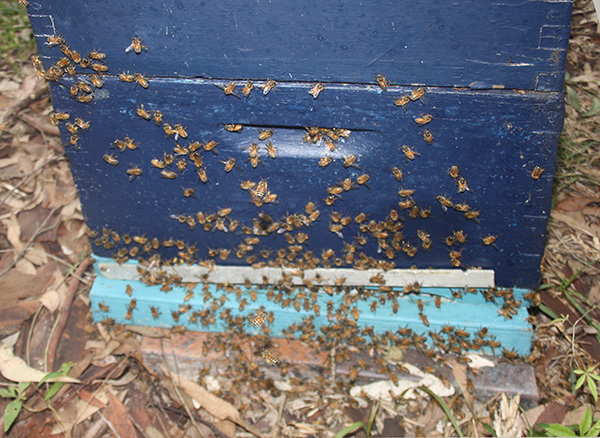
Bees present across the whole entrance
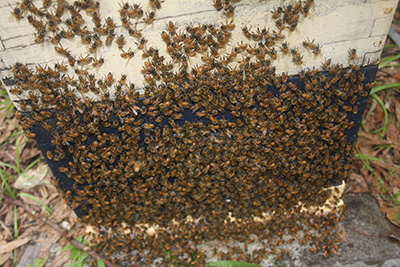
Bees clustering at the front of the brood box a sure sign of a strong colony.
Inside of the hive
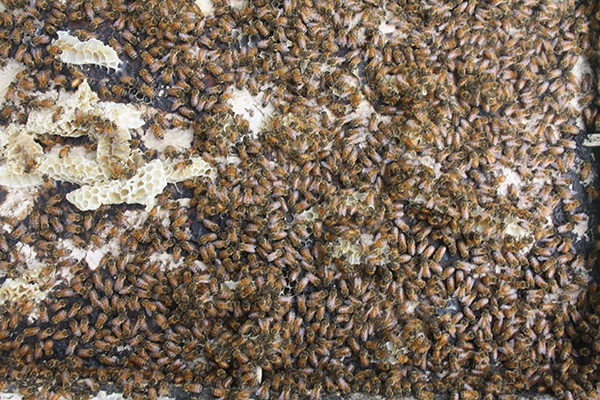
Bees clustering under a migratory lid, burr comb and all frames in the hive covered with bees.
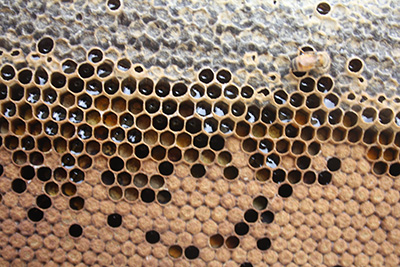
Super frames with honey and nectar with the nectar easy to shake out.
Brood frames full of capped and uncapped brood, especially a lot of drone brood present at all stages of development.
Queen cells are present with about twelve to fifteen built. Queen cells on different frames usually on the bottom edge of the combs are a sure indication the colony will swarm. About two days before the first queen cell hatches, in order to stop the colony swarming remove or destroy all the queen cells and split the colony by removing bees and brood. Older queens are more likely to swarm in spring than young ones, older queens are slow moving and less hairy than younger ones.
Action you can take to reduce the chance of strong colonies swarming.
Add extra supers of drawn combs and/or foundation to increase the cavity size , cull brood combs and replace them with comb foundation.
If you have more than one colony, from strong colonies, even out colony strength by removing brood frames with bees on the frames after first finding the queen. If you cannot find the queen shake the bees from some brood frames at the hive entrance and place above an excluder for about twenty minutes, so that the nurse bees will be on the frames when you remove them. These frames and bees can then be transferred to weaker hives thus removing bees and brood from the stronger colonies and reducing the chance they will swarm.
From the frames removed shake the bees at the entrance of the hive to be strengthened and place the frames in that hive brood nest with no bees on. As most of the bees on the brood frame were nurse bees they will stay at the new location. Because they are not robbers, they will be welcomed into the new colony and no fighting will occur.
Demaree Method
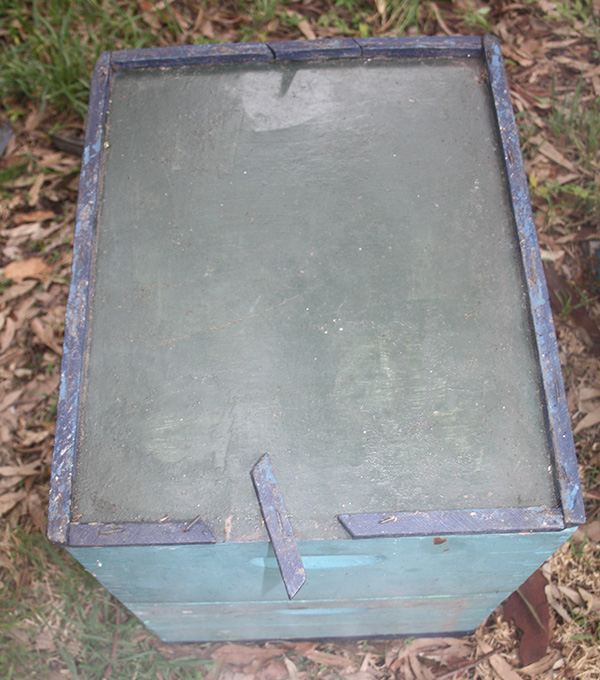
A great method to use it you have one or more hives as it reduces the strong hive population by the use of a board with a riser and entrance and is easy to use
If you have a strong colony likely to swarm, find the queen or shake bees from half the brood frames and lift them above an excluder and wait twenty minutes for the nurse bees to cluster on the brood combs.
Use another box and put into it half the brood frames covered with bees, but no queen from the original colony and place above the Demaree board. Make sure all the boxes are full of drawn combs or comb foundation. Turn the strong colony round 180 degrees place the Demaree board on the super. With the open Demaree entrance facing the same way as the original hive entrance had been.
This method effectively splits the bees in the original strong colony that may have swarmed into half with the queen left in the bottom box. The box above the Demaree board can be requeened with a queen in a cage and she will start to lay in a couple of days, a mature queen cell can be used with a cell protector and this queen should start to lay in about twelve days or let the bees raise emergency queen cells from the lifted brood. In this case that queen should start to lay in about twenty two days.
Once the new queen is laying you have an additional hive, or when the swarming season is finished, kill the old queen from the original hive and over paper unite both together.
Transferring Hives
Provided your hives are healthy, you can swap the location of a strong and weak hive. The best time is morning and the bees from the strong hive will drift into the weak hive, because of the changed location. Thus, you reduce the colony strength of the stronger hive and no fighting will occur. The drifting field bees from the stronger hive are taking in nectar, pollen, and water giving the weaker hive an increased field force of bees.
Requeening
Avoid requeening strong colonies during the swarming season as the new caged queen can fly and when the bees release her from the cage they may decide to swarm with her.