
The Hidden Barrier to Varroa Control
by Nathan Whitford
President, Geelong Beekeepers Club

Over the past month, I’ve found myself doing something I never expected when I first stepped into the role of President of the Geelong Beekeepers Club: lobbying. Not in the political sense, but in the practical, beekeeper style way. Seeing a problem, naming it and trying to fix it before it becomes a bigger one.
The issue is simple. Most Varroa treatments available under emergency permits are supplied in larger pack sizes, even though the majority of Victorian beekeepers are hobbyists. In our club alone:
- 62% of members run fewer than 10 hives
- 25% have just one hive
Yet many treatments are packaged for operators with dozens or hundreds of colonies. Some examples:
- Formic Pro: available in 2 treatment or 10 treatment packs (enough for 10 Hives)
- Bayvarol: 20 strip (enough for 5 hives) or 800 strips
- Apistan: 10 strips (enough for 5 hives)
- Apivar: 10 strips (enough for 5 hives)
- Apiguard: 10 trays (enough for 5 hives)
- Api Bioxal: 350 g pack treating up to 100 hives
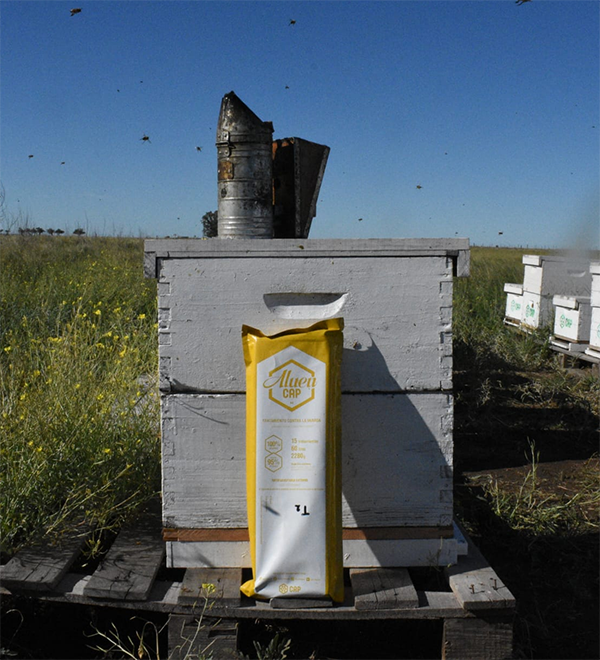
And then there is Aluen CAP, supplied only as a 60-strip carton to treat 15 hives, with two strict conditions under PER95790:
- “Discard unused strips 24 hours after first opening the pouch.”
- “It is illegal to sell individual strips separately.”
For a beekeeper treating one or two hives, this means opening a pack, using a handful of strips, and discarding the rest. It’s financially unreasonable, environmentally wasteful, and it risks pushing people toward unsafe workarounds like storing opened strips or informally sharing partially used packs, both of which undermine treatment efficacy and increase the risk of resistance.
That said, let’s be realistic: sharing packs within local zones is probably the only practical option we have right now, and it’s something we will likely encourage. But it’s not as simple as it sounds. Coordinating treatments across our member zones means juggling a lot of moving parts, hive thresholds, weather windows, beekeeper availability, and the 24-hour discard rule for some treatments. Will my hives be at threshold when yours are? Can we get enough beekeepers ready to treat on the same day? Can we physically open a box, have members collect their strips, and get everyone treated within the required timeframe? It’s possible, but it’s a complex dance, and it highlights exactly why a smaller, sealed pack size would make such a difference for hobbyists. Resistance is not hypothetical. We already have documented resistance in Australia to popular treatments like Bayvarol, which is exactly why Aluen CAP is viewed by many as a much-needed alternative. Smaller, practical pack sizes would help prevent beekeepers from storing opened strips, losing potency, and unintentionally under dosing mites. But even the best alternative only works if people can actually use it.
So, on behalf of the Geelong Beekeeper Club, I reached out to Agriculture Victoria, the VAA (Victorian Apiarists Association), CAP Products Australia and finally in frustration the APVMA (Australian Pesticides and Veterinary Medicines Authority), and I’ve encouraged other clubs to do the same. I note both South Gippsland, Mansfield & District, raised the same concerns.
What we’ve heard back
Agriculture Victoria acknowledged the issue and provided clarity around which products can be stored after opening and which cannot. They recognise the challenge and are doing what they can within their remit. They also suggested that we raise our concerns with the VAA so that the request is backed by industry, making it clear to suppliers that this is a statewide issue rather than an isolated one.
|
Trade Name |
Active Chemical |
Storage instructions – From Labels/Permits |
|
Bayvarol Strips |
Flumethrin |
Store at 30°C (room temperature). |
|
Apistan |
Tau-fluvalinate |
Store locked up. Store below 25°C, out of direct sunlight and away from other pesticides |
|
Apitraz |
Amitraz |
Do not store above 25°C. Protect from light. Use immediately after opening. Do not use if you see signs of deterioration. |
|
Apivar |
Amitraz |
Store below 30°C (room temperature). Store in the original closed package. Protect from light. Use the contents within 24 hours of opening. Discard any unused portion. |
|
Formic pro |
Formic Acid |
Keep locked up. Do not store above 25°C (air conditioning). Only store in the original container indoors, out of direct sunlight, in a dry and well-ventilated area, away from sulphuric acid, oxidizing agents, and sources of ignition. Avoid heat, sparks, and open flames. Keep containers tightly closed. |
|
Apiguard gel for beehives |
Thymol |
Store below 25 °C (air conditioning) in a cool, dry place protect from light. |
|
Aluen cap slow-release oxalic acid strips for beehives |
Oxalic Acid |
Store in the closed, original container below 30 °C (room temperature). Protect from light. |
** Please note that best practice for storage of any veterinary chemicals is to keep them locked up and in original packaging inside an air-tight container unless the label/permit states otherwise. I have highlighted some examples for you above.
I also note that the Agriculture Victoria table should ideally include the Aluen CAP permit instruction “Discard unused strips 24 hours after first opening the pouch.” which is a critical part of PER95790 and central to the challenges hobbyists are facing.
The VAA discussed the matter at their board meeting and agreed the issue is real but noted that emergency permit conditions limit what can be changed in the short term. Their suggestion was to explore a “buddy system” like Bendigo’s. And then came a detailed and constructive response from Aluen CAP (CAP Products Australia), which added important context.
Aluen CAP’s response, and why it matters
Aluen CAP were very open in acknowledging the problem. They made it clear that:
- They recognise the 60-strip pack is challenging for hobbyists. They cannot change the pack size or discard rule while the product is under the current emergency permit as these conditions are set by the APVMA.
- A smaller 24 strip pack does exist overseas but introducing it in Australia would require a new application pathway, not a simple amendment.
- They have already invested heavily in the emergency permit and full registration process and cannot fund multiple registration pathways simultaneously.
- The APVMA requires Australian data, not overseas studies, to support label changes — meaning any amendment requires new local evidence, time, and cost.
- Once full registration is granted, they will be in a much better position to seek amendments, including smaller pack sizes and reviewing the 24-hour discard requirement.
Importantly, they also clarified that while strips cannot be sold individually, beekeepers can coordinate treatment together and use a full pack within the 24-hour window. It’s not perfect, but it is compliant under the current permit.
The APVMA
Also recognise the practical and compliance challenges that can arise where the available pack size does not align well with the needs of smaller-scale operators.
In their email reply they “appreciate that this may result in increased product wastage and create difficulties for beekeepers seeking to comply with the permit conditions.” “However, the APVMA can only assess and approve the information put before us in an application. The pack size and associated label instructions under PER95790 were proposed by the permit holder as part of their application. The APVMA cannot require a permit holder to market or supply alternative pack sizes.” The APVMA also suggested “The most effective way to pursue a change is for beekeepers and industry groups to raise the issue directly with the permit holder. If the permit holder elects to seek approval for additional or smaller pack sizes, they may submit an application to the APVMA, and we would assess that application on its merits”
What has become clear is that: AgVic, APVMA, VAA, Aluen CAP, and other clubs recognise the issue. No single organisation can fix it immediately. The real opportunity for change will come after full registration, when label amendments become more feasible. In the meantime, clubs will need to support members through coordination, education, and practical compliance advice.
As a club, we are strongly encouraging members to use their members zones, these are effectively six geographical arounds around Geelong loosely based on Northern, Southern, Eastern and Western suburbs. Members within the club can opt in to allow members in their zones to connect. The more connected each zone is, the easier it becomes to coordinate treatments when they’re needed.
Why I’m continuing to push
Because if we don’t raise these issues, they remain invisible. Hobbyist beekeepers make up the majority of Victoria’s beekeeping community. We are part of the state’s biosecurity system, and our ability to treat effectively matters just as much as that of commercial operators. If treatment pack sizes are impractical for most beekeepers, then the system isn’t working as intended.
My role or should I say our role as beekeepers, is to make sure that our message is heard clearly, respectfully, and persistently. What can you do? Please let Aluen Cap know that this remains a major concern for your club and your members. I strongly encourage every beekeeper to contact their local federal and state Members of parliament to outline the value of hobbyist beekeeping, and the real impacts Varroa is having on your beekeeping.
Thank you to everyone who has shared their stories and supported this work. It’s your lived experiences that give these discussions genuine weight.