

Biosecurity Buzz
with Mike Allerton ABA Biosecurity Officer
Apimondia 2025 — Copenhagen: what stood out
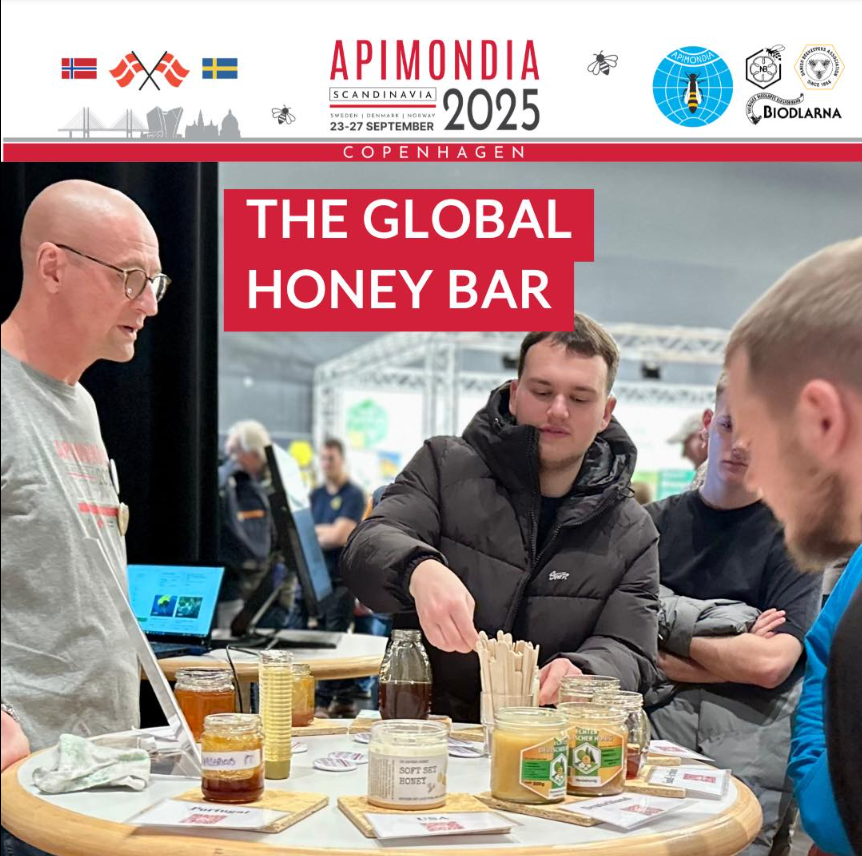
The 49th Apimondia Congress in Copenhagen (23–27 September 2025) drew over 7,000 participants from 121 countries, with 179 exhibitors showcasing apiary equipment and scientific innovations. The “Global Honey Bar” displayed over 40 nations’ honeys, and for the first time honey was not judged in the awards, owing to ongoing concerns about fraud and adulteration.
The scientific sessions and trade show were packed with discussions on climate stress, pesticide residues, declining pollinators, and of course, varroa. The push now is toward precision beekeeping, less chemical dependency, and smarter in-hive monitoring.
From an Australian standpoint, it’s encouraging to see that beekeepers in Europe and beyond are shifting focus toward integrated, tech-assisted control and natural resistance, rather than incremental tweaks of the same old miticides.
The BOND Project (Gotland, Sweden) — “Live and Let Die”
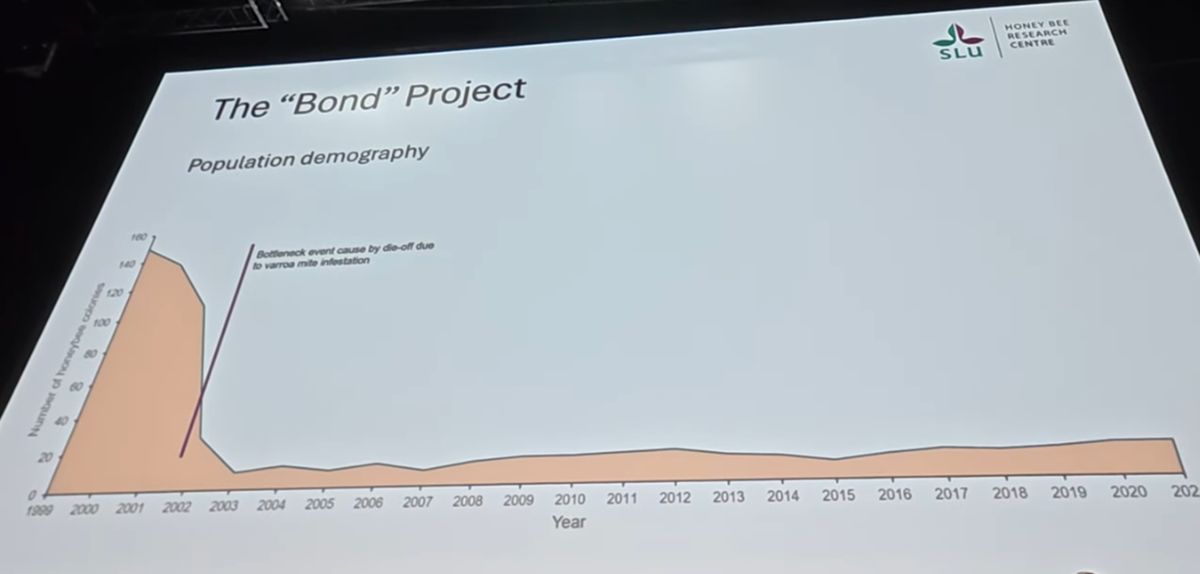
One of the more controversial but fascinating highlights at Apimondia was the 25-year report on the BOND Project on Gotland, presented by Dr. Barbara Locke from Uppsala. The core of the BOND experiment: take a large starting population of honeybee colonies heavily infested with varroa, then withdraw human interventions — no mite treatments, no swarm prevention, no feeding, no queen replacement. Let natural selection sort it out — hence the “Live and Let Die” ethos.
Key observations and points of caution:
- The early years were brutal. Within about 3 years, 80 % of the colonies died off. The population bottleneck was severe.
- What survived arguably has traits of mite tolerance or resistance: increased hygienic behaviour, enhanced grooming, reduced mite reproductive success, brood dynamics, and suppressed mite reproduction have been reported in associated studies.
- However, it is not a silver bullet. The surviving colonies tend to be small, low-productivity, and genetically vulnerable (narrower gene pool). Some critics argue that you’re left with “tough survivors,” but at the cost of yield, and with a compromised resilience to other stresses.
- The BOND Project illustrates that natural resistance is possible in principle — but the costs (colony losses, low output, limited genetic flexibility) are high. It doesn’t automatically translate to commercial-scale beekeeping without intervention.
For an Australian beekeeper, BOND is a cautionary tale: yes, you can breed for resistance, but waiting passively is a slow, high-stakes gamble unless paired with smart management.
Innovations in varroa control spotlighted
At Apimondia there was considerable buzz around a few new or maturing technologies that might shift how we manage varroa. A few worth keeping an eye on:
Thermosolar Hive
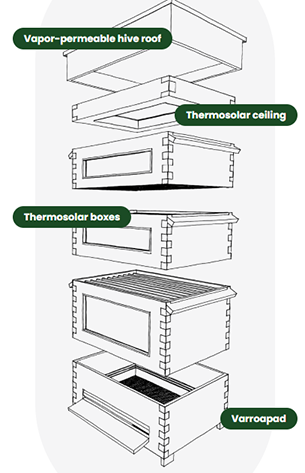
This Czech innovation is essentially a hive that doubles as a solar thermotherapy device. The idea: remove the outer cover, let solar heating raise brood-chamber temperatures to levels lethal to mites (but still tolerable to bees), maintain for 1–2 hours, then ventilate. Advocates claim mite elimination without chemicals, faster spring build-up, and better winter survival. Some notes of scepticism remain: will brood suffer? Is the heating uniform? Do mites hide in cooler zones? In essence, Thermosolar is promising and field testing an Australian modified version for our diverse climates will be worth monitoring.
Paul Kucera from Thermosolar Hive is an expat Aussie living in the Czech Republic. He tells me they will be at next year’s NSWAA conference in Bathurst with their Aussie adapted version.
HiveMaster (by ToBe)
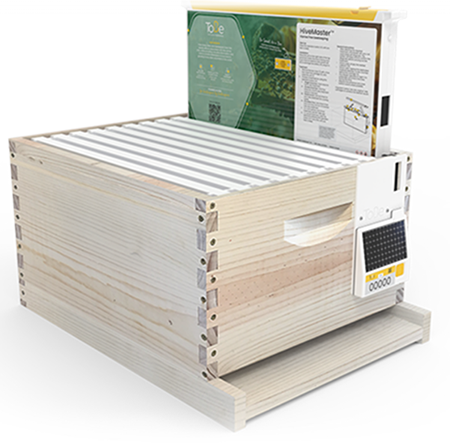
This is a smart, in-hive treatment/sensing system: an IoT device inserted into the hive that automatically delivers small pulses of gaseous anti-varroa compounds (e.g. amitraz, oxalic acid) based on internal sensors and algorithms In trials in Florida, HiveMaster demonstrated 95–97 % reductions in mite loads (adult and capped brood), outperforming conventional strips like Apivar, using substantially less chemical, and with no observed colony weakening. The device is plug-and-play (no maintenance for a year) and links to a smartphone app for diagnostics.
Vice President Product & Business Development, Avner Einav tells me they are currently undergoing field trials and regulatory processes in several regions, including Australia. It’s early days outside those pilot trials, but it has potential to shift the paradigm toward precision, low-residue varroa control.
Micro Honey Harvester (HiveKeepers)
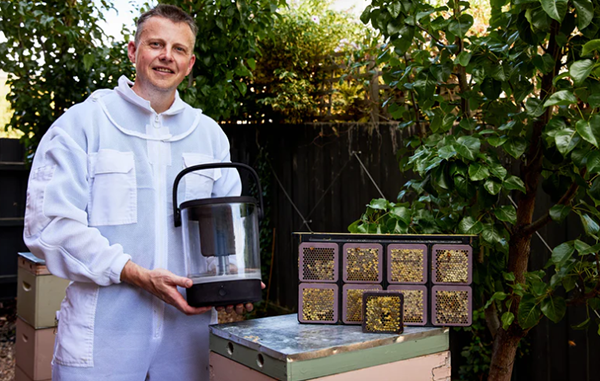
This is not a mite treatment per se, but an innovation in honey extraction. Aussie inventor, Simon Mildren won a Gold Medal for his Micro Honey Harvester, a closed cassette-based extractor system for small-scale beekeepers, allowing you to harvest in 5 minutes with zero uncapping, no mess, no filtering. For small Australian operations or hobbyists, this is a drag-reducing gadget, not transformative for varroa, but useful in streamlining labour.
Bottom Line
Apimondia in Copenhagen shows clearly where global beekeeping is heading: toward more automation, data, resistance breeding, and less reliance on one-size-fits-all chemicals. BOND reminds us that natural resistance is possible, but brutal, survival of the fittest doesn’t guarantee productivity or sustainability.
Of the new tools, HiveMaster is probably the one with the most upside (if it proves robust in temperate and harsher climates) because it addresses the dual challenge: reducing varroa while lowering chemical loads. Thermosolar is intriguing, especially in sunny climes (like parts of Australia), stay tuned for the results of the Australian trials. And devices like the Micro Honey Harvester help reduce the labour friction and storage squeeze of the one or two hive beekeeper.
Club Guest Speaker
Somewhere between Apimondia, work and family, I recently headed to some clubs for presentations. Thanks for the invitation and great questions from Southern Highlands Apiarists, Cumberland Beekeepers, Parramatta Beekeepers, Goulburn District Beekeepers and Central Coast Branch.
I was also invited to speak on the Victorian Apiarists’ Association (VAA) YouTube podcast. HiveMeet is VAA’s online platform to invite guest speakers to present to and answer questions from the live audience. I recommend checking out the growing library here https://www.youtube.com/live/n3lxmZDojBQ?si=S1OGPQIwp_YGHT4p
The year is fast coming to a close, but let me know if you’d like me speak at your club. If I can’t fit you in this year, 2026 is around the corner. Email me at biosecurity@beekeepers.asn.au.
Own Use Exemption
Thanks again to all those that signed the petition. It’s now closed with a disappointing 1,533 signatures out of some 50K beekeepers across the country. It appears the various state associations and clubs representing beekeepers didn’t forward my email inviting signatures to their membership. I’m sure we would have more signatures if people knew about the parliamentary partition.
The good news is there are enough signatures to require a response from the Hon Julie Collins MP Minister for Agriculture, Fisheries and Forestry. I’ll be sure to publish her response in an upcoming issue of TAB.
Until next time.
Mike Allerton ABA Biosecurity Officer