
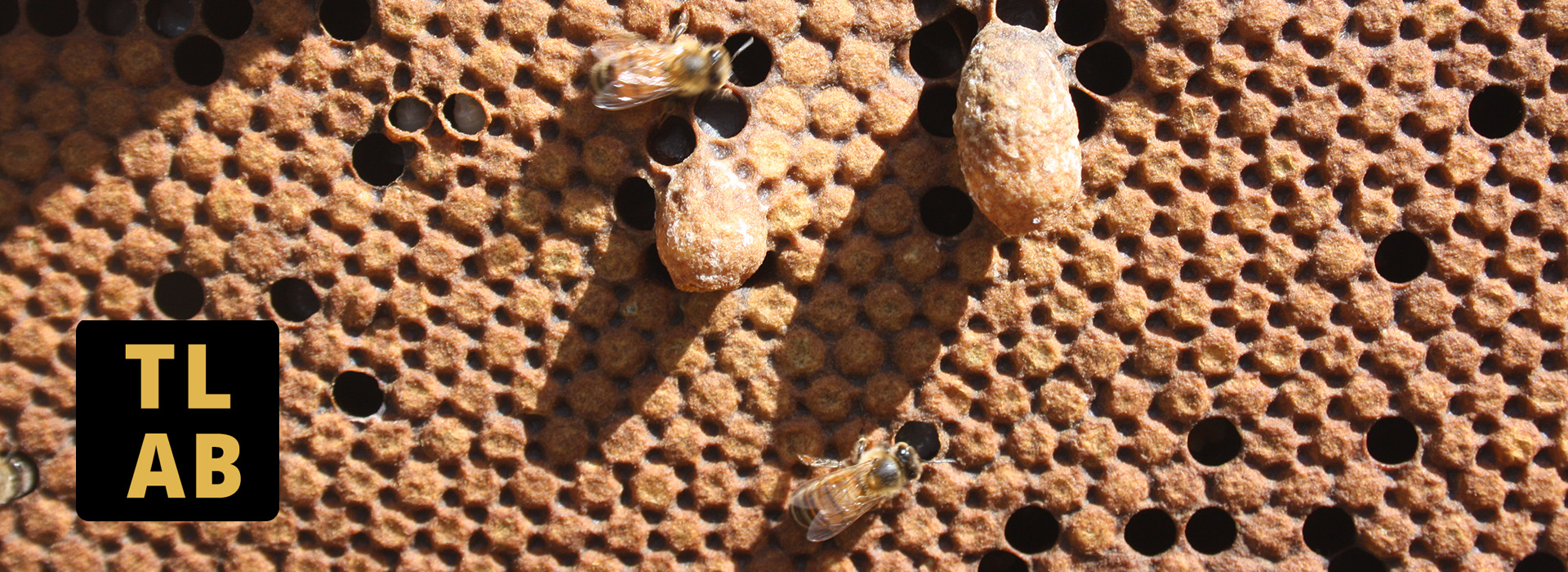
Increasing Your Hive Numbers
Bruce White OAM
Illawarra and Cumberland clubs

Hive numbers can be increased when plenty of nectar and pollen is available usually from spring to late summer. Boxes with a small number of frames are usually used to start the new colony - called a nucleus to accommodate a split or you can use brood boxes with a reduced number of frames.
The best way is to divide your current hives by splitting the colonies and by removing frames and bees when colonies are expanding in worker bee numbers.
The more frames covered with bees used to split the colony the quicker the hive will develop into a strong colony and you can transfer it to a larger box and add frames as it expands.
You have three options to provide the split with a queen
- Let the split make its own queen
- Place a mature queen cell in the split
- Introduce a mated queen into the split
Making up the split
First locate the queen in the original hive.
- Finding the queen by looking to ensure she remains in the original hive, or
- Shake or brush all the bees from the selected frames into the brood box, if you cannot find the queen. Place the frames above an excluder on the original hive, the queen will be below the excluder.
Selecting frames with bees for the split
- A frame of honey and pollen
- A frame of uncapped brood with some eggs
- A frame of capped brood
- All frames covered with bees
- If you brushed or shook all of the bees from the selected frames, place them above the queen excluder to ensure no queen, leave for about thirty minutes for the bees from the brood box to cover them before using the frames for the split
- Replace the selected frames from the original hive .
Place the selected frames covered with bees into a box to form the nucleus colony ( split) with the wall comb being the frame of honey and pollen and the uncapped brood frame being in the centre then the capped brood frame. Depending on the number of frames the box holds, frames can be added as the colony expands or the colony transferred to a larger box.
Reason
You are providing the split with nectar, pollen and mature field bees on the honey and pollen frame, the uncapped brood frame provides brood to hatch over 24 days and young nurse bees. The capped brood frame with brood close to hatching and nurse bees that were keeping the frame at brood temperature in the original colony.
You are disorientating the bees so they will stay in the split.
Three options
- Move the split to a new location at least two kilometers away and open the entrance ,leaving the original hive where it was
- Turn the original hive around 1800 so the entrance of the split is where the original hive entrance was located, this means returning field bees will go into the split. The original colony will adjust its field force to replace the field bees lost to the split.
- Move the original hive sideways a couple of meters and place the split in its place . The field bees from the original hive will drift into the split
Providing a queen for the split three options
- Let the split make its own queen
Just leave the split and the bees will make emergency queen cells from the brood you provided.
The cells will hatch in twelve days and the queen will be laying about ten days later so queenless for twenty two days
- Place a mature queen cell in the split.
Leave the split queenless for a day so the split will start emergency queen cells then the split will accept the mature queen cell or
You can make up the split and place a cell protector around the mature queen cell
You can raise your own queen cells or purchase them from queen breeders
Handle queen cells gently always with the point down so as to not to not damage the pupa.
Mature queen cells are placed in splits about a day before they hatch between the top bar of the frames or on the frame side. So the split will not have a laying queen for eleven days as the emerging queen from the queen cell has to mate before laying.
Introducing a queen into the split.
Mated queens can be purchased from queen breeders
Check you can see no Varroa on the escorts or Queen
The queen will be in cage with escorts’ worker bees and at one end with queen candy, Make sure the bees from the split can chew the queen candy end to release the queen and escorts.
The bees in the split colony will take a couple days to release the queen.
Place the cage between the frames so the candy end allows the bees to release the queen and do this when you make up the split.
The split will be queenless for only two days.
Check for the queen presence by seeing her or her brood after ten days.
All methods have risks the split will not have a queen.
With the first two options virgin queens have to mate on the wing with several drones. Drones are in short supply due to Varroa adding to the risk. Virgin queens can get lost on mating flights and introducing queens in cages can result in the colony rejecting the queen.
Checking the success.
If you let the split make its own queen first check for the queen’s presence 26 days after making up the split.
If you introduce a queen cell check for the queen 15 days after making up the split.
If you introduce a queen in a cage check for the queen presence 10 days after making up the split.
In all options you only have to see unsealed brood.
The best option is to purchase a queen from a queen breeder, the stock should be of good quality and the split should only be queenless for a couple of days
Manage Varroa using best practices once the queen is laying
If no brood or queen cells re unite the split with an established hive, using newspaper between two boxes or shake the bees at the entrance of an established hive.
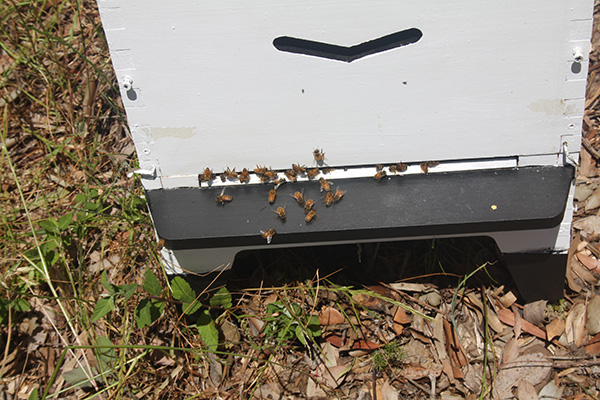
Guard bees at the entrance to a split
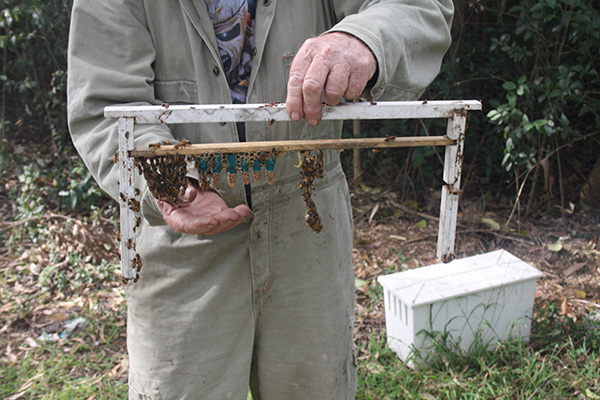
Mature queen cells can be transported ready to place in a split
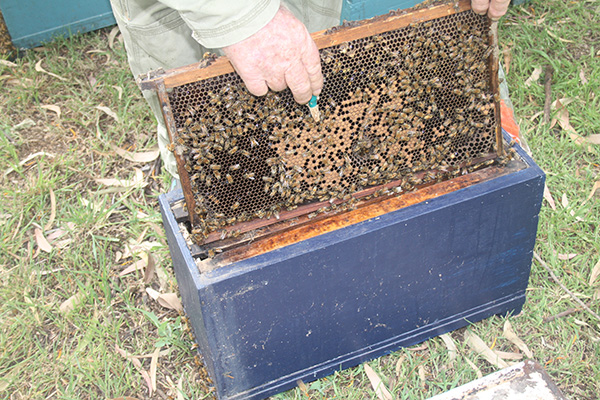
Placing a mature queen cell on the side of a frame after a split has been queenless for a day
Mature queen cell in a cell protector – prevents the bees from destroying the cell
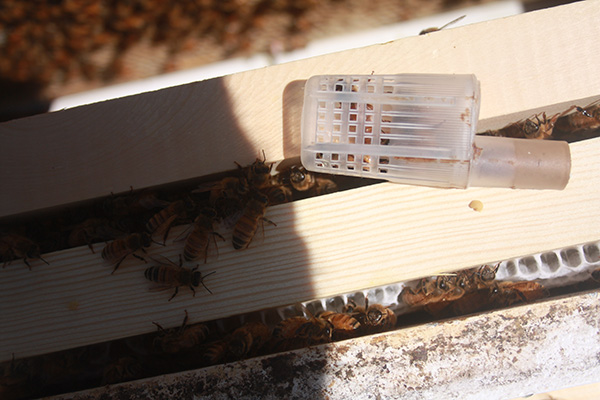
Queen in cage ready to introduce between top bars of two frames
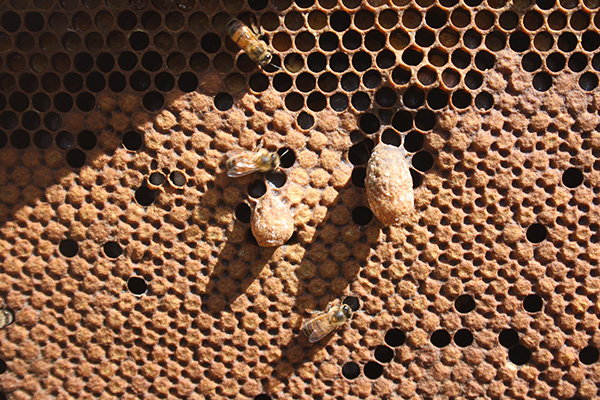
Two emergency queen cells started by the bees to provide a queen
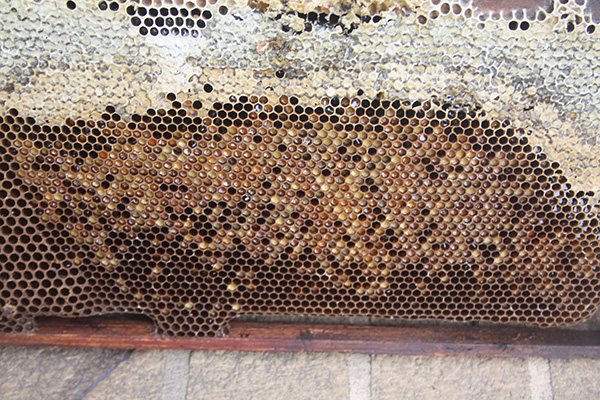
Frame of honey and pollen to provide stores for the split
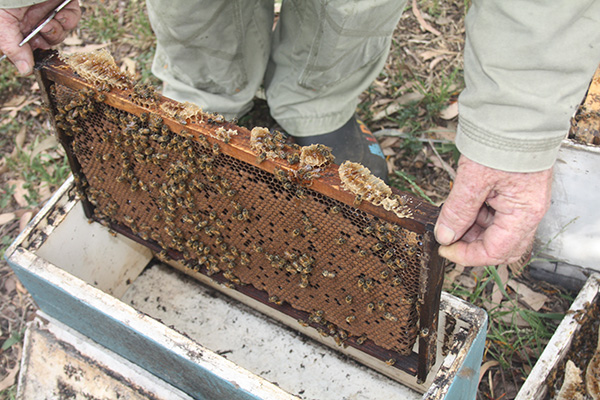
Placing capped brood in the split to ensure plenty of young bees will emerge
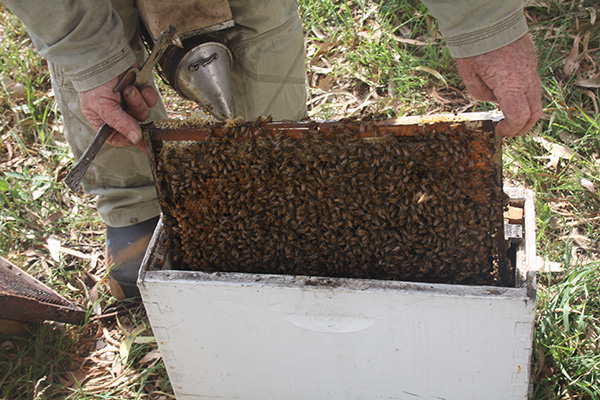
Frame covered with nurse bees – as they have not yet been field bees, they will not drift. No Queen.
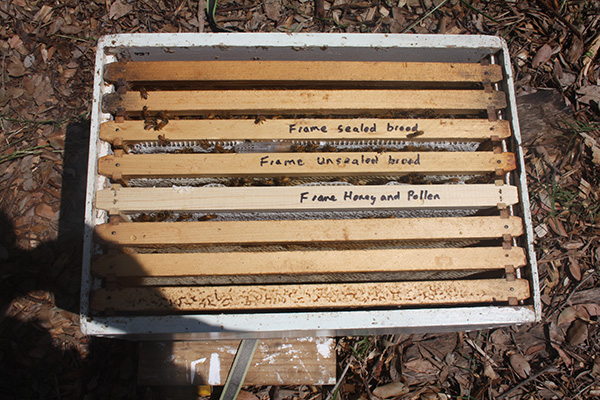
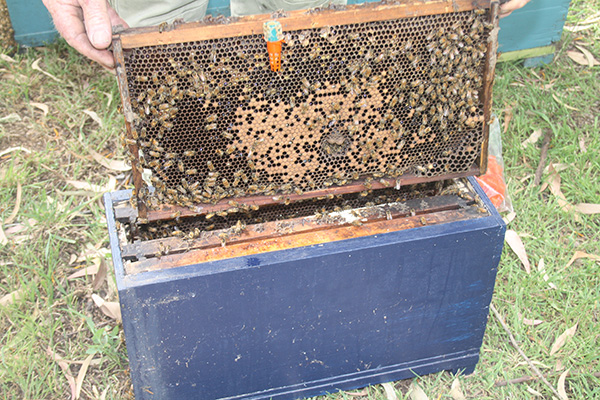
Make up the split. Sealed brood, uncapped brood, honey and pollen frames covered with bees – no queen.
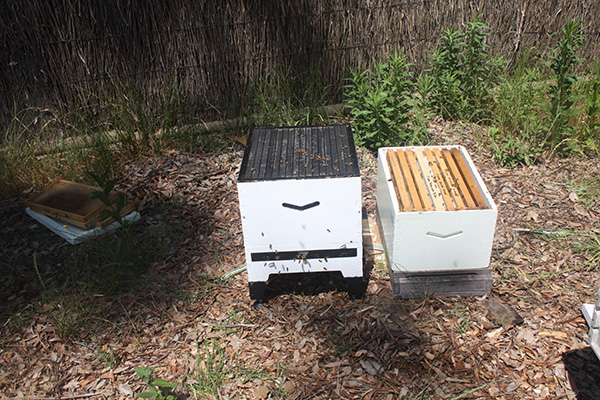
Turning the original hive around 180 degrees and placing the split in its place so that field bees will drift into it.
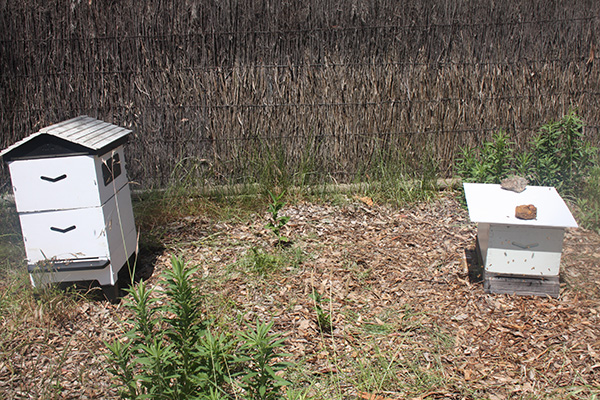
Move original hive (two boxes) and place split (1 box) in its place for field bees to drift in