
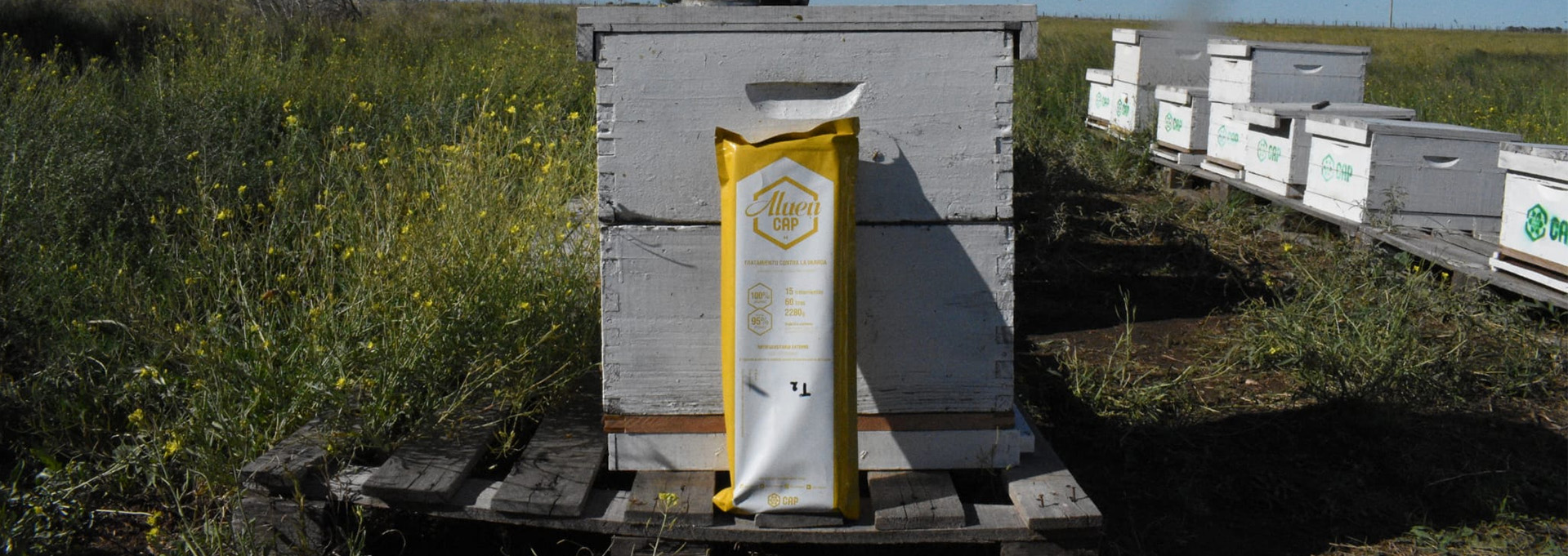
Aluen CAP emergency permit, what it means for Australian beekeepers
by Mike Allerton
ABA Biosecurity

A new APVMA emergency use permit has opened a legal pathway for slow release oxalic acid strips. The opportunity is real, but so are the restrictions. Here is what PER95790 actually allows, how it compares with Api-Bioxal under permit, and why manufactured strips beat home made strips on safety and reliability.
At a glance
- Aluen CAP strips are legal in Australia under APVMA emergency permit PER95790 (16 Dec 2025 to 30 Jun 2027).
- The permit currently restricts use to once annually and prohibits use across two consecutive treatment periods.
- Api-Bioxal is also available under emergency permit (PER94609, 11 Nov 2024 to 30 Sep 2028) in NSW, ACT, VIC, QLD and SA, with up to two applications per year allowed under conditions.
- Manufactured strips provide consistent dosing and a validated release matrix, reducing safety risks and the wild efficacy swings seen with home made strips.
“In Australia right now, the permit is the law. If you do not follow it, you are outside the legal authority entirely.”
What is an emergency permit, and why should you care?
When a new pest arrives, registrations take time. An APVMA emergency use permit is a controlled pathway that allows supply and use of a vet chemical product that is not yet registered in Australia, or allows a registered product to be used outside its label directions. The permit sets the rules, including where the product can be used, how often, dose rates, withholding periods, disposal and safety requirements.
A practical way to think about it is this, overseas labels and hearsay do not protect you. If a permit condition conflicts with an overseas label, the permit wins. If you do not follow the permit, you are not “a bit off label”, you are using an unapproved chemical treatment.
Aluen CAP under PER95790, the key conditions
PER95790 permits the supply and emergency use of Aluen CAP Slow Release Oxalic Acid Strips for Beehives. The permit is in force from 16 December 2025 to 30 June 2027. The strip format is straightforward, each strip contains 10 g oxalic acid dihydrate, and the product is designed for slow release while in the hive.
The operational directions are also clear. For an 8 to 10 frame hive, the permit specifies 4 strips. For a 5 to 6 frame nucleus hive, it specifies 2 strips. Strips remain in the hive for 42 days and must then be removed. The permit also includes packaging and handling conditions, including that it is illegal to sell individual strips separately, and unused strips must be discarded within 24 hours of opening the pouch.

The restriction that matters most
PER95790 states, DO NOT use more than once annually.
It also states, DO NOT use over two consecutive treatment periods.
If you have heard that multiple treatments per year may be possible in the future, that may be part of the registration goal, but it is not allowed under the current permit.
Honey withholding is also important for beekeepers. The permit lists a honey withholding period of zero days after removal of strips. That does not mean you can ignore best practice around honey hygiene, it means the permit does not require a longer withholding interval after strips are removed.
Api-Bioxal under PER94609, similar chemistry, different delivery
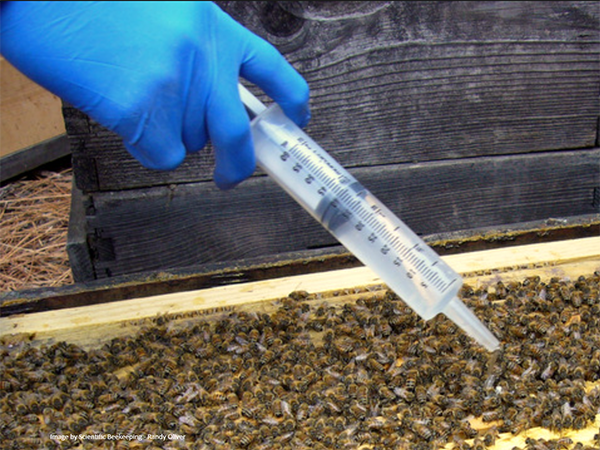
Api-Bioxal is another oxalic acid based varroa treatment available in Australia under emergency permit. PER94609 is in force from 11 November 2024 to 30 September 2028. Unlike Aluen CAP, Api-Bioxal is used as a dribble (solution) or via vapourisation (powder). The permit covers NSW, ACT, VIC, QLD and SA.
[image OADribble.png – Caption “Api-Bioxal delivery by Dribble or Vapour”]
PER94609 includes maximum dose rates and a clear frequency limit. Under the permit, Api-Bioxal may be repeated up to twice annually, with a minimum of 5 days between applications. Like Aluen CAP, the honey withholding period listed is zero days. The permit also warns that efficacy reduces in colonies with brood, which aligns with the well known limitation that oxalic acid has low impact on mites sealed under cappings.
Side by side comparison
|
Feature |
Aluen CAP (PER95790) |
Api-Bioxal (PER94609) |
|
Format |
Slow release cellulose strips, 10 g oxalic acid dihydrate per strip |
Solution (dribble) and powder (vapourisation) |
|
Treatment duration |
42 days in hive then remove |
Short application events, may repeat as permitted |
|
Frequency allowed |
Once annually, not over two consecutive treatment periods |
Up to twice annually, minimum 5 days between |
|
Coverage |
All states and territories, WA subject to local restrictions in permit |
NSW, ACT, VIC, QLD and SA |
|
Honey withholding |
0 days after strip removal |
0 days |
|
Practical sweet spot |
Designed to span brood cycles via sustained exposure |
Best when brood is minimal, or as part of an integrated plan |
“Strips are not magic, but they are engineered. That engineering is what stabilises dose delivery and improves repeatability.”
Why slow release strips are attractive in Australian conditions
A classic oxalic acid strategy overseas relies on a broodless window. That window can be brief or absent in many Australian districts, especially in mild winters and coastal climates where colonies keep brood for long periods. In those conditions, single hit treatments can underperform because a large proportion of mites are protected under brood caps.
Slow release strip systems are designed to keep effective levels present long enough to intercept mites as they cycle between brood and phoretic phases across multiple brood cycles. In plain terms, the goal is not a stronger one off dose, it is a sustained dose long enough to catch mites that would otherwise emerge later with the brood.
Efficacy, the uncomfortable truth about variability
Beekeepers love a simple answer, does it work? The honest answer is, sometimes very well, sometimes modestly, and under some conditions not at all. That is not a reason to dismiss strips, it is a reason to treat them as a proper chemical tool that must be used at the right time, with the right dose, and verified by monitoring.
Published studies on oxalic acid and glycerin type strips report high efficacy in some subtropical settings, and far lower efficacy in northern summer climates. For example, controlled trials in Mexico and other warm climates have reported corrected efficacy figures around the low 90 percent range over a 42 day treatment window, while a 2025 northern climate summer study in Ontario reported about 56 percent efficacy for an oxalic acid and glycerin strip formulation. In a separate large field test of the popular “shop towel soaked in oxalic and glycerin” approach across commercial colonies, researchers found no evidence it reduced varroa under their conditions.
That spread matters. It means you should not rely on any single anecdote, whether positive or negative. It also means that if you cannot measure mite levels before and after treatment, you are operating blind. Treatments should be judged by numbers, not hope.
Manufactured strips vs homemade strips
Why it is not a fair fight!
As varroa pressure rises, home made strip recipes and “staple” style strips are being discussed more often. Some beekeepers see them as a frugal workaround. The problem is that they create three separate risks, legality, safety, and variable efficacy. Manufactured strips reduce all three.
1) Legality
Unless a method is authorised through a permit or a registered label in your jurisdiction, it is not an approved use of an agvet chemical product. The varroa national program guidance is consistent, permitted products must be used in accordance with the permit. When you depart from permit directions and start making your own delivery system, you step outside the legal authority.
2) Safety for the beekeeper and the bees
Oxalic acid products under permit are classified as poison and carry strong warnings around eye and skin damage risk, ventilation, and safe handling. Home preparation increases the chance of inhalation exposure during mixing, skin and eye exposure, accidental contamination of benches and tools, and incorrect concentration. On the bee side, oxalic acid is not inert. Permit documentation for oxalic products notes that agitation and increased adult mortality are commonly observed after treatment. That does not mean the product cannot be used safely, it means it should be used with respect and within limits.
3) Variable efficacy, the worst kind of failure
The biggest operational risk is not a complete failure you can see. It is a partial treatment that knocks mites down briefly, but leaves enough survivors to rebuild fast, while viruses continue amplifying. Variable dosing and variable release rates are exactly what home made strips tend to produce, because different absorbent materials, different mixing quality, different humidity and temperature, and different placement inside the hive can all change the release profile.
A practical, beekeeper focused rule
If you cannot describe exactly what active ingredient is in your strip, how much is in each strip, and how the release rate is controlled, you do not have a “treatment”. You have an experiment, and your bees are the test subjects.
What this means for your apiary in 2026
If you are considering Aluen CAP, the decision should be driven by three things, your monitoring data, your seasonal brood profile, and your planned rotation with other treatments. Because PER95790 limits use to once annually, it is not a product you can lean on repeatedly through a season. It is better thought of as one planned strike in a wider integrated program.

Checklist, doing it properly
- Confirm your state and territory requirements and read the permit, not just summaries.
- Monitor mite levels before treatment and again after removal, use a consistent method so numbers are comparable.
- Apply exactly the strip number and placement as per PER95790 and remove at 42 days.
- Record dates, hive strength, brood level, and weather notes so you can interpret results.
- Plan a rotation, do not depend on one active ingredient or one delivery method year round.
- Treat early enough to protect winter bees and avoid viral load compounding into autumn.
You may also hear that the importer is working towards an Australian registration label later in 2026, with the expectation of more flexible application options. That may occur if the registration is granted and the label directions differ from the permit. Until then, the permit is the enforceable instruction, and the once annually limit is not optional.
Conclusion
PER95790 gives beekeepers a legal slow release oxalic strip option, which is a meaningful addition to the varroa toolkit. The catch is that it comes with strict limits, including one use per year, and it must be used exactly as permitted. Api-Bioxal remains another oxalic option under permit with different delivery methods and different limitations. Across both products, the pattern is clear, manufactured products exist to deliver known doses safely and repeatably. Home made strips do not just bend the rules, they add risk and uncertainty at the worst possible time, when varroa pressure is already high.
References and further reading
- Australian Pesticides and Veterinary Medicines Authority (APVMA). PER95790, Permit to allow supply and emergency use of Aluen CAP Slow Release Oxalic Acid Strips for Beehives. In force 16 December 2025 to 30 June 2027. Available via APVMA permit search.
- PER94609, Permit to allow supply and emergency use of Api-Bioxal Solution and Api-Bioxal Powder. In force 11 November 2024 to 30 September 2028. Available via APVMA permit search.
- Australian Honey Bee Industry Council (AHBIC). Varroa Chemical Treatment Table (current December 2025).
- National Varroa Mite Management Program (Australia). Api-Bioxal product guidance and permit compliance notes.
- Rodriguez-Dehaibes SRR, and colleagues. Control of Varroa destructor development in Africanized Apis mellifera honeybees using Aluen CAP (oxalic acid formulation). (Peer reviewed study reporting high efficacy over 42 days in a warm climate).
- Thurston D, and colleagues. 2025. Efficacy and Safety of an Oxalic Acid and Glycerin Formulation for Varroa destructor Control in Honey Bee Colonies During Summer in a Northern Climate. Pathogens.
- Bartlett LJ, and colleagues. 2023. No evidence to support the use of glycerol oxalic acid mixtures delivered via paper towel for Varroa destructor control. Journal of Insect Science.