
Methods to Find a Queen in a Colony
by Bruce White OAM
Illawarra and Cumberland clubs

One of the most difficult things to do in the management of a colony of bees for new beekeepers is to find the queen amongst the thousands of worker bees and drones in the colony. It is normal for only one queen to be present and finding the queen can be very rewarding for new beekeepers, many say they have never found a queen.
When searching for the queen only use sufficient smoke to control the bees you don’t want them running or hiding because of the over use of smoke where you are looking.
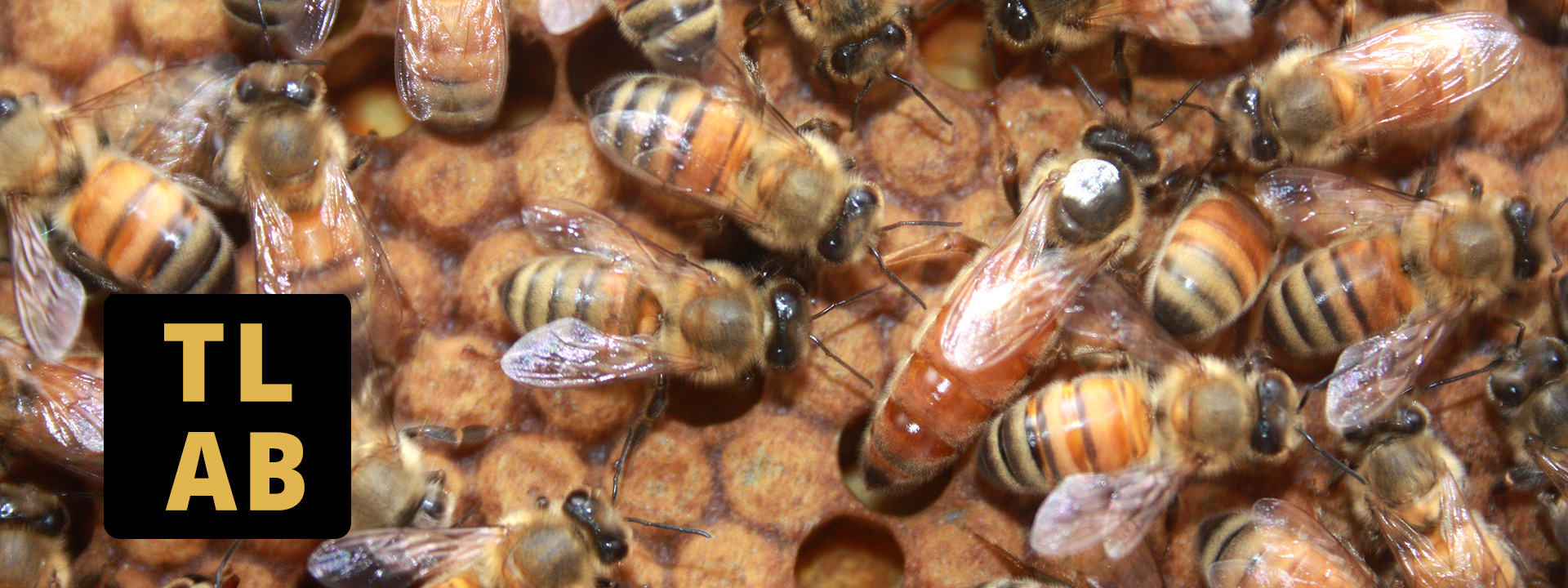
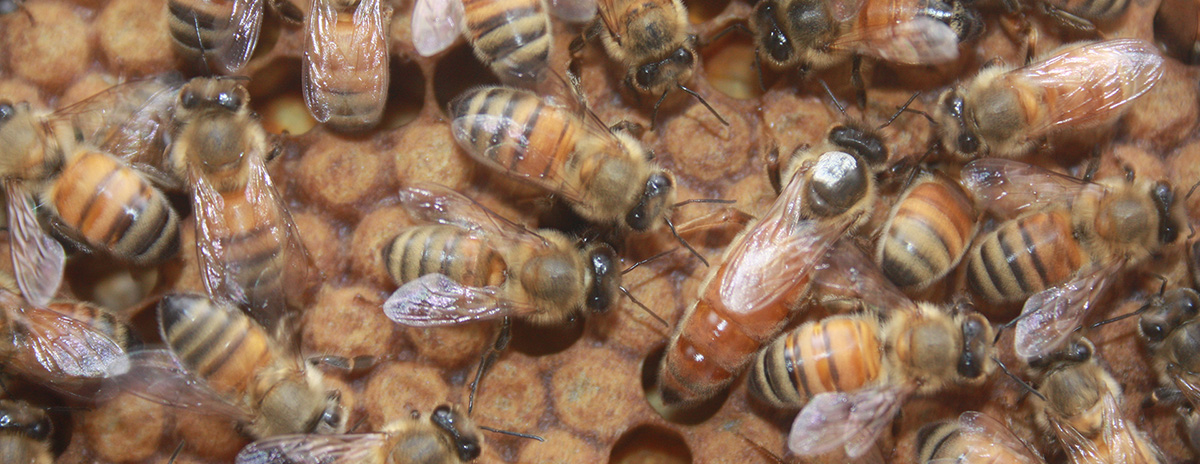
Know what a queen looks like by looking at pictures, she has a longer abdomen and is larger than workers, concentrate and focus on only looking for the queen in good light preferably when there is plenty of worker bee flight activity an indication a lot of the worker bees are out foraging so less worker bees in the hive.
If you wear glasses have them on use a veil with clear vision and if worker bees cluster in some spots blow on them as the queen may be being covered up. Blowing disperses the cluster and could expose the queen.
If a colony has normal brood the queen is present so become familiar with normal brood, especially the egg stage. In the life cycle of brood eggs are eggs for three days standing straight up when first laid and over the next three days lying sideway till they hatching into a lava . The queen is often found on the frame with newly laid eggs.
Beekeepers need to see the queen occasionally to ensure she is active looks healthy, and it is best practice to requeen colonies with young queens to ensure plenty of workers for colonies to prosper. Commercial beekeepers practice requeening every year and amateur beekeepers should every two years in late spring or early autumn .To requeen a colony the queen must be killed or removed from the colony to be requeened and a new queen introduced into that colony that is another topic.
Many methods can be used to locate the queen.
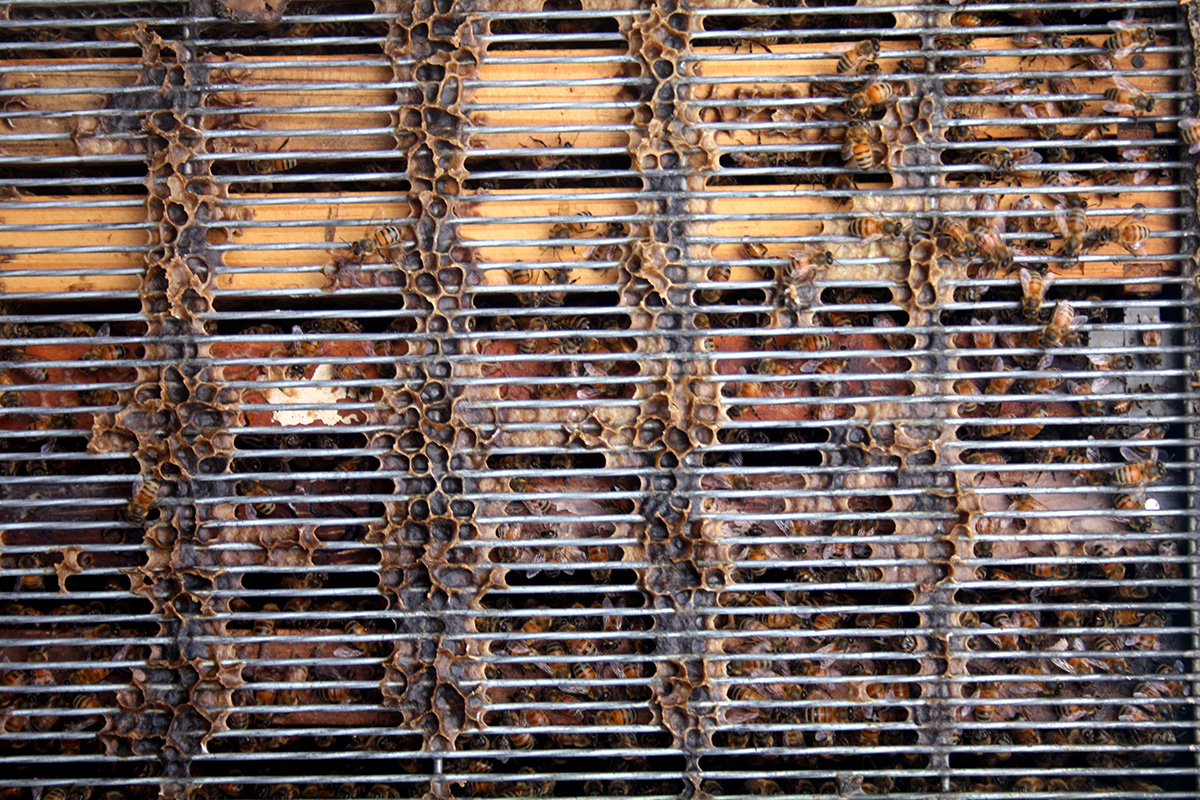
Queen excluders are valuable to confine the Queen to the brood box
Queen excluders are a huge benefit as opposed to allowing the queen to occupy all the boxes on managed colonies by using a queen excluder the queen can be confined to a single brood box that is sufficient for her to maintain a very strong colony provided the frames have mainly worker cells.
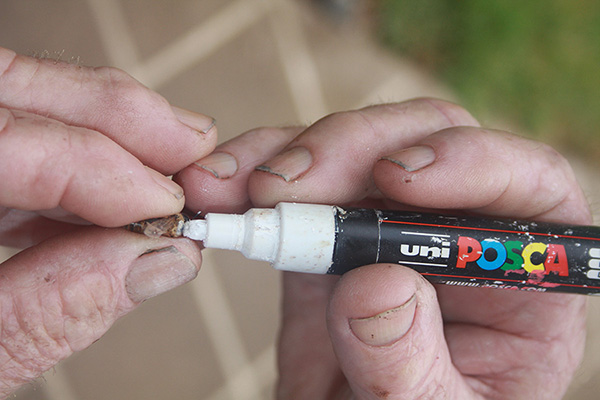
Marking the queen on the thorax helps find her using a Poska Pen available from some beekeeping supply outlets, office works or news agents.
Special gadgets are available to help you mark the queen or if buying queens get the queen breeder to mark her If you want to mark queens practice on drones first
You can manipulate the hives to assist in the finding of the queen and use the one or ones that suit you best that may depend on conditions at the time .
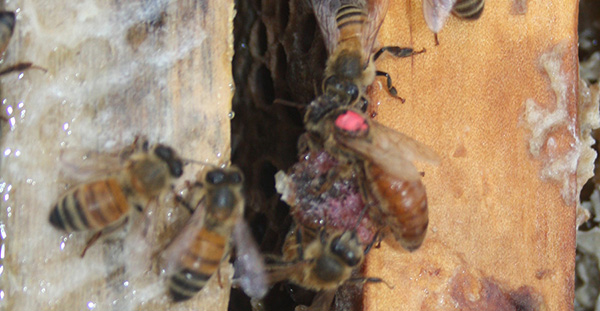
1. Checking brood frames for the queen
The most common method used. Requires the careful examination all the frames the queen can access including bottom board , box walls and the lid if a hive without an excluder, if a queen excluder is used examine as the queen maybe on it.
Only use sufficient smoke to control the bees, remove a frame and examine each side, top ,bottom bars and end bars for the queen. If the queen is not found place to one side , then systematically examine each frame for the queen. You can place the examined frames into another box or back into the gap in the original box in the gap left by the frame removed The queen can be anywhere but most likely on a frame with upright eggs.
2. Using smoke to reduce the worker bees in the brood box
(Suitable only for hives fitted with a queen excluder)
Apply plenty of smoker across the whole hive entrance and move the hive lid so the smoke can escape just like a chimney.
The aim is to force most of the worker bees into the super above the excluder, so as to have less bees on the brood frames, Then remove the boxes above the excluder .carefully examine the excluder for the queen she is often found on the excluder because of the smoke used. The bees on the frames will be mainly docile young nurse bees so making it easier for you to spot the queen. Examine the frames till the queen is found and if necessary box walls and bottom board.
3. Doubling
A method I was only told about last month by a member Michael Syme, beekeeping is an ever learning process.
Works on the theory queens like to hide from the light.
Check the queen excluder if fitted for the queen.
Remove and examine the two wall combs for the queen in the brood box and if the queen is not found place the remaining frames in pairs in the brood box.
Wait a while then remove and examine the brood frames the queen is then often found hiding from the light on the side of the frame that was the dark side if not found check box wall and bottom board.
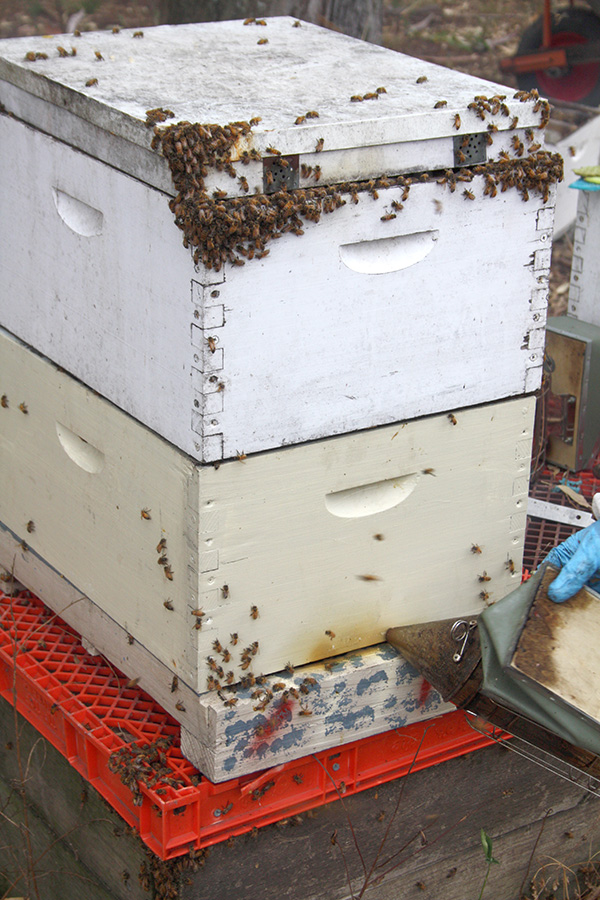
4. Moving the hive you want to find the queen in.
This is the best method if a colony is aggressive.
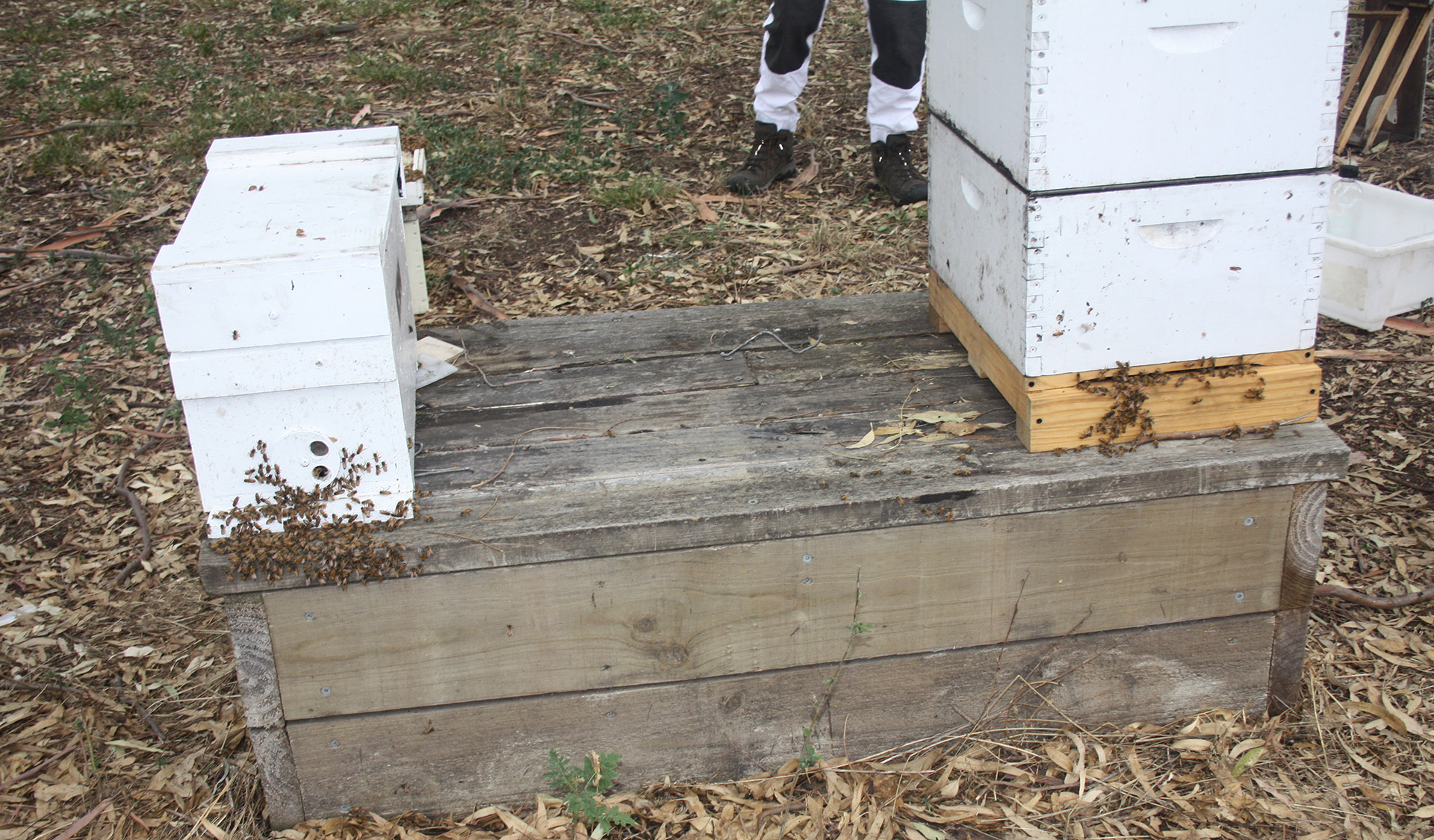
Move the hive to a new location about two meters from its original position
Place in the original hives location an empty brood box with a lid and bottom or cardboard box with an entrance hole All the field bees from the original colony will go to this location in about ten minutes Then examine the colony that was moved to the new location for the queen checking all the brood frames box walls and bottom board till the queen is found making it easier to find her as the field bees will go to the original location
Once you have found the queen place the hive in its original location and shake the field bees out of the brood box or cardboard box and remove
5. Shaking the bees at the hive entrance.
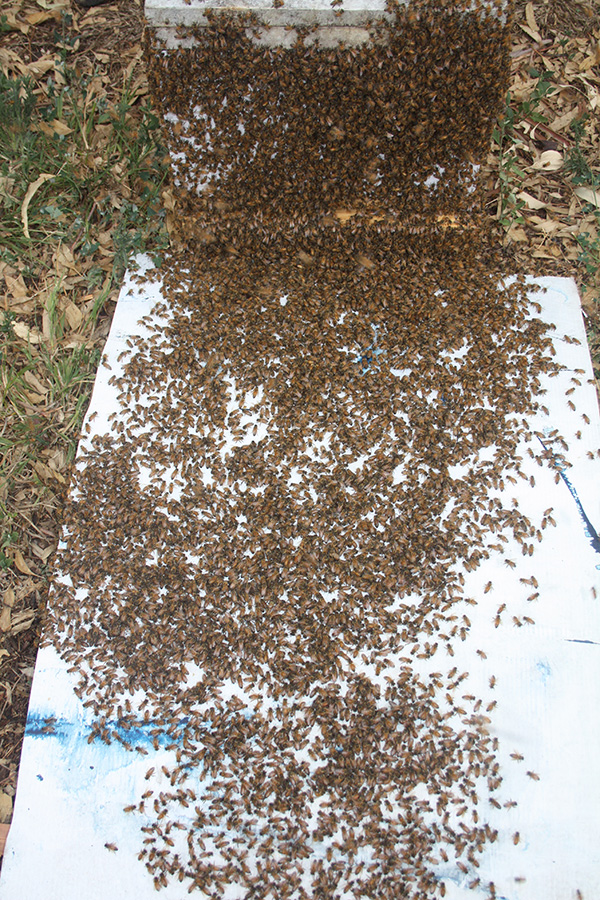
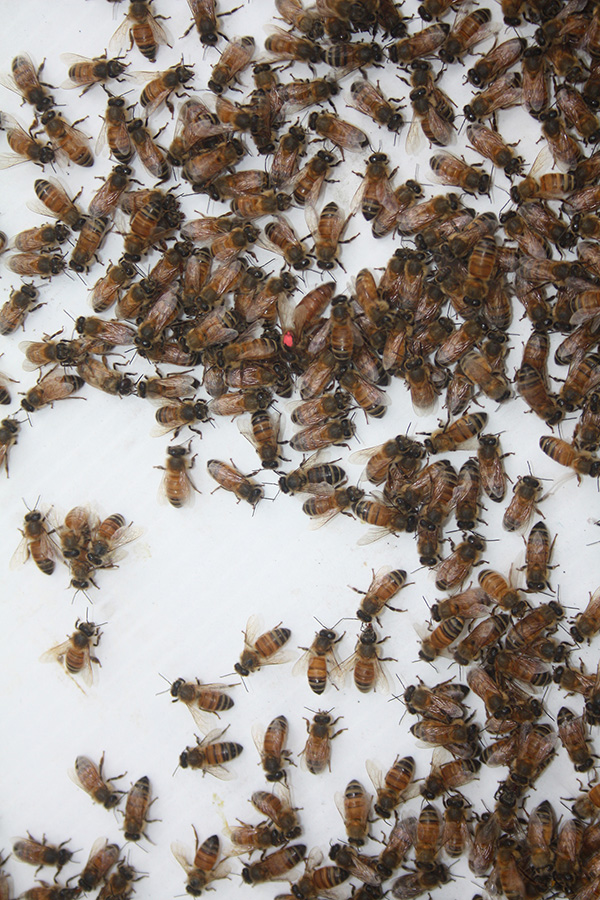
(Only suitable for hives not on stands)
Get a large sheet of core flute (a used real estate sign is ideal) or plastic tarpaulin and shake or brush all the bees from the brood box or boxes onto the core flute or tarpaulin out the front of the hive entrance, the bees will go to the entrance. Its much easier to see and catch the queen.
6. Screening the bees through an excluder
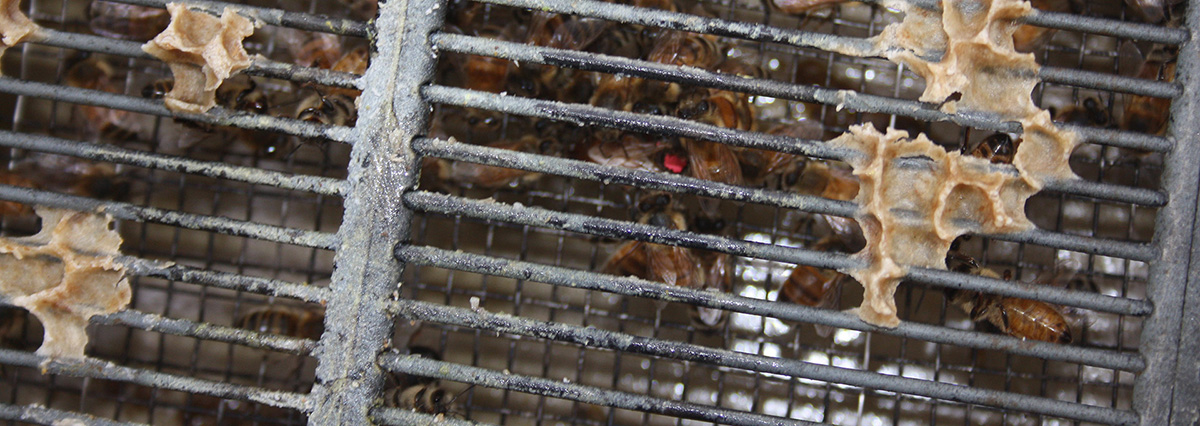
For hives on the ground
If a loose bottom place the queen excluder on top of the loose bottom or if a fixed bottom place the queen excluder on top of an empty brood box no frames.
Shake or brush all the bees from the brood box or boxes at the hive entrance on a sheet of core flute they will go to the entrance and into th hive .
Place the shaken frames into a brood box and place on the excluder, the bees will be attracted to the brood frames but have to pass the excluder to get to the frames after about ten minutes only drones the queen and a few workers will be below the excluder so queen easy to locate You can use smoke to guide the bees and queen into the entrance .
For hives on stands
If your hive is on a stand shake all the bees from the brood box or boxes into the empty bottom box. Ieft on the stand. Place the box with brood combs above a queen excluder The shaken bees that should include the queen will then go through the excluder being attracted by the brood combs and leave below the excluder only the drones queen and a few workers .so easy to spot the queen.
7. A very radical method
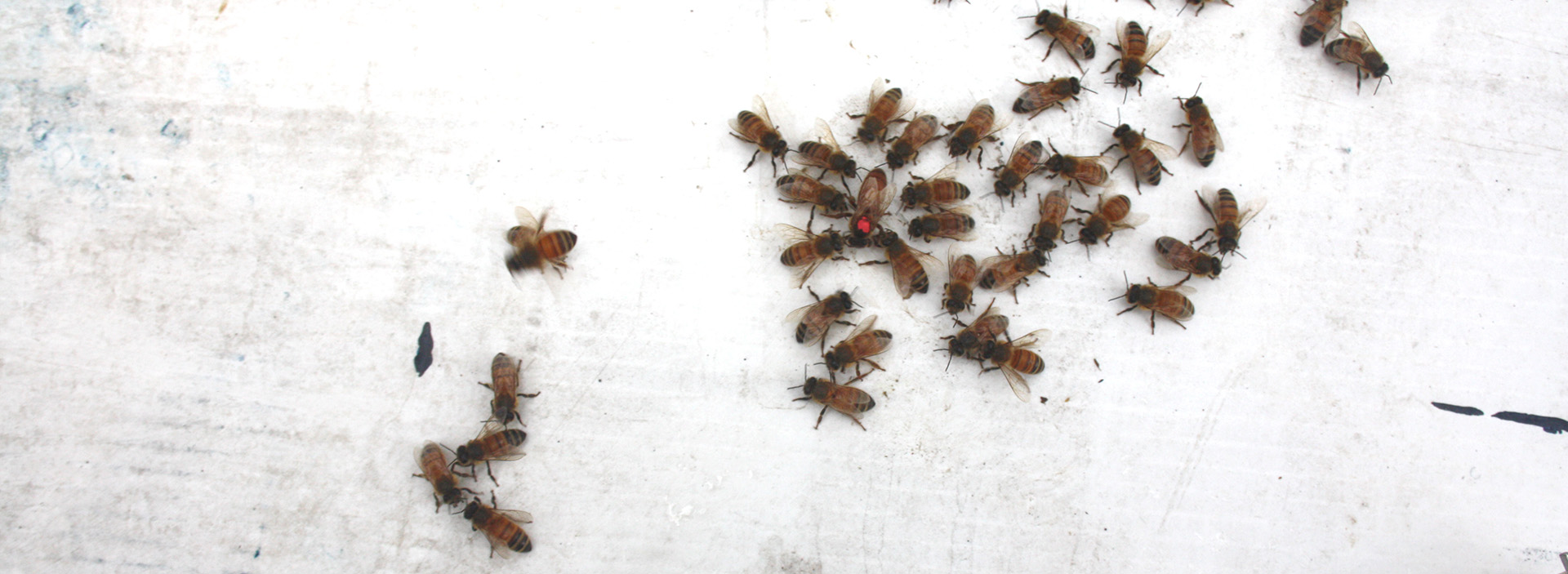
Queen on core flute after all the brood frames were shaken on core flute and field bees flew back to the hive
If all fails, laying queens cannot fly
You can shake the whole colony onto a sheet of core flute or a tarpaulin several meters from the hive location. All the field bees will fly back to the hive location, leaving behind the queen and nurse bees. Blow on or smoke any clusters of bees, as they may be hiding the queen. Once you catch the queen, you can pickup the core flute and shake the remaining bees at the hive entrance.
8. If you don’t wish to use a queen excluder in your apiary
Buy an excluder just to assist you to find queens. Place it on a hive between the boxes and look again after a week. The box or boxes with eggs are the ones with the queen. This reduces the number of frames and boxes to look at to find the queen. Once you have found your queen you can remove the excluder.