
What’s In Flower?
That’s good for pollen and honey production
by Ian Spencer

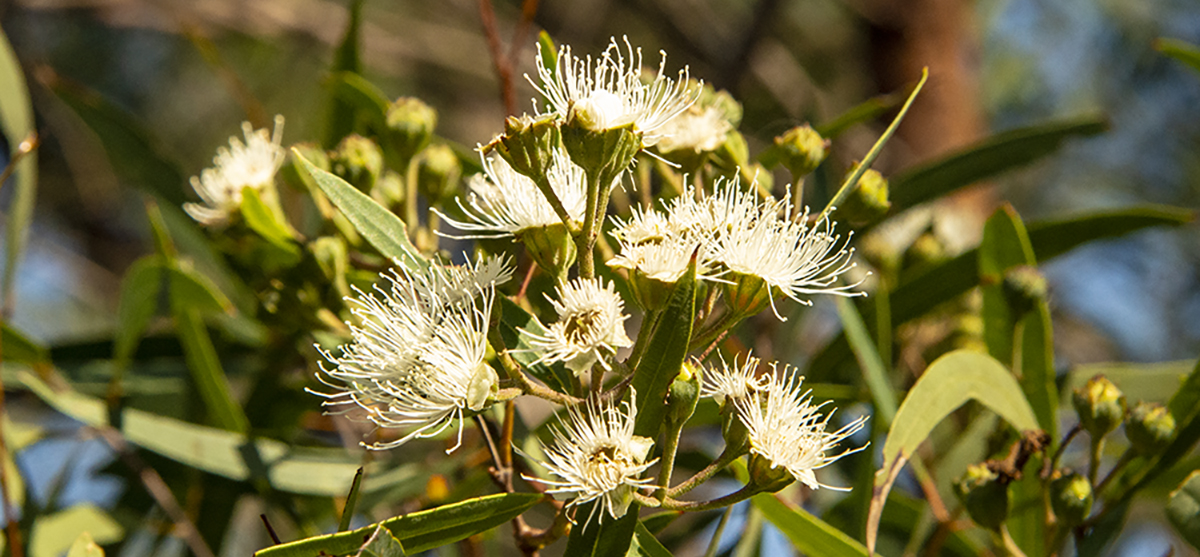
For the last few weeks in December (and it will extend into January) there is a massive flowering in western Sydney of a tree that looks like a Eucalypt, but isn’t.
The tree is Rough Barked Apple or Angophra floribunda. It’s a close relative of the Eucalypts. Floribunda means many flowers and this year it has definitely lived up to its name.
Rough Barked Apple is a fairly nondescript, often scrubby medium tree. It is very widespread on a range of soils. In early January 2026 it was in full flower on sandstone soils at East Kurrajong but a month ago I drove 40 km to Mt Druitt and it was in flower on different soils the whole way.
Doug Somerville describes it as the most important Angophra for honey production in NSW. He also says it often flowers strongly after a drought or dry period. That may explain why this year’s flowering was so extensive. Given September, October, November and December have been quite dry
I had a good extraction of honey in late January 2025 from Rough Barked Apple but the summer of 2025-26 flowering is at least 5 times more extensive and maybe a month earlier. Rough Barked Apple produces medium amounts of honey and large amounts of good quality pollen. This makes it very attractive to bees. It produces an excellent dark medium honey.
If you have a lot of rough barked apple near your apiary, keep an eye on your supers as this is an exceptional flowering.
A what’s in flower segment has had a long history in TAB. Please email editor@beekeepers.asn.au with what’s in flower in your area.
Identifying Rough Barked Apple:
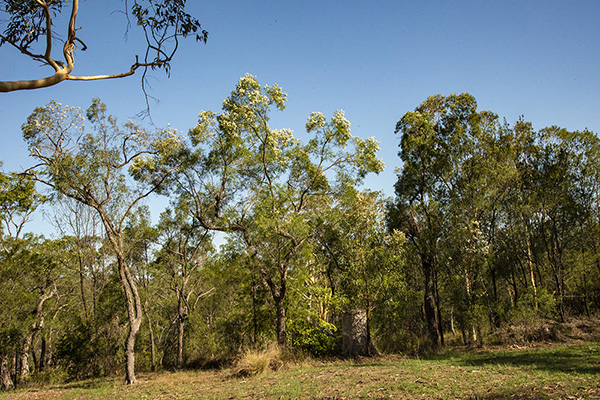
Rough Barked Apple is a medium tree. Smaller trees can be quite scrubby. Even the smaller saplings can flower. Some larger trees are 10-15 metres tall, but most are smaller.
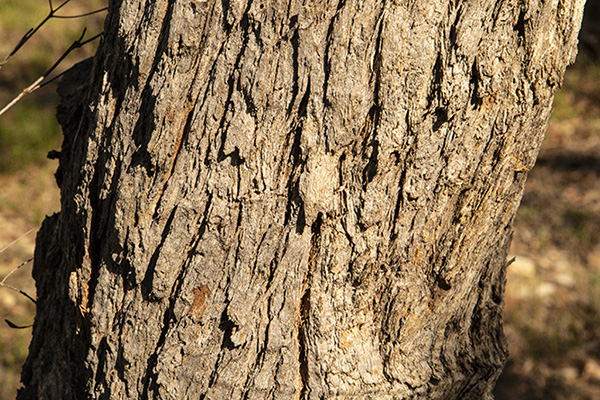
Like its name suggests it has rough grey brown bark on almost the entire tree including the branches
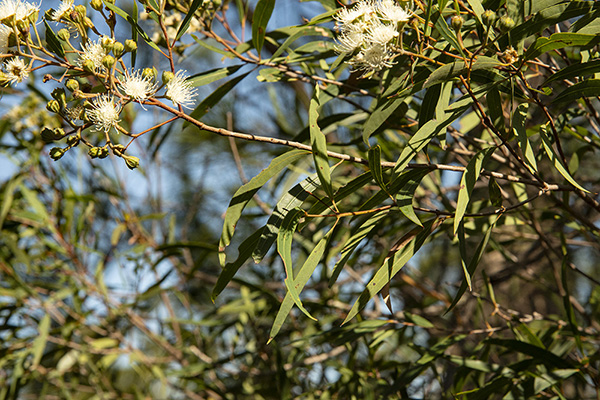
Leaves are arranged in pairs on the stem. (NB: All common Eucalypts have leaves that alternate along the branch.)
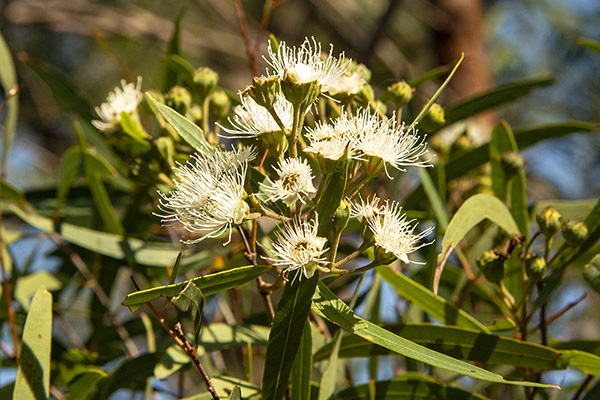
The flower looks like a Eucalypt, but the fruit (gumnut equivalent) is distinctly ribbed like all Angophra species