
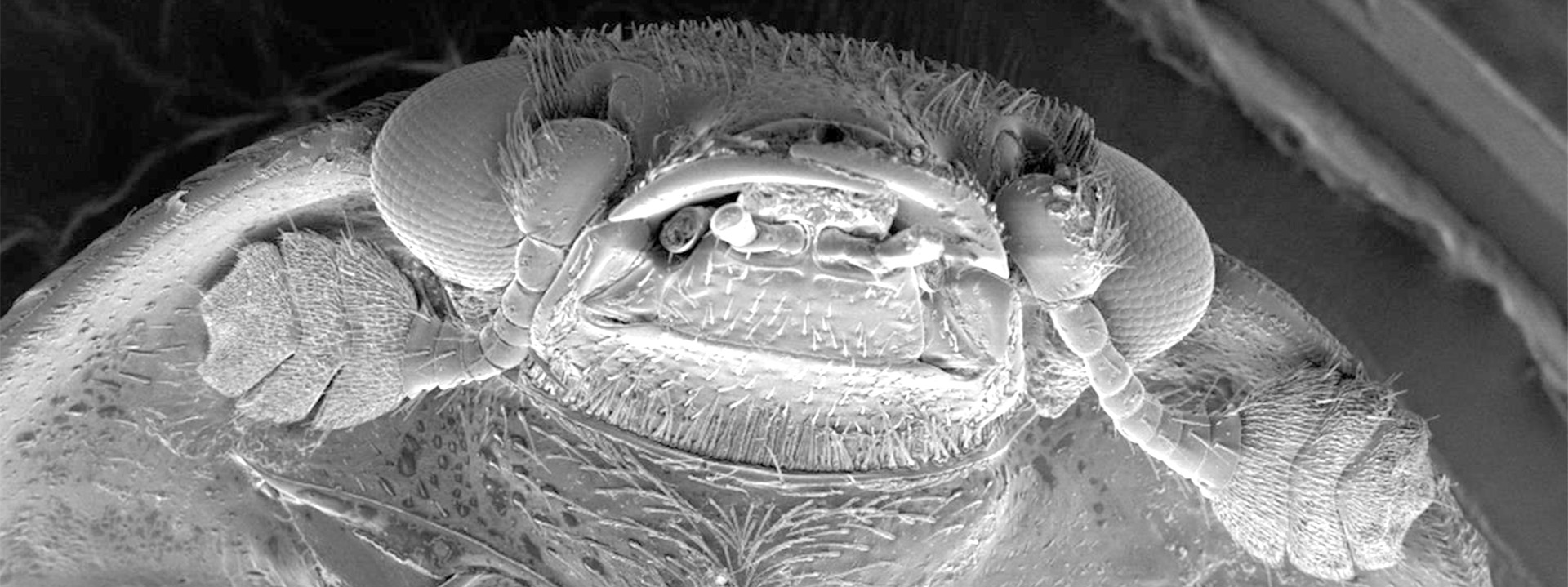
An electron microscope image of a very alien looking Small Hive Beetle
Managing Small Hive Beetle through the QLD storm season
by Tonia Johnson – QLD Bee Biosecurity Officer

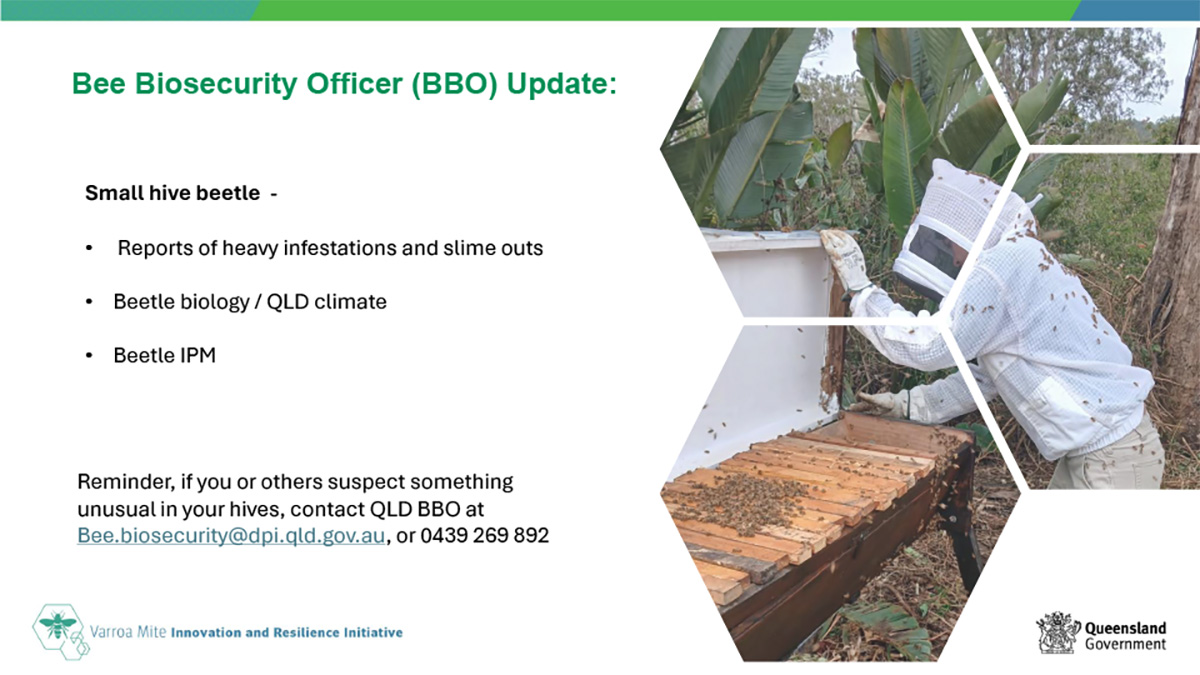
Small hive beetle (SHB) pressure has risen dramatically across parts of Queensland in recent weeks. Beekeepers in some areas are reporting high adult beetle numbers in their hives and rapid hive slime-outs. SHB is a familiar pest, but the intensity we’re seeing so far this season reflects how closely Queensland’s weather patterns align with the conditions beetles thrive in.
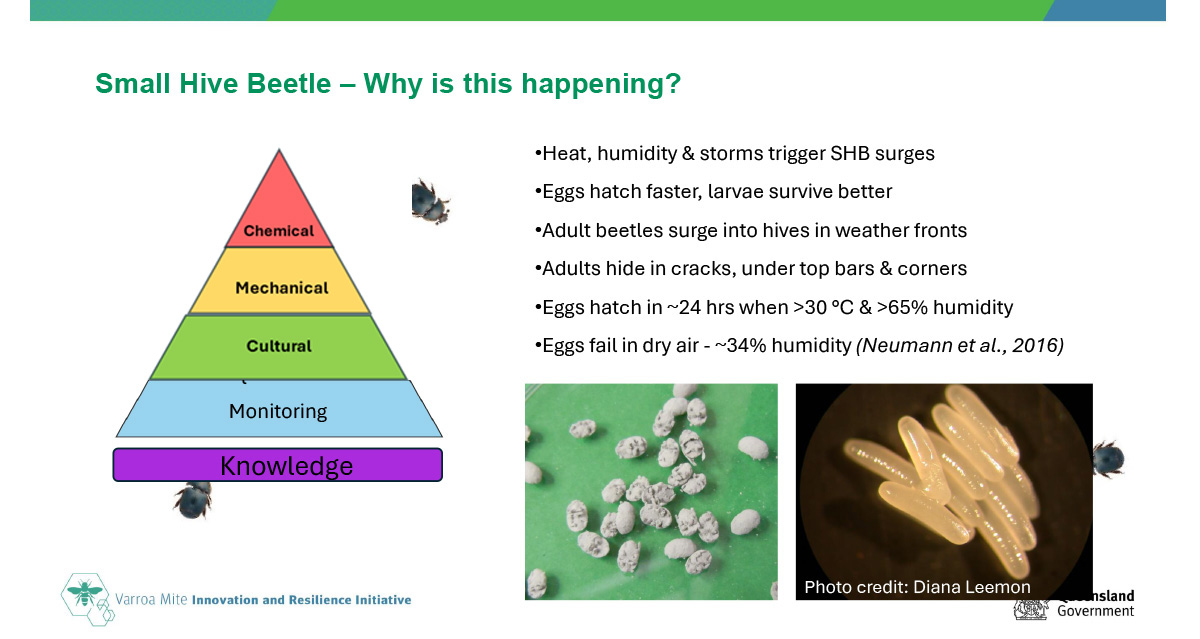
Research shows that high temperatures, humidity and storm activity create ideal conditions for small hive beetle. During the warmest months, a large proportion of beetles remain outside the hive. As humidity rises and storm fronts build, beetles surge into hives in greater numbers, drawn by stronger hive odours and changing weather conditions.
Once inside the hive, adult beetles seek shelter in areas inaccessible to bees, then slip into comb or debris to lay pockets of eggs. In these weather conditions when temperatures are above 30 °C and humidity exceeds 65% eggs can hatch in as little as 24 hours (Annand, 2011)
When beetles reproduce faster than bees can control them, colonies are quickly overwhelmed and rapid fermentation of honey and pollen (‘slime-out’) can occur.
Integrated Pest Management – Small Hive Beetle
Effective management of Small Hive Beetle (SHB) relies on an integrated pest management (IPM) approach that combines good hive management practices with mechanical and, when necessary, chemical controls to reduce beetle pressure without compromising colony health.
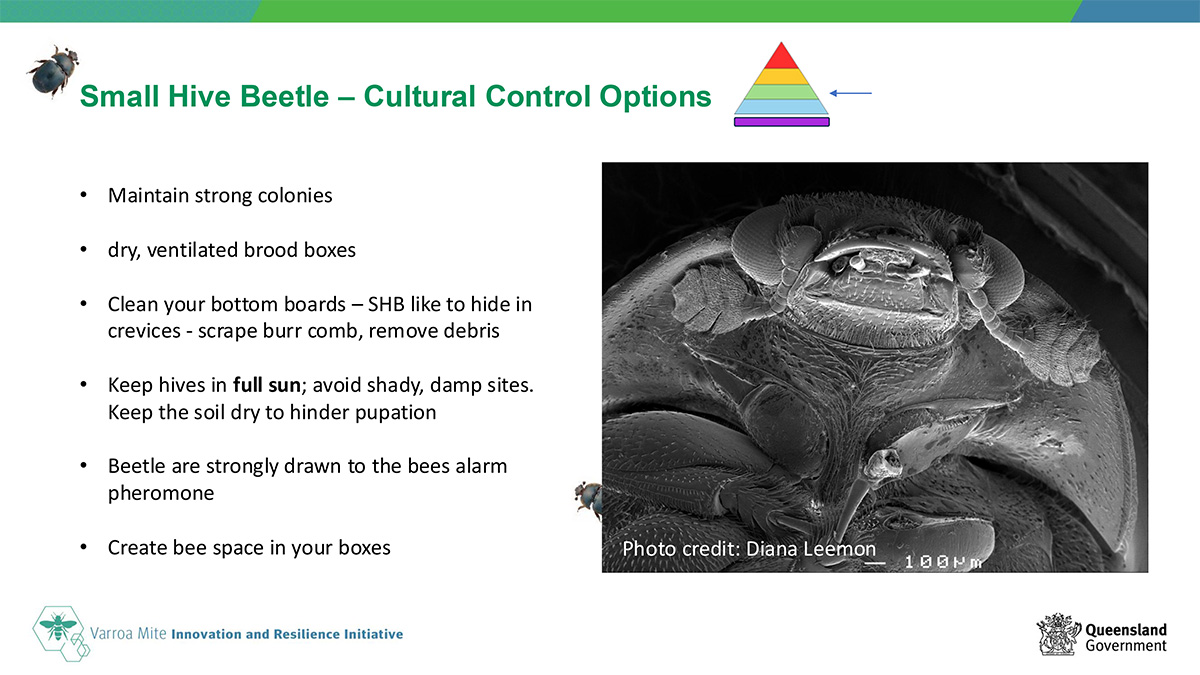
Cultural Control Options
- Maintain strong colonies
Strong, well-populated hives keep beetles under control. When bee numbers weaken, excess space creates unguarded areas where beetles quickly build up and slime. - Dry, well-ventilated brood boxes
SHB relies on warmth and humidity to reproduce effectively. Drier, better-ventilated hives disrupt the beetle life cycle. - Hive placement in full sun
Full sun keeps both the hive and surrounding soil drier, making conditions less favourable for beetles and reducing pupation success. - Minimise disturbance
Beetles respond quickly to hive disturbance. Carry out regular, necessary inspections, but avoid excessive inspections, particularly ahead of or during unsettled weather. - Manage internal bee space
Good bee space management helps bees control beetles by reducing the cracks and tight areas bees can’t reach. This includes spacing frames evenly so bees can patrol freely, ensuring pest treatments are installed correctly so beetles cannot shelter behind or under them, and regularly removing burr comb, and debris.
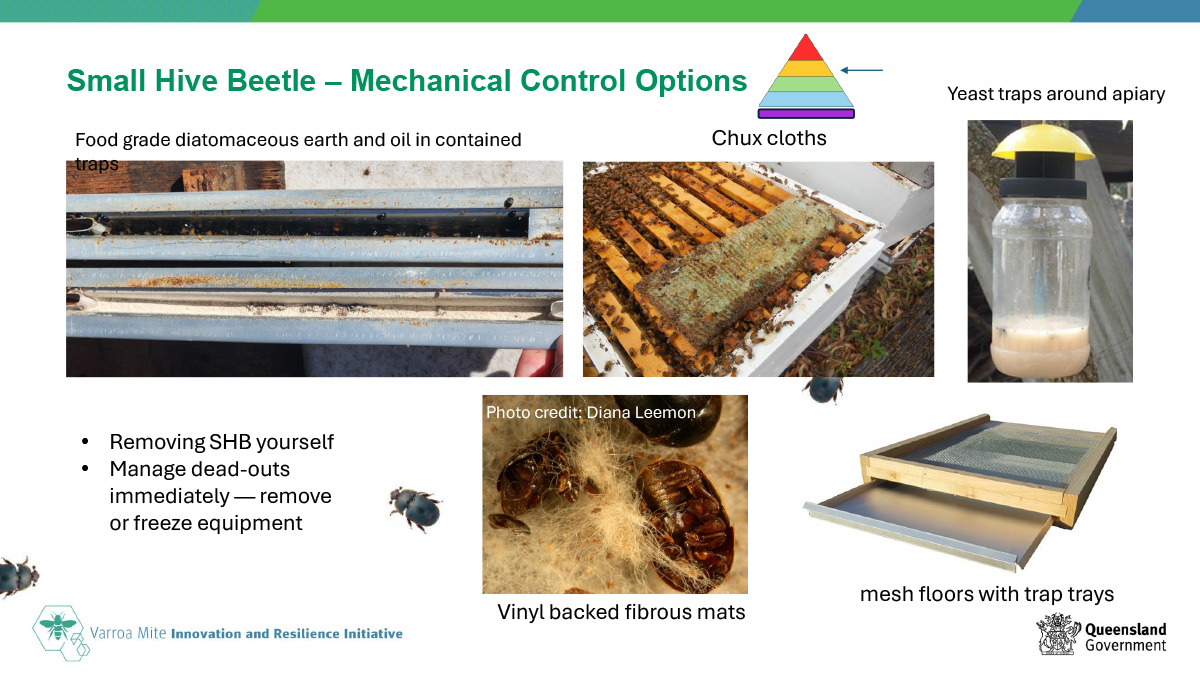
Mechanical Control Options:
- CHUX cloths or vinyl-backed fibrous mats
SHB have fine body hairs that become caught in the fibres of the fluffy material, restricting movement and trapping them.
- Food grade diatomaceous earth (DE) in contained traps
Works by damaging the SHB’s wax coating on its outer shell, leading to dehydration and death. In Queensland’s humidity DE clumps and loses effectiveness unless kept dry and replaced often.
- Vegetable oil in contained traps
Suspended between frames, SHB fall into trench traps, cannot escape, and drown
- Mesh floors with trap trays
SHB fall through the mesh into a tray containing DE or oil, where they are unable to escape.
- Yeast traps around apiary
SHB often surge into hives during Queensland’s tropical storms. Placing yeast traps around the apiary draws beetles to the trap scent, intercepting their attraction to the hive odour. Do not place traps too close to hives as this can draw SHB toward the colony. (Figure1)
- Reduce hive entrances
Adding a hive entrance reducer on the day of a storm helps bees guard the hive entrance more effectively when beetle surges happen.
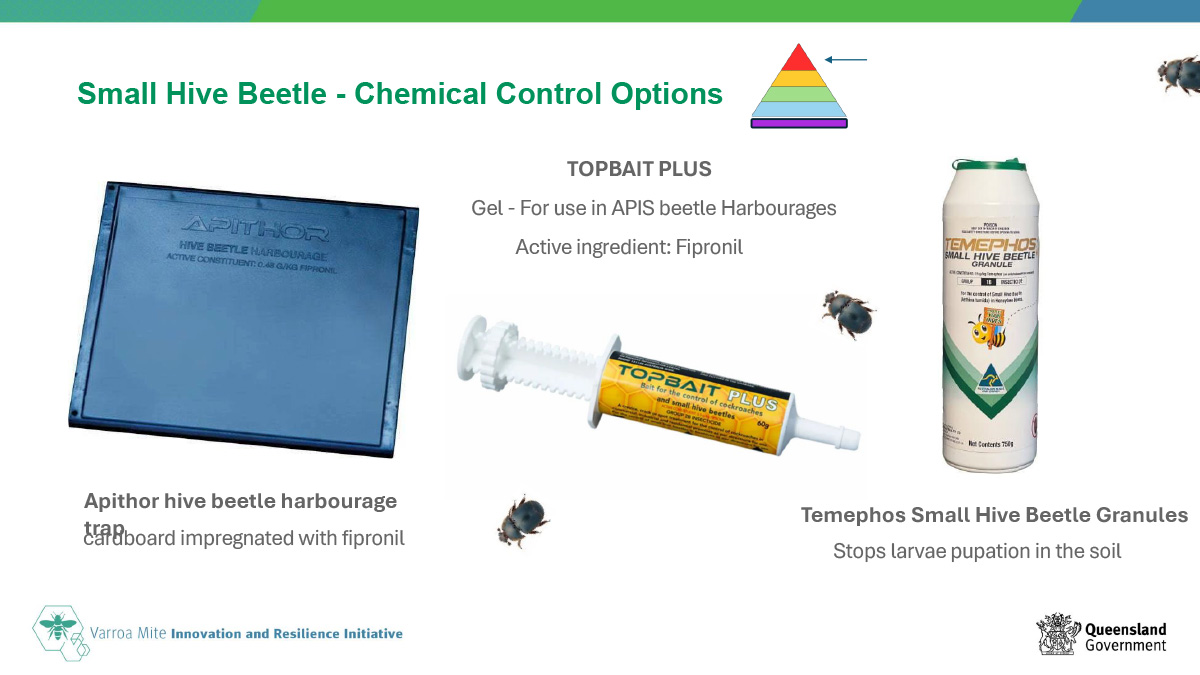
Chemical Control Options:
Where beetle pressure remains high despite strong cultural and mechanical controls, targeted chemical options may be required.
Always use chemical control products strictly in accordance with the manufacturer’s label instructions.
- Apithor Beetle Trap
A ready-to-use plastic trap containing a cardboard insert impregnated with fipronil.; SHB enter the trap to hide and die when exposed to it.
- TOPBAIT PLUS
A gel bait insecticide used in APIS beetle traps or harbourages. SHB enter to hide and are exposed to the gel, functioning similarly to Apithor but without a cardboard insert.
- Temephos Small Hive Beetle Granules
A soil-applied insecticide that targets small hive beetle larvae in the ground, preventing successful pupation and reducing the number of adult beetles emerging near hive.
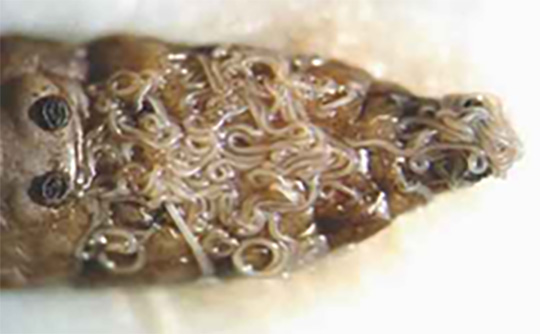
Nematodes infesting an SHB larva
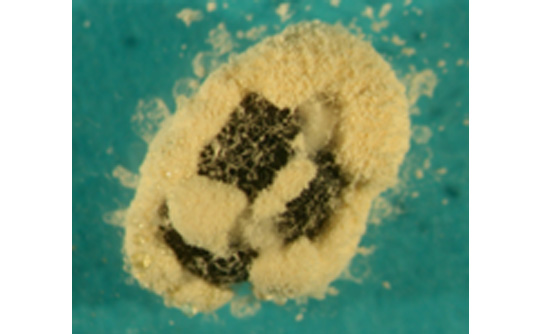
Fungus-infected small hive beetle
Potential Alternative Control Options:
- Entomopathogenic nematodes
Entomopathogenic nematodes can be applied to soil around hives to target small hive beetle wandering larvae. Laboratory and semi-field studies show promising results under warm, moist conditions, but field validation is still required (Aryal et al., 2025). - Entomopathogenic fungi
Laboratory and limited in-hive studies have shown Metarhizium and Beauveria species have potential to infect and kill small hive beetles. These options remain largely experimental and requires further development (Leemon & McMahon 2009)
When managed correctly using an integrated approach, Small Hive Beetle populations can often be reduced to manageable levels, helping colonies remain strong and productive while lowering the risk of significant beetle-related damage. To learn more about Small Hive Beetle, visit Small hive beetle « Bee Aware
References:
- Aryal, S., Katlav, A., House, C. M., Spooner-Hart, R. N., Duncan, M., Nielsen, U. N., Cook, J. M., & Riegler, M. (2025). Virulence and biocontrol potential of entomopathogenic nematodes against soil-dwelling stages of the small hive beetle under laboratory and semi-field conditions. Pest Management Science, 81(7), 4004–4015.
- Investigations on small hive beetle biology to develop better control options. Annand, N. (Author). 2011. Western Sydney University thesis: Master's thesis
- Leemon, D. M. and McMahon, J. (2009) Feasibility Study into In-Hive Fungal Bio-Control of Small Hive Beetle. Project Report. Rural Industries Research and Development Corporation.
- Plant Health Australia. Small hive beetle. Bee Aware. https://beeaware.org.au/pest/small-hive-beetle/
All photos credited to Diana Leemon.