
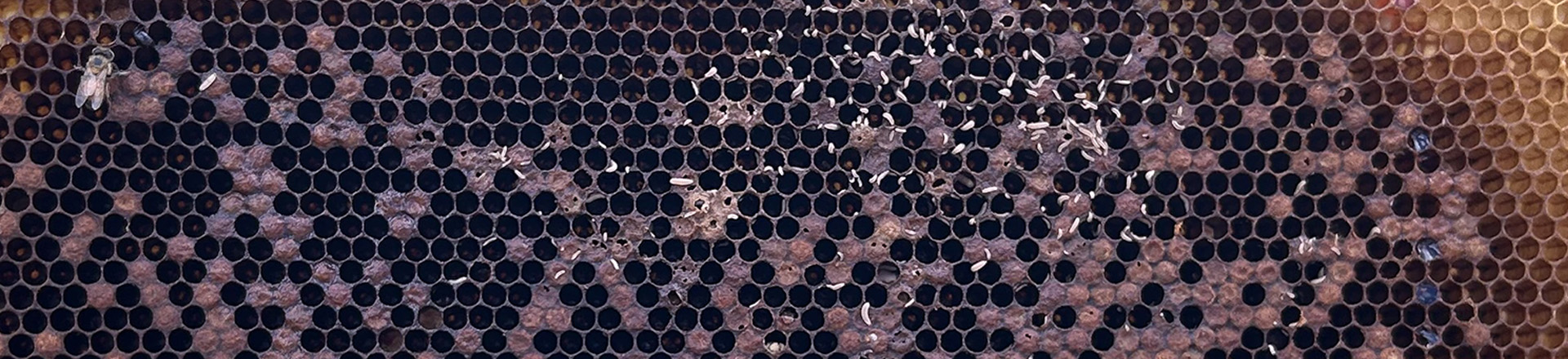
Image: With an SHB larvae infestation like this, the colony will slime out soon!
Be on the lookout for SHB (and AFB) over summer.
by Rod Bourke, Bee Biosecurity Officer DPIRD

As everything heats up over summer so too does the pressure from that versatile and pesky little bee pest called small hive beetle (SHB). SHB loves the warmer seasons and is delighted to come across any vulnerable beehive that it thinks can become a fantastic breeding opportunity for them. It can detect regular beehive odours (including alarm pheromone from recently worked, queen-less or hives under attack from robber bees, ants or other predators) at quite a distance. It can also detect odours from hives starting to slime, which become particularly attractive to any nearby SHB flying around. Being able to fly 10+ km in one night, they can sometimes seem to appear from nowhere and swamp one particular hive that stands out to them as being the evenings hot opportunity.
Some beekeepers hear those scary facts about SHB and think “what hope in hell do I have at stopping that”, so here are a few tips for the warm period until it starts getting really cold again (if it does ever get cold where your bees are).
1- Maintain strong and healthy colonies. A strong colony can often manage “resident SHB” numbers by assigning bees 24/7 to harass and corral them into propolis jails or corners of the hive. That action controls SHB unless you, the beekeeper ruin all their good work by causing chaos (opening the hive). Strong colonies often withstand an attempted SHB invasion which saves the colony from becoming a slime-out. On top of that, strong healthy colonies (often with a young queen) will always be your most productive ones too.
2-Always keep some SHB traps in your hives to help keep “resident SHB” numbers as low as possible. There are many different types, so it often helps to have a few different ones in places where you have seen SHB (often around a particular top bar, corner or other area where bees may have pushed them to). The more beetles you see the more traps you should be using, as one will not always be sufficient. Please note that weak hives will likely be unable to effectively corral or harass SHB, so traps will be less effective as the beetles don’t feel the necessity to hide as much. Downsizing that colony to a single or nuc can improve their SHB management success.
3-When you get those hot days consider how much invasive hive work (removing brood combs etc.) you really do need to perform on the colony, especially if your SHB numbers are high. Often when you open the hive you will see a bunch of beetle scramble from a place where the colony had corralled them, so once you release them and start disorganising the colony that gives beetles a great opportunity to lay eggs that the worker bees may not find and clean up. Many colonies that were opened on “the wrong day” have absconded 4-5 days later as the colony had become slimed.
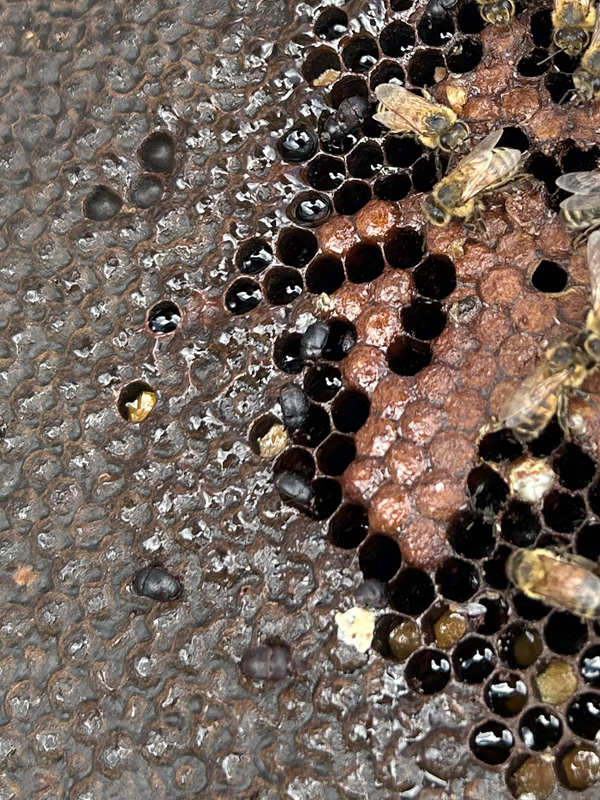
Image: Weak hives and unhealthy brood are very susceptible to attack by SHB.
4-If your hive does have high beetle numbers then often getting those numbers down becomes the most critical hive management job, before some other things that you may like to do. To assist with that you probably want to gently remove most of the extra space and capped honey from the colony (without disorganising the hive too much), add more traps and tighten them up so that there are less exposed combs and areas that beetles can remain in without harassment by bees. Adding Apithor can seem an extreme measure to some (because it contains Fipronil), but it is a tried and tested device that can effectively manage SHB, so when things become extreme then you should definitely consider using the big guns. Along the coast many beekeepers almost always use Apithor as SHB are often very abundant.
5-Having lots of vulnerable unprotected honey (especially with some cells of pollen in it) is a disaster waiting to happen on a weak colony. Always manage weak colonies (and find the reason why) so that they regain their strength quickly. If your hive swarms, then it is also very important to remove all that extra exposed and unprotected space, or they may be taken out almost instantly by SHB.
6-Ventilated bottom boards with a tray underneath them containing oil, Diatomaceous earth or hydrated lime, can be a very effective method of killing SHB, as once down in there they generally don’t come back out. Their price, design and overall effectiveness vary considerably, but many that use them absolutely love them. Some points to remember are that you do need to open and maintain the tray often, otherwise it may go from killing beetles to allowing them to breed up in all the pollen and other detritus that falls through. You may need to remove the entire base at least once per season to clean it thoroughly to remove propolis that the bees have built to block the mesh up, otherwise it will stop working. An interesting exercise is to clean out and replenish the tray before you work the hive, then look at how many beetles (and possibly varroa) are in it after you have finished working the hive…often it can be higher numbers than you may have imagined.
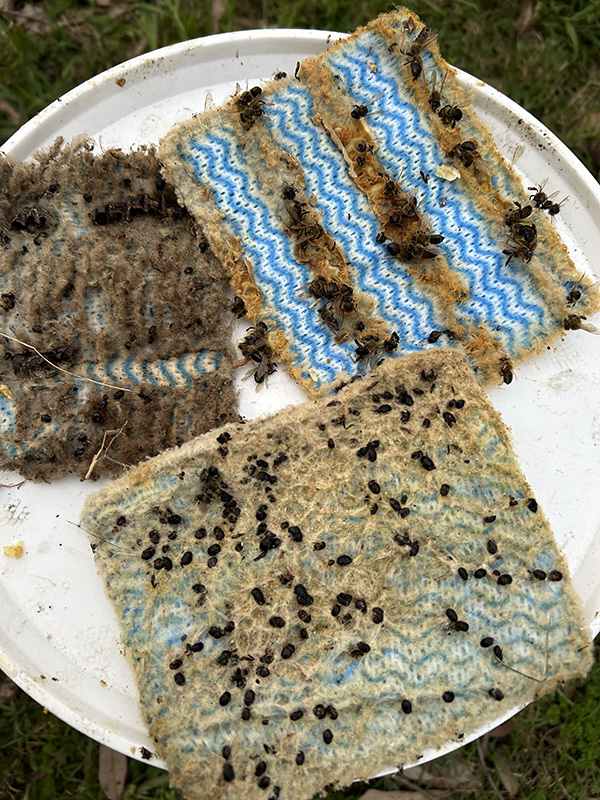
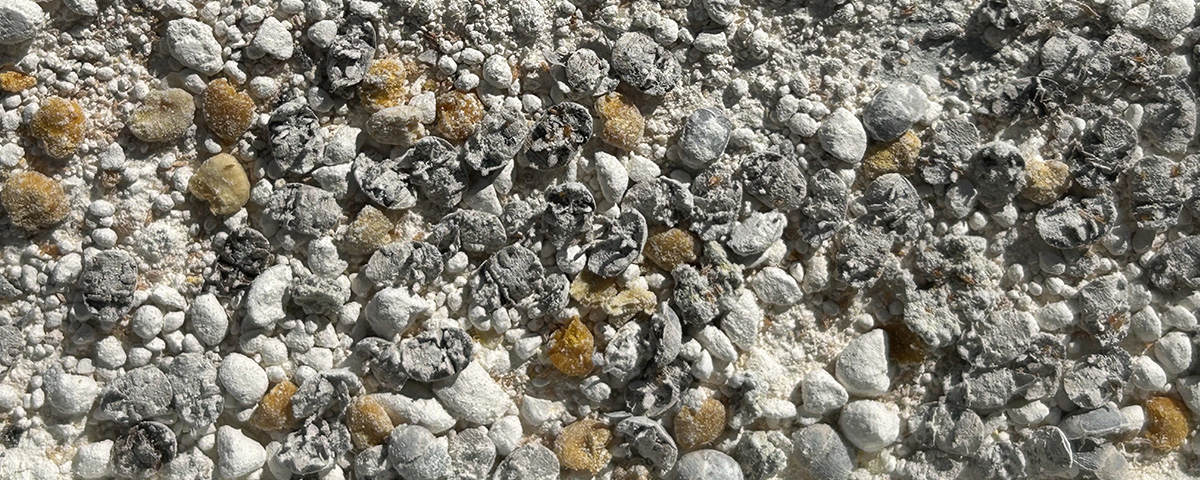
Image: Dead Small Hive Beetle in a catch tray with lime.
7-Don’t let SHB “hold you hostage” over summer. There are times when you may feel powerless to do anything to your hive due to the astronomical SHB numbers in it, but with a bit of patience and maybe having to spend some dollars on a new mesh base and extra traps you can eventually turn the tide against SHB. When it comes to SHB, prevention is always better than a cure, so always consider how important any hive job is and where it fits into your integrated pest management program for controlling your SHB.
A really important aspect of that goes right back to point 1-always keeping a strong and healthy colony. Always manage your varroa mite numbers to keep your colony healthy. High mite levels lead to increased presence of all our endemic bee viruses, and these can really bring down the hive health rating, as well as trend up the effects of any nosema, European foulbrood or chalkbrood that is already sitting within the colony. Ensure your colony is getting good nutrition to breed healthy bees and regularly check your hive for American foulbrood (AFB). Many colonies that have slimed out from SHB actually had an underlying and increasing AFB infection, so the beetles just took advantage of that unhealthy colony and turned it into a mass breeding event (we are talking many thousands of larvae per brood frame). More recently, high varroa numbers have also caused significant hive losses due to SHB attack.
Whenever you have a slimed colony and cannot 100% confirm that AFB was not the underlying cause of the hive weakening, (because you had recently done a brood inspection and it was clean) then you should strongly consider sterilization of any retained hive products before reusing.
Cleaning up slime-outs is a real chore. But, if your hive does slime out then you, as the beekeeper have a General Biosecurity Duty to control, eliminate and manage the SHB (adults and larvae) that have bred up within your colony. Please don’t just walk away and let them complete their life cycle, as that will just create more SHB problems for every beekeeper. For me, the best option is double bagging each box and components in really heavy-duty bags (not cheap flimsy ones), sealing them up (as the larvae are very good at escaping) and getting them into a freezer to kill everything. If you don’t have a spare chest freezer lying around (every beekeeper should have one) then you have 2 options, which are to either buy one or use someone else’s. Freezing kills the SHB, and very importantly you can store it there until such time as you can face cleaning it up.
Needless to say, though, if you have ever had a slime-out then you will already know that prevention is far better, so ensure you take whatever steps you can and the right decisions so that you don’t inadvertently cause your hives to slime this summer or autumn.