
Biosecurity Update: Emerging Risks to Australian Beekeeping
by Doug Purdie
NSW DPIRD Bee Biosecurity Officer

In the previous edition, Mike Allerton provided an insightful overview of two significant threats facing the Australian beekeeping industry. While it is important to avoid unnecessary alarm, these risks are genuine and warrant careful consideration.
The increasing movement of people and goods presents ongoing biosecurity challenges. For example, cruise ships travelling from New Zealand to Sydney in less than 24 hours create a pathway for pests such as the yellow legged hornet or bumble bees to enter Australia. In addition, Tropilaelaps mites are established in several South Pacific nations, some of which have previously been linked to incursions, including Apis cerana in Far North Queensland.
At Apimondia last year, both the yellow legged hornet and Tropilaelaps mite were the focus of several presentations, reinforcing concerns about their potential impact and highlighting the relevance of these risks to Australia.
Surveillance Activities in NSW
This global context has informed the development and refinement of surveillance programs in New South Wales. Recent challenges, including the emergence of treatment-resistant Varroa mites, demonstrate how rapidly biosecurity pressures can escalate. A single incursion has the potential to significantly impact both industry productivity and confidence.
The NSW Department of Primary Industries and Regional Development operates two primary surveillance programs for exotic bee pests:
- National Bee Pest Surveillance Program: Sentinel hives located at the ports of Newcastle, Botany, and Wollongong, recognised as high risk points of entry.
- Early Detection Network: Sentinel hive placements along major transport corridors or aggregation sites.
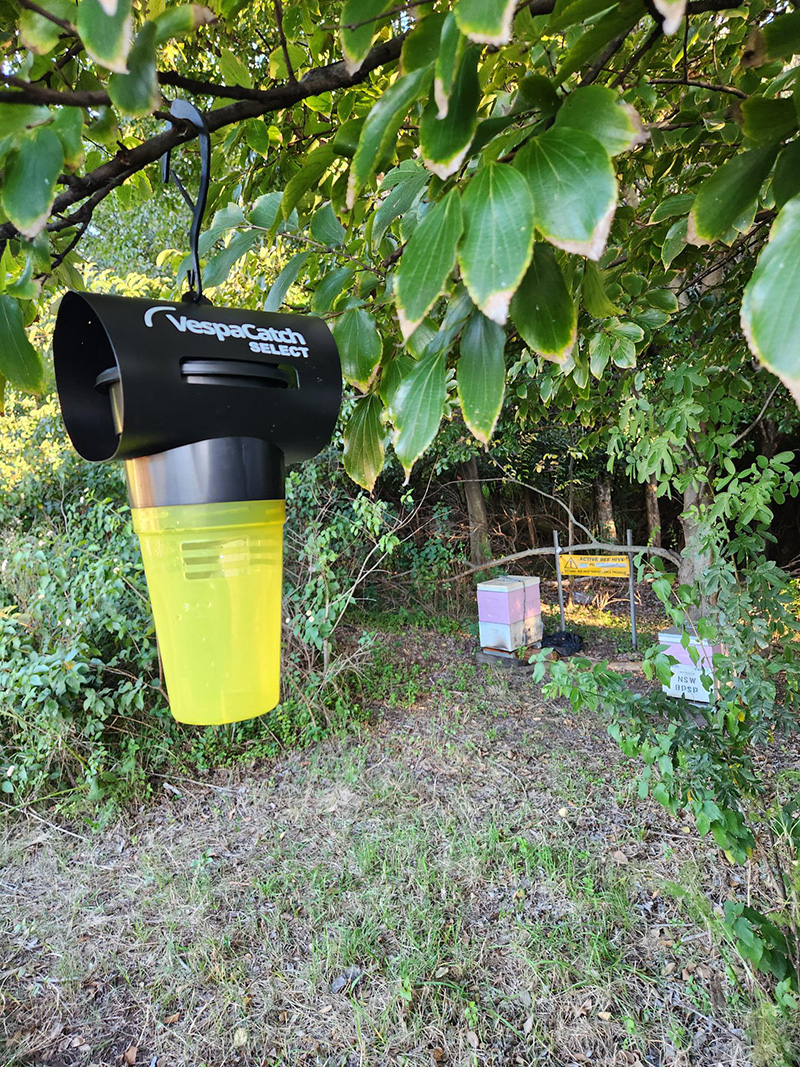
These programs are designed to detect exotic mites such as tracheal mites and Tropilaelaps, as well as pathogens including deformed wing virus (DWV). In 2026, additional surveillance measures are being implemented, including the establishment of bumble bee monitoring points and the rollout of a targeted network of yellow legged hornet traps.
Practical Actions for Beekeepers
Beekeepers play a vital role in supporting early detection efforts. If unusual insects or hive activity are observed:
- Take a photograph of the suspect insect or hive issue
- Submit the information via email to biosecurity@dpird.nsw.gov.au
Submissions will be assessed by entomologists, and Bee Biosecurity Officers are available to provide advice and support.
Effective biosecurity relies on collective vigilance. Early detection remains the most important defence against exotic pest incursions, and the contribution of beekeepers is critical to protecting the health and sustainability of the industry.