
Honey Testing: A message from EMAI Laboratory
At Elizabeth Macarthur Agricultural Institute (EMAI) our laboratories play an important role in monitoring and protecting NSW and Australia’s agricultural industries from diseases and pests. We are part of NSW Department of Primary Industries and regional Development (DPIRD) and as part of that one important role is bee disease testing and monitoring.
All AFB honey testing for NSW DPIRD occurs in the Bacteriology Laboratory. We are a small team who have been trained in Honey culture for AFB and in the microscopic identification of AFB, EFB, Nosema and Chalkbrood.
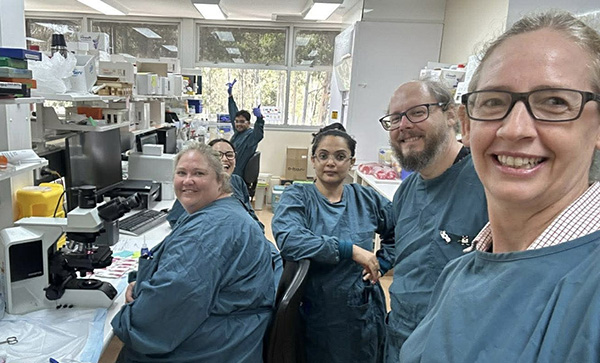
Bacteriology Team at EMAI 2026
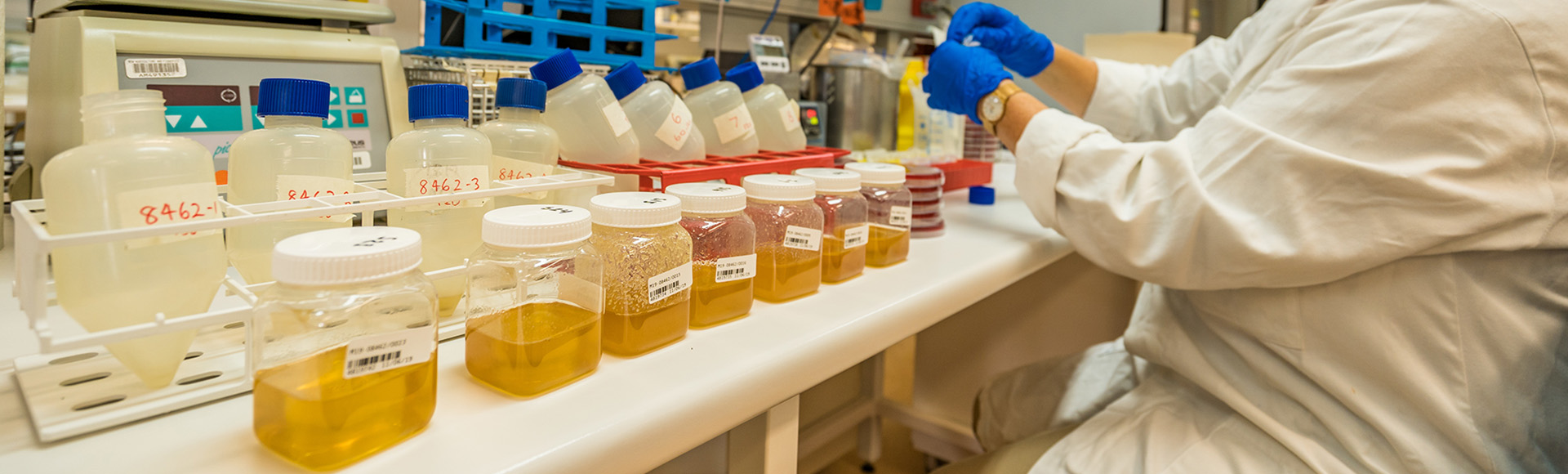
Honey testing not only benefits individual beekeepers but the entire industry, not to mention the bees. And from a Lab perspective it is one of our favourite tests. Part of our testing heats the honey, before spinning it, to separate the Paenibacillus larvae (AFB) spores from the honey. This fills our Lab with the delightful smell of warm honey, a delightful and welcome change from our predominant smelly workload which includes diagnostic and screening test on livestock for bacterial infections. While we don’t offer pesticide testing at EMAI we do have a laboratory running virus detection in bees and mites, as well as researchers working on Varroa mites and resistance to treatment.
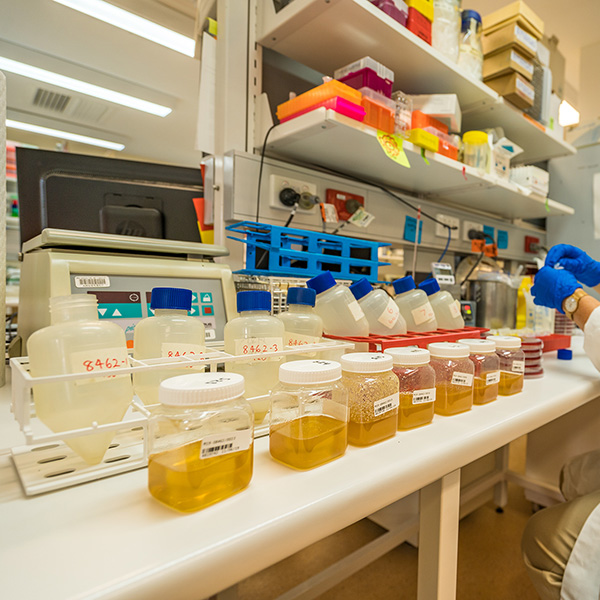
Honey test set up in the laboratory
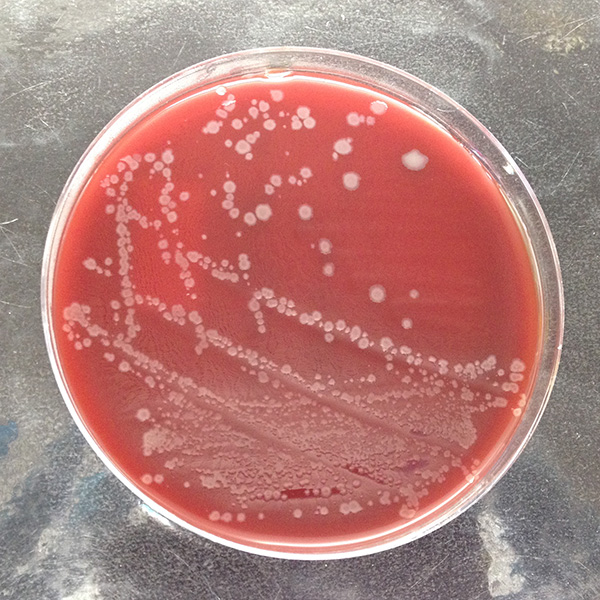
AFB growing on our Agar plates
When honey is sent to us, we heat the honey till it is just runny, then mix it with a solution to help thin it down. We spin that mixture at high speed until any AFB spores settle at the bottom. We then take the bottom 1ml, heat that again to kill off other bacteria, and place that onto plates that have a gel like base designed to encourage the growth of Paenibacillus larvae(the bacteria that causes AFB). This is incubated for a number of days and then we analyse the plate for growth to be identified and confirmed as AFB. The Honey culture test gives an indication of the likelihood that one of the hives that homey comes from has AFB. We do not diagnose AFB from honey culture. For this the smear test is required.
For AFB and EFB diagnosis. When smears are sent to the lab for disease confirmation we dye them to highlight any of the potential organisms associated with AFB and EFB. It can take a number of years to learn how to identify and differentiate the bacterial spore shapes and sizes, and we know how important this is and the impact this work has.
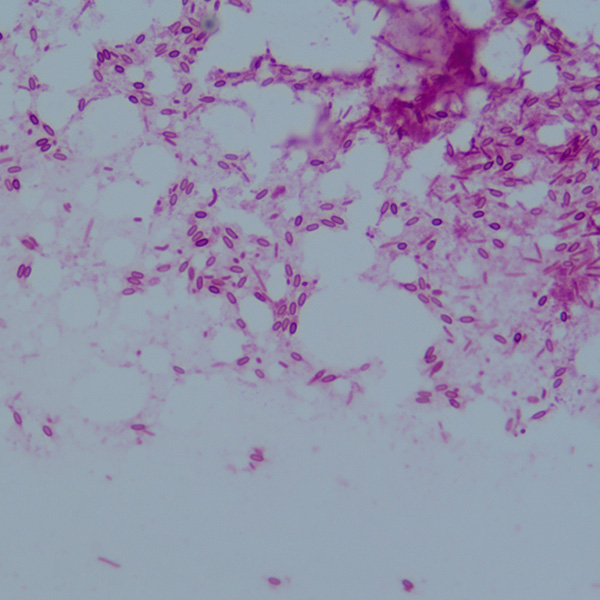
EFB through the microscope
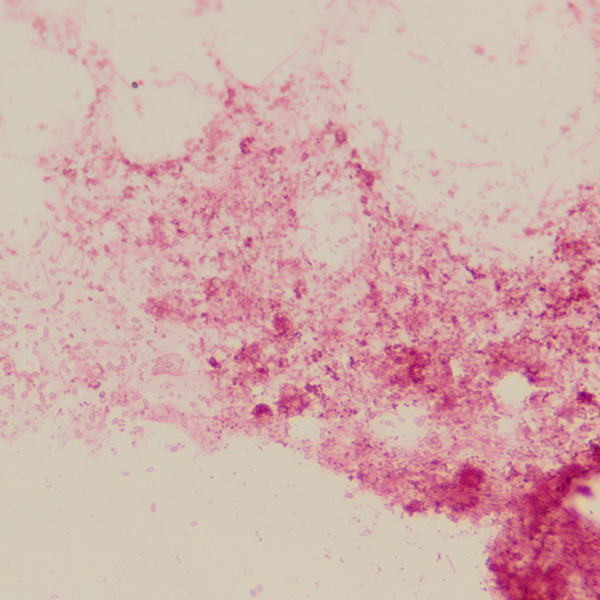
EFB through the microscope
Since 2019, DPI now DPIRD has been running the AFB Minimisation strategy (AFBMS). which aims to reduce the impact of AFB on the NSW beekeeping industry and plant industries that benefit from pollination.
Honey samples for the AFBMS are provided by honey packers and just as importantly amateur beekeepers located throughout NSW. The samples from amateur beekeepers are an important part of this study because it gives a diverse range of samples from all over NSW.
The testing for the AFBMS is completely anonymous and free, and DPIRD does not receive identifying information on those beekeepers who submit samples for the AFB minimisation strategy. The testing is designed to measure whether NSW government and industry strategies to reduce the incidence of AFB in NSW are effective. A report is prepared annually to the industry each year tracking AFB rates. Individual results are returned to the beekeeper through the Amateur Beekeepers Association (ABA) for personal information and records.
We would love to test your honey, please talk with the Amateur Beekeepers association Biosecurity officer to be a part of this important work.
Bee a part of Varroa research
Just around the corner in another laboratory at EMAI research is being conducted on Varroa mites. The team is currently conducting genetic tests on varroa mites to assess resistance to treatment, including Bayvarol, and is looking for more samples to test.
If you think you are seeing resistance or having mixed results with treatment please get in touch with the NSW DPIRD at bee.biosecurity@dpird.nsw.gov.au or speak with the ABA biosecurity officer who can help with sending your varroa mites in for testing.
Other contacts include Daniel Martin – NSW DPIRD Bee Biosecurity Officer 0475 947 516, daniel.martin@dpird.nsw.gov.au
Harvey Howard – NSW DPIRD Bee Biosecurity Officer 0475 627 846, harvey.howard@dpird.nsw.gov.au
We hope to see your samples soon
EMAI Bee team