
Tell us about your Handy Hive Hints

Fiona Fernie
TAB Editor
As we come into winter time, many difficulties are facing beekeepers, not least being miticide resistant varroa. Colonies are facing an uphill struggle and are sometimes overwhelmed by varroa, making treatment less effective. This is the definition of Varroosis. We need research into new treatments and methods of controlling varroa reproduction. The Amateur Beekeeper wants to publish all this new science and we thank the academics for sending us material, to publish.
We hope that the magazine helps to keep you up-to-date with any new ideas and treatments. It would help us all if experienced beekeepers would send in their “Handy Hive Hints” We would run these as short paragraphs with a photograph, describing a useful idea that has been of help in some way.
Our very first Handy Hive Hint is from John Wooding.
Handy Hive Hint Number 1
by John Wooding
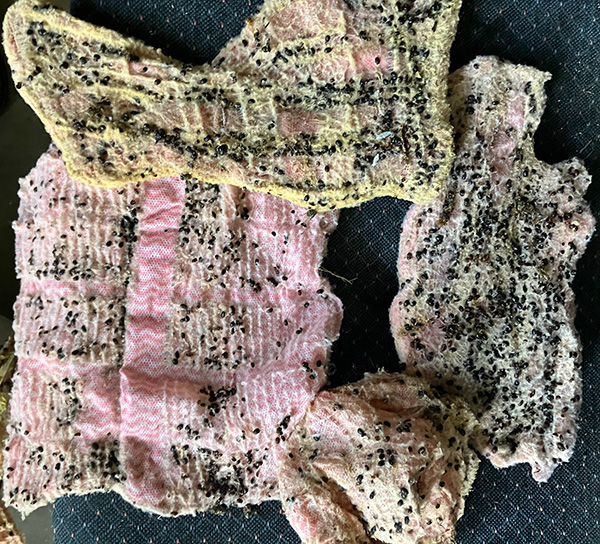
Small Hive Beetle numbers have exploded across parts of the Northern Rivers this season and, while none of us are particularly excited about placing synthetic materials into a hive, sometimes keeping colonies alive has to come first. The photo below shows Chux-style cloths removed from a hive after less than a month sitting above the super — and the SHB load speaks for itself. One trick we’ve found useful during heavy beetle pressure is to fold the cloths rather than laying them flat. This seems to reduce the tendency for bees to drag and remove them from the hive. When conditions become extreme, we will often place one above each super to increase trapping area and help colonies stay ahead of the pressure.
Photo provided by John Bull, Casino.
There seems to be two camps. Chux users and Chux avoiders. Tell us your experiences with SHB and Chux. If you are of the Chux Avoider group perhaps you have an alternative method of SHB control to share. - Editor
There are many experienced beekeepers in our membership and it would be wonderful if they would share their Handy Hive Hints. Little gems of help when you most need it! Please let me have your tips – you may remain anonymous, if you wish. All contributions greatly appreciated and the first is in this issue.
We are seeking articles on forage crops and whether they are good for nectar, pollen and/or both. As one of our skilled members keeps saying to me, look up and around – what are your bees foraging on? Trying to keep our bees well fed and healthy is so important in the varroa age.
It’s membership renewal time, again. Your magazine is all part of the benefits of belonging to the ABA. We reach out to the Bee Biosecurity officers to get their input on all matters concerning the health of our honey bees, and their contributions are warmly welcomed. We thank our own Biosecurity Officer who writes with knowledge and passion about all aspects of good beekeeping husbandry.
We hope you will all take this opportunity to renew your ABA membership on or after 1st June. We would welcome stories from our clubs, along with notifications of any courses or field days. Or, just share your experiences! Beekeepers love stories from other beekeepers.