
A Scottish Perspective on Why Swarm Control is Important!

by Fiona Fernie TAB Editor
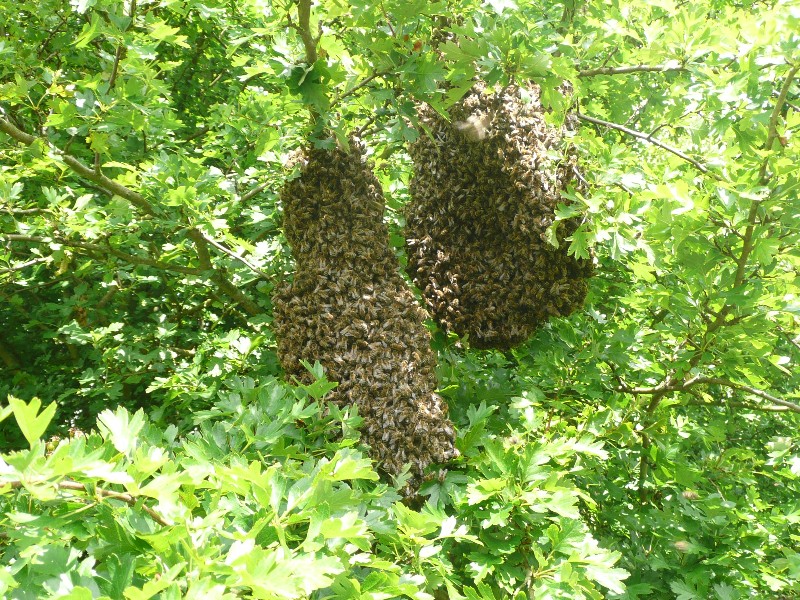
There are interesting stories from NSW, this year, regarding unusual swarming behaviour from really strong colonies. Prime swarms have left numerous hives and cast swarms have followed. Some hives have had multiple prime swarms in very short succession. Requeened colonies have swarmed. Frames with multiple queen cells have been observed. I thought it may be of value for local beekeepers to have a perspective on how beekeepers in the northern hemisphere approach swarm management.
There is a saying in the Northern hemisphere:
A swarm in May, is worth a load of hay
A swarm in June, is worth a silver spoon
A swarm in July, is not worth a fly
This medieval saying sums up the value of swarms to a beekeeper, in the colder regions of the Northern hemisphere. If a swarm is early enough in the year, then the bees have sufficient resources to make up the colony strength before winter. It is also customary to feed a swarm a proprietary sugar syrup, with added enzymes, to aid comb building and accelerate reproduction of workers
So, why is swarm control important? In the short foraging season, in Scotland, for example, if you lose a swarm, you lose your honey crop for that year. There is only sufficient time for the queen to emerge, to go on mating flights and to start laying. The queen can concentrate on replacing the swarmed bees and the workers concentrate on replenishing the stores. Any bad weather during the foraging season will set the colony back and you may have to unite two colonies, to give them enough strength, to last through the long winter months.
For colder climes with a short foraging season, taking swarm management action early will save your colony strength and produce a strong colony for over-wintering. This is considered the most important element of swarm control.
Secondly in importance is swarm prevention as part of varroa control. Although a brood break is beneficial when reducing varroa numbers, allowing a swarm to depart to colonise another location, is probably replenishing a varroa mite bomb, that will then re-infect your managed colonies. In Australia re-infestation levels are reducing as the unmanaged colonies die out. You will notice that treatment intervals increase as the feral colonies die out or are slimed out, with small hive beetle. Either way, it is a welcome trend that wild honey bee populations are reducing, from the varroa perspective.
And, thirdly, it is vital to the agricultural economy, that more colonies of managed bees are available for pollination. This means full production colonies are required to successfully pollinate the various fruit and vegetable crops. Recreational beekeepers are a valuable resource to complement commercial beekeepers as paid pollinators to set various fruits, nuts and vegetables. Even small numbers of hives can make a huge difference when pollinating smaller crops or orchards.
Australia had a deficit of honey bees for pollination, even before varroa. Now that varroa has decimated the unmanaged honey bee colonies, the need is greater still for full production colonies to set the various growers’ crops. This is an inter-dependent system between beekeepers and growers. Allowing the loss of colonies as they swarm, is wasteful of a valuable resource, a resource that is already scarce and under-valued.
Varroa management is a year-round activity, as is swarm control. Neglect either and you will lose your bees. It is far more cost effective to control swarms and varroa, than to have to replace full production colonies.
I have told my beekeeping friends in Scotland, we take honey off all year round in Queensland. Imagine their envy of our resources and climate!
PS. I was a beekeeper when Varroa first arrived in Scotland in 1996. We did not have the strange swarm behaviour we are seeing in NSW over the last 12 months.
Fiona Fernie