To Swarm or Not to Swarm, that is the Question

Biosecurity Buzz
with Mike Allerton
ABA Biosecurity Officer
Letting colonies swarm in Australia’s varroa era: A helpful reset or future headache?
Before varroa, Australian beekeepers could treat swarming as mostly a productivity issue, lost honey, annoyed neighbours, and a smaller workforce for pollination. Now that we’re transitioning to long-term management nationally, the question changes. In a varroa landscape, swarming can look like a “free” brood break and a genetic pressure valve, but it can also be a mechanism that re-seeds mites and viruses into places you thought had settled down.
The upside, swarming as a mite brake (for a while)
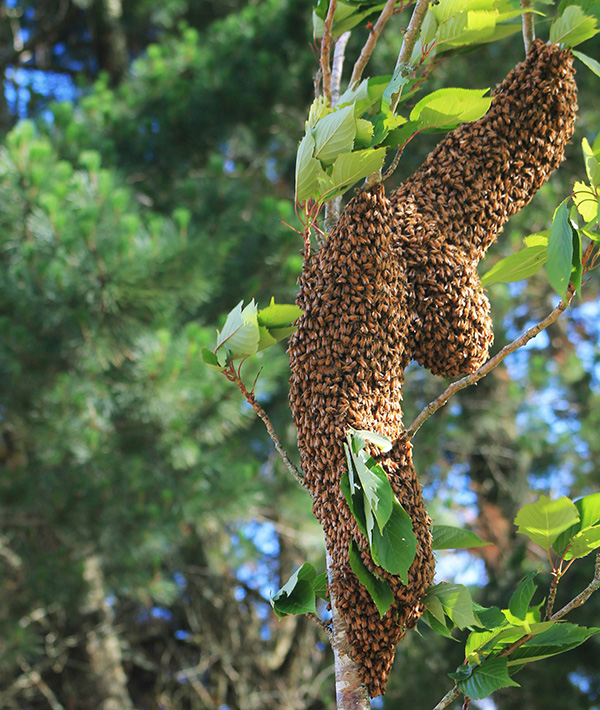
A prime swarm usually leaves with the old queen and a big cohort of adult bees. Adult bees can carry phoretic mites, but the swarm leaves brood behind, and the new colony has a period with little or no sealed brood. That broodless window matters because varroa reproduces in brood cells, so a break can slow the growth curve of the mite population. This is the same logic behind many management tactics, induced brood breaks, caging queens, or splits, just done the bees’ way.
There’s also a selection argument. In regions where unmanaged and feral colonies have already crashed and no longer provide constant reinfestation pressure, beekeepers sometimes notice management feels “easier”. Part of that is simply fewer nearby colonies shedding mites, and fewer chronic, half-dead hives acting as reservoirs. In that setting, swarming can temporarily reduce mite pressure in the parent colony and, if you catch and manage the swarm, it can be a useful reset.
The downside, escaped swarms can become tomorrow’s “mite bombs”
Here’s the uncomfortable bit. A swarm that escapes your control is not “gone”, it’s an unmanaged colony candidate. If it establishes in a tree hollow, wall cavity, or old shed, it can run for months, sometimes a season or two, and then fall off a cliff once mites and associated viruses build up. When colonies are heavily infested, drifting and robbing spread mites fast, which is the core “mite bomb” dynamic, a collapsing hive becomes a donor of mites to nearby colonies.
So yes, in principle, escaped swarms can contribute to a secondary wave of reinfestation, especially once they reach the “collapse” stage and surrounding colonies start robbing them out. The risk is highest when:
- there are enough managed colonies within flight range to rob or drift,
- the swarm establishes and survives long enough to build brood and mite numbers,
- local beekeepers relax monitoring because “the main wave has passed”.
If feral density really has dropped hard in your district, each escaped swarm matters more, because it’s one of the few remaining chances for a new unmanaged reservoir to reappear.
Small hive beetle, fewer ferals helps, swarms can rebuild habitat
During the peak varroa infestation stage, small hive beetle (SHB) cashed in and exploded in number. Now with fewer unmanaged colonies, it can mean fewer weak, slimy hives where SHB can thrive. But swarms setting up in cavities can recreate those unmanaged “incubators”, particularly in warm, humid areas where SHB pressure is already high. Swarms that establish in poor cavities, with limited defensible space and no beekeeper intervention, can slide into the kind of stressed condition that both varroa and SHB exploit.
Drone shortage and mating quality, plausible, but not guaranteed
Heavy colony losses can reduce drone output at the landscape level. Colonies regulate drone production tightly because drones are resource-expensive, and stressed colonies tend to cut drone rearing and evict drones sooner.
Does that automatically mean poor mating, more supersedure, and more failing queens? It can contribute, but it’s not a simple straight line. Queens mate with many drones across multiple flights, and drone congregation areas pull drones from a surprisingly broad radius, so local shortages can be buffered if there are healthy apiaries around. Still, parasites and disease pressures are strongly linked with queen problems, and varroa-associated stress is part of that broader picture.
The practical takeaway
If you want the benefits of swarming without the landscape costs, the hard truth is you don’t “allow swarming”, you manage swarming.
- If you’re going to let colonies raise queens or create brood breaks, do it as controlled splits and nucs you can monitor and treat.
- Treat every escaped swarm as a potential future reinfestation source, yours or someone else’s.
- In “post-wave” areas, don’t get complacent, lower background pressure is exactly when one unmanaged survivor can stand out as the next problem.
- Keep an eye on queen performance, not just mite counts, because poor mating and supersedure can be an early warning signal that the wider drone and disease environment is changing.
AFB Minimisation Project
The latest round of tests came back negative for the presence of AFB spores. Good news indeed for our fellow beekeepers in the Eurobodalla club.
I still have kits available for clubs. Biosecurity Officers email your request to biosecurity@beekeepers.asn.au and I’ll send a kit with sample jars, labels and return post. The free anonymous honey test is for NSW club members only, but interstate member’s tests will be paid by the ABA.
Own Use Exemption
As I mentioned in Biosecurity Buzz in the last issue of TAB, the Hon Julie Collins MP Minister for Agriculture, Fisheries and Forestry is obliged to respond to the parliamentary petition. So far, there is still no response, but I suppose the government is preoccupied by recent events at Bondi. I’ll publish her response in an upcoming issue of TAB.
While the ABA and I don’t condone illegal practices, it is commonly known that oxalic acid (OA) is likely the most popular treatment option in use. Millions of OA strips have been used in hives all over NSW and now in other states.
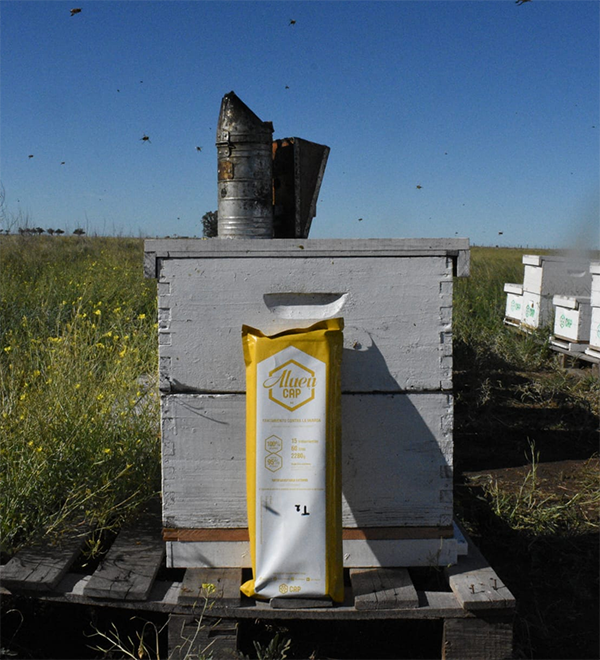
Many beekeepers I’ve spoken with, do not want to use synthetic chemicals in their hives. With that decision, legal choice for treatment is restricted. Chemical options include only FormicPro, Apiguard, Api-bioxal and now Aluen CAP. There are other options in the world that may never see the legal light of day in Australia. Why? We are a tiny market, and registration is slow and expensive.
The “Own Use Exemption” clause would make every organic option legal. It would make all those beekeepers currently breaking the law, law abiding citizens. After all, they’re only trying everything they can to keep their bees healthy without going broke in the process.
Aluen CAP is now allowed.
I’ve written elsewhere about the long overdue emergency permit for Aluen CAP. The APVMA initially responded with a “there’s no longer an emergency” answer, but sense has finally prevailed. We now have another legal oxalic acid option.
I checked with the Australian distributor, Lyson Australia for availability and pricing. Stocks are expected in March with an estimated cost of treatment per hive of $8.50 for 42 days. Full registration is expected around May 2026. Local trials are underway to support approval for multiple treatments per year. Further information and pre-orders for the expected March arrival can be found at https://capproducts.com.au/.
Normally registrations are funded by the manufacturer, but as stated earlier, the market in Australia is too small to outlay the high cost. I give a shout out here to the folks of family run, Lyson Australia who have invested a great deal of personal money, time and effort to bring us a proven organic alternative.
Until next time.
Mike Allerton
ABA Biosecurity Officer