
Cumberland Beekeepers
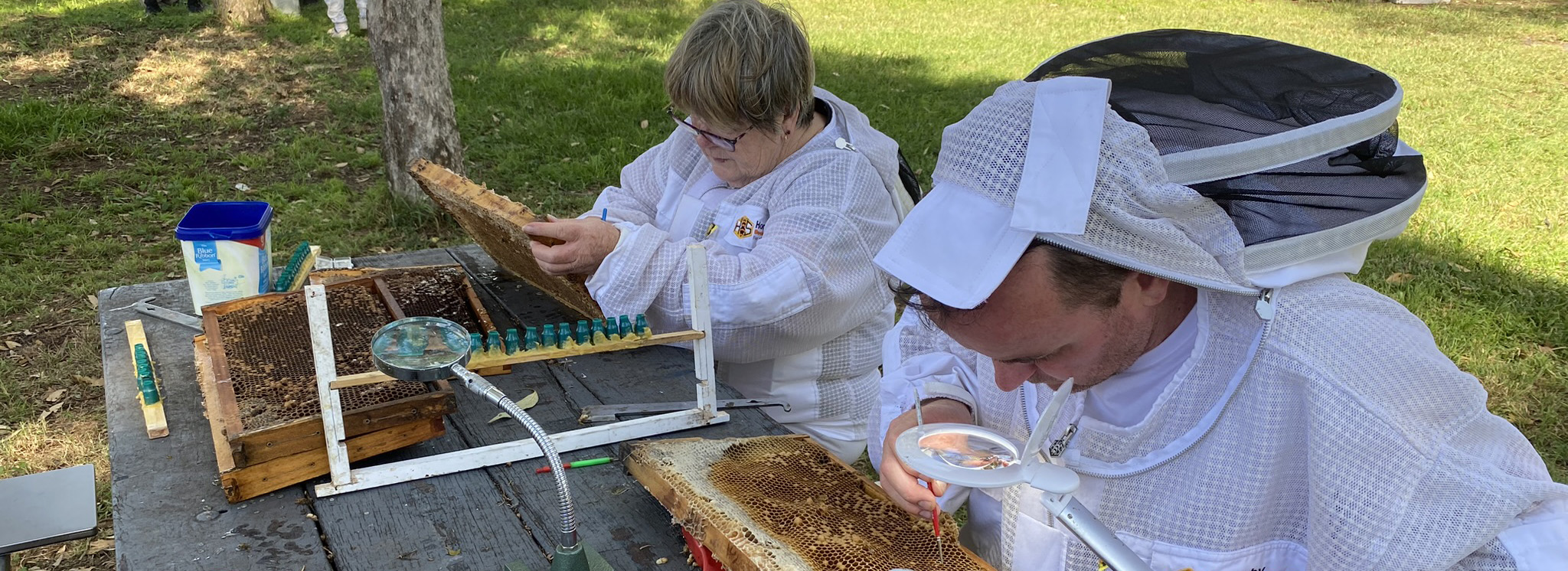
Current holders of the Bruce White Award
By Fiona Stroak
Cumberland President
Tucked away in Western Sydney, the Cumberland Amateur Beekeepers is a young club with a surprisingly resilient history. Formed just prior to COVID, the branch began its life, not around a shared hive stand, but around screens. For the first year or two, members met monthly via Zoom, talking bees from their lounge rooms while the world shut down around them. Those early days were quiet, a few new members, and plenty of uncertainty, but they laid the foundations for a friendly, supportive club that has since hit its stride.
Today, the club meets in person at Chifley College Bidwill Campus on the first Tuesday of every month at 7:00 pm, with a follow-up field day in the school apiary the following Sunday. If that Sunday happens to fall on a public holiday or a family day such as Mother’s Day or Father’s Day, the field day simply shifts to the following weekend. The rhythm suits many members, who enjoy the combination of a relaxed evening meeting followed by hands-on work at the hives.
The apiary itself is shared between the school and the club. Typically, there are between six and ten club hives on site, alongside the school’s own colonies. Club members help maintain the school hives during the holidays, making sure the bees are well cared for when students and staff are off-campus. It is a practical partnership: the club gains a well-located teaching apiary, and the school gains experienced volunteers and a living resource for its agriculture and science programs.
Like many NSW beekeepers, Cumberland members felt the first wave of varroa very keenly. The early seasons were a crash course in pest surveillance, hive management and biosecurity. The school has since invested in a Varroa Controller, and the club has been working to integrate its use into routine hive management. Meetings and field days now regularly include discussions about monitoring, record-keeping and how to combine newer tools and management with established practices.
Education sits at the heart of the branch’s purpose. The club aims to provide training and support not just for its own members, but also for the wider community. Several courses are run throughout the year, advertised via the club’s Facebook page and through Humanitix. They are open to anyone with an interest in bees, from absolute beginners to experienced backyard beekeepers wanting to hone their skills. Members keep both European honey bees and Australian native Tetragonula carbonaria, so there is usually someone on hand to talk bees, boxes, splits and honey for both species.
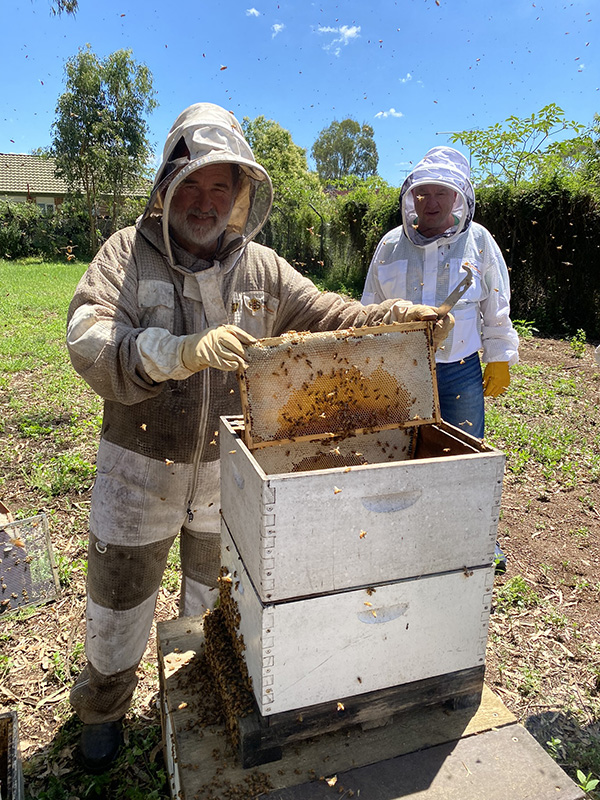
Honey produced from the apiary is mainly sold through the school, strengthening the link between the bees and the local community. Each year the club also supports World Bee Day with the school: we bottle and label small sample jars of honey, then students hand them out to parents/guardians at morning drop-off. It’s a simple gesture that starts conversations about pollinators, food production and the option of studying Agriculture at school.
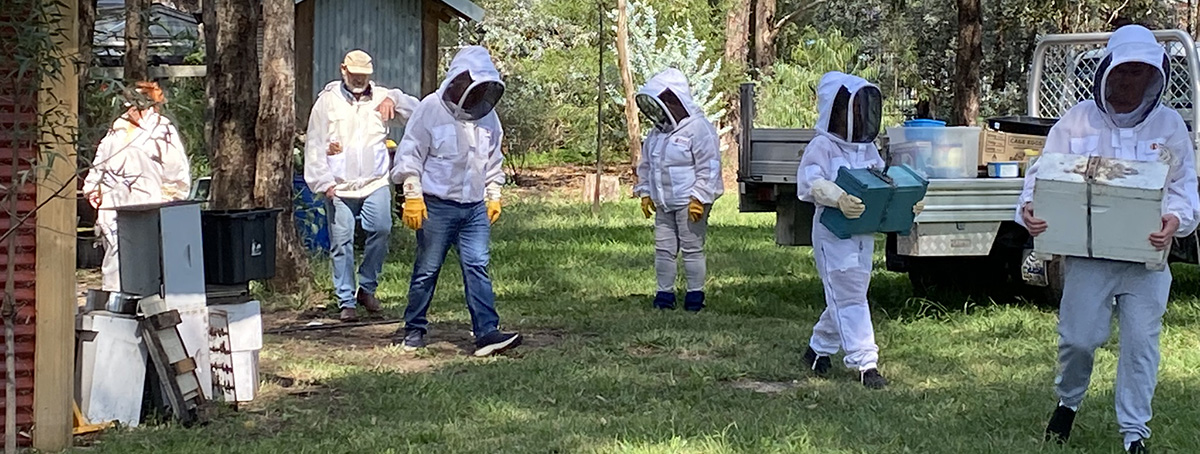
For the past few years, meetings have been held in the school science labs, but a new multi-purpose building has been under construction over the last six months. The Cumberland Club is looking forward to moving into this new space in early 2026 – a fitting next step for a club that began online, weathered varroa, and is steadily building a practical, community-minded home for beekeepers in Sydney’s west.
If you’d like to keep in touch with what we’re doing – from monthly meetings and field days through to upcoming courses, please follow our Facebook page
https://www.facebook.com/CumberlandABA/
We post updates there regularly, and everyone is very welcome to like, share and pass news of our events on to friends, neighbours and anyone else who might be curious about bees.