
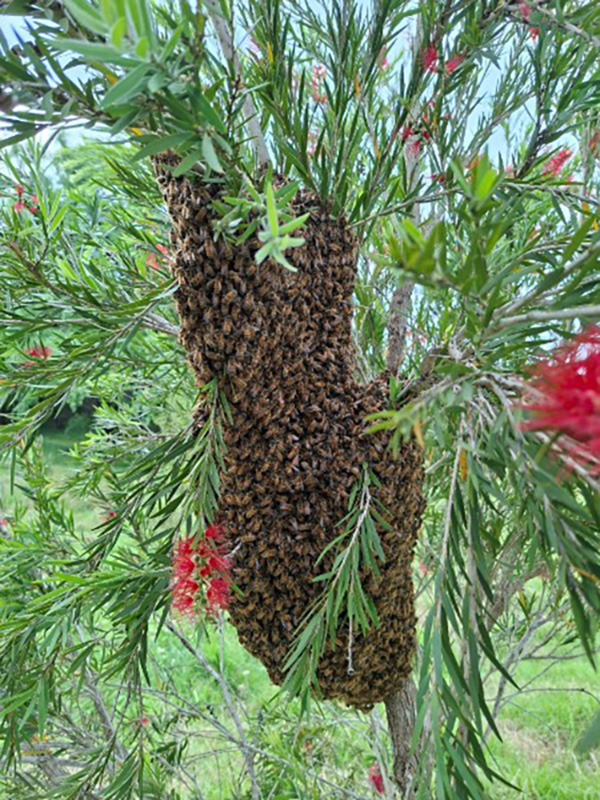
So you Think Your Bees Won't Swarm!
By Jacqueline Lea, ABA Treasurer and Edward Lea, Hawkesbury Treasurer
Mitigate for swarms they say! We have been keeping bees since 2018 and up until January 2024 had experienced very few problems with colonies swarming. We carried out the usual pre-spring management and replaced queens at regular intervals. All was harmonious in our apiary.
However, in early 2024 all of that changed. Unexpected swarms started and since then, we have been in a continuous battle with all of our colonies as we attempt to mitigate against the bee’s instinct to swarm.
We were taken by surprise that January as all had appeared normal during recent inspections and at that stage, we hadn’t found varroa in our colonies. So, we were dismayed when some colonies unexpectedly swarmed. 7 swarms in 14 days; some colonies produced multiple swarms and one of those colonies had only been requeened in the December and she appeared to have settled in and laying well. Was it the weather?
Was it resources, as although the bees were bringing in pollen and nectar, the resources were not as good as previous seasons. Was it the positioning of the hives, or was it genetics? I poo pooed genetics as we had purchased queens from 3 different breeders during the course of that spring/summer and the swarms were from various recipients of said noble majesties.
The bees were disease free although we had noticed an uptick in the quantity of SHB. The reason for the major swarm activity shall remain a mystery; however, we discovered our first varroa in a wash in late April 2024. There were 3 mites in a wash in one hive only. Was varroa the cause of the swarming in January? Did the bees know something that we didn’t?
We thought that we’d get ahead of the game by requeening all the colonies at the beginning of the next season (24-25 spring/summer). Good plan you’d think. That was until we needed to treat for varroa when the supers were on and we had a good nectar flow. As we’d already used Bayvarol in the previous treatment, the only other option at that time was Formic Pro. The temperature window was right so we went for it. It didn’t go down too well with the bees. Most colonies rolled their queens, some swarmed. Following that treatment, one colony requeened itself back-to-back 3 times in a very short timeframe. Be assured though, that a brood break works when it comes to controlling varroa! So, after that experience we decided to let virgin queens mate locally as it’s a costly exercise to purchase queens that may get booted out before we’ve had a chance to get to know them.
Despite doing everything that we can to mitigate against swarming, the new normal is for the colonies to sneak in a spontaneous swarm every couple of months, or replace their queen every couple of months. A couple of recent swarms, I have to admit, have been own goals as we weren’t quick enough to add additional supers when the nectar started to flow. Lots of lessons have been learned, however at the end of the day, the bees know what they are doing and we are just along for the ride. I’ll also add that we’ve managed to catch the majority of the swarms as most have come out low and straight into small shrubs that we have near the apiary. Others that we’ve seen still airborne have been treated to a good ‘tanging’ (apologies to our neighbours) and have dutifully landed in a nearby tree – so not too many have slipped through the net.
Under the lids we keep notes of when the queen was replaced (or the first sighting of a virgin queen) and if the queen has been marked. When we open a hive up these days and the queen is more than 3 months old it’s quite a pleasant surprise. Not finding queen cells is also a pleasant surprise, but we all know that the bees can change their minds in an instant, and off they go! It has been a game of cat-and-mouse and the bees appear to be winning.
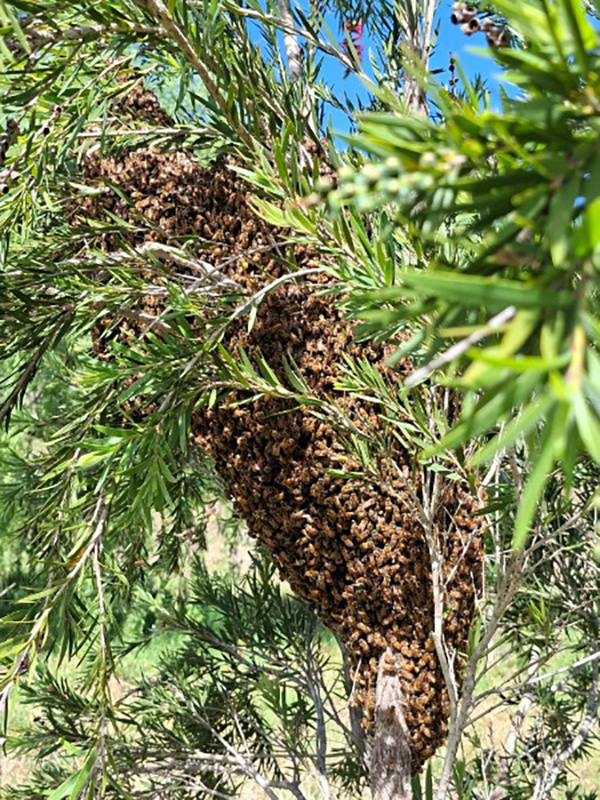
This is the swarm videoed taking up residence in their new home.