
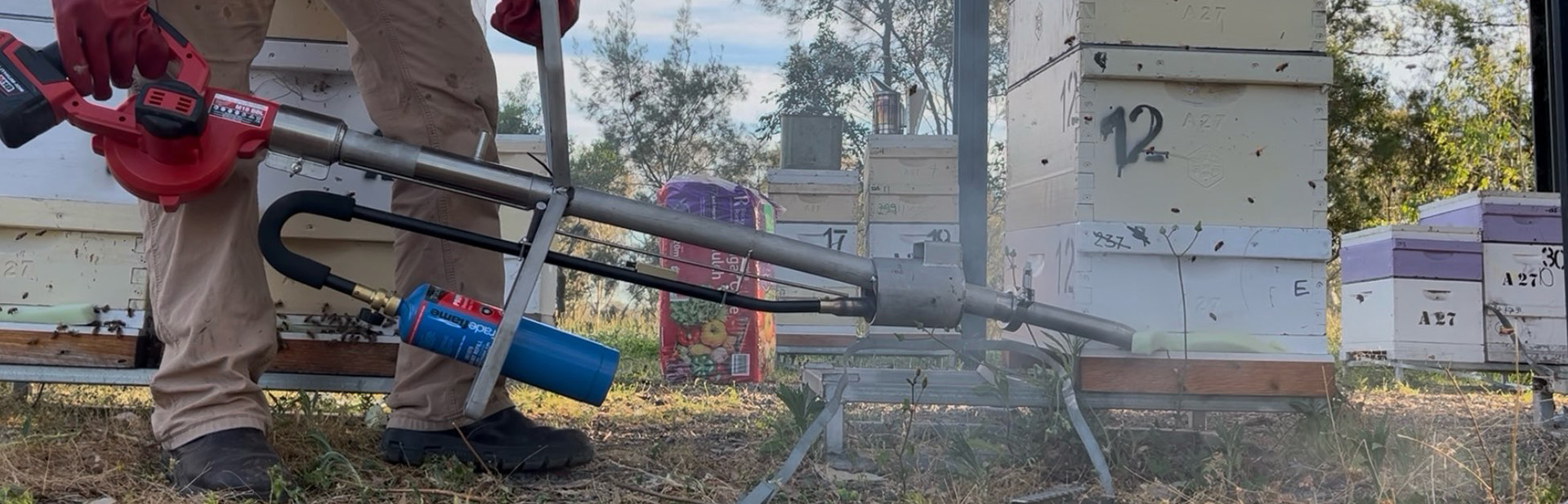
Trialling 4g oxalic acid vaporisation treatment at NSW DPIRD research station Tocal Ag College. Note gauntlet-length acid-resistant chemical gloves, full coverage bee jacket, and reduced hive entrance.
Oxalic Acid Vaporisation
By Elizabeth Frost
DPIRD Technical Specialist Bees

Beekeepers’ interest in oxalic acid varroa treatment methods is massive. In October at the Beekeepers’ Field Day at Tocal Ag College I spoke about oxalic acid drizzle, strips, and vaporisation treatment methods. My talk was recorded and put on Tocal’s YouTube channel and received over 207 views in one month, compared to my 2024 talk on varroa resistance traits which got 267 views over the course of a whole year, about 22 views per month. You can view my 2025 oxalic acid treatment presentation by following the link here:
Oxalic acid vaporisation involves heating oxalic acid dihydrate crystals, using either an electronic resistance or gas-powered device, until the crystals turn into a gas which is either passively or fan-forced into a bee hive. Inside a well-sealed bee hive, the vaporised oxalic acid can coat the surfaces and bees within the hive, resulting in grooming which can cause increased mite fall (Schneider et al., 2012). The currently approved dose per hive in Australia is 2.3 grams. Full Australian conditions can be found on the current Australian Pesticides and Veterinary Medicines Authority Permit PER94609.
Vaporising oxalic acid is the varroa management method of greatest interest to commercial beekeepers who run bees to make a living. Why is there so much interest in oxalic acid vaporisation? The main reasons are:
- Non-invasive application at the hive entrance (reduces hive disturbance and labour)
- No residue risks on a honey flow (under current accepted maximum residue limits)
- Reduces synthetic chemical exposure (oxalic acid is one of 3 non-synthetic, “organic” treatments currently available, and beekeepers prefer to have little to no chemical inputs in their hives if possible
- Cost (lower product cost and labour costs to apply compared to other treatments)
- Impact (reduces mite levels if everything is “just right”).
The last dot point ‘impact’ is the trickiest to get “just right” in the Australian environment. To have everything “just right” to make oxalic vaporisation an effective treatment in Australia takes much more effort than other treatments. Australia, being the land of brood and honey, takes mite management to the next level, compared to the Northern Hemisphere, where most miticides were developed and are used in temperate climates with weaker honey flows. Remember varroa relies on honey bee brood to reproduce, so more brood = more mites. Oxalic drizzle and vaporisation treatments are known to have low effectiveness when brood is present, unless multiple treatments over a few weeks are undertaken as is supported in US and European research (Jack et al., 2021; Al Toufailia et al., 2015). Oxalic acid in any dose or treatment formulation doesn’t kill mites that are in capped brood unless it’s in the hive long enough, as a slow-release strip formulation or is applied repeatedly, to be active over multiple brood (and mite!) hatch outs. This is why oxalic acid drizzle and vaporisation treatments are most effective when no brood is present, either seasonally or by management intervention, and why a legal slow-release oxalic strip is so attractive for Australia.
In a good season in Australia, you can make honey 12 months of the year if you burn enough diesel (to get to the honey flow!). Active honey production limits miticide choice to Bayvarol, Formic Pro, and oxalic acid to prevent chemical residues and/or flavour taint (e.g. Apiguard). However, with high temperatures likely during peak honey production, Formic Pro could be risky to hive health. Thus, oxalic acid becomes the most attractive non-synthetic treatment in summer. Recently approved slow-release oxalic acid strip product Aluén CAP is music to honey producers ears as well. More on this product in a future article.
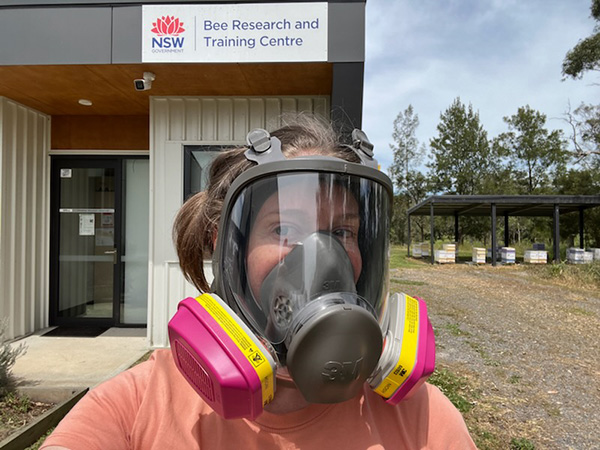
Troubleshooting oxalic acid vaporisation
Whenever you introduce a new technique into beekeeping, there is troubleshooting involved particular to your hive type, apiary environment, season, operation size and goals. The first steps are to figure out how to do things safely and correctly (Figure 3). For full oxalic acid vaporisation instructions, see: www.varroa.org.au/api-bioxal-powder.
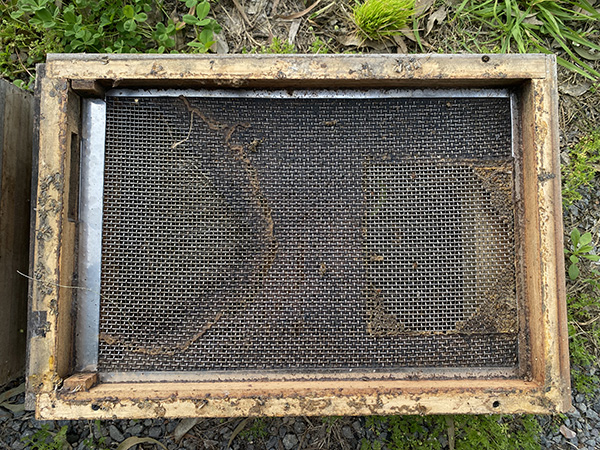
After you figure out how to safely apply oxalic acid by vaporisation, the next step is to figure out how to do it efficiently, while staying accurate. Since I’ve solved my oxalic acid vaporising leakage issues by switching out ventilated bottom boards (Figure 4) for solid bottom boards and any vented lids, my next steps to improve things are:
Actions
- Purchase and use more accurate field scales for weighing oxalic acid crystals
- Purchase and test infrared thermometer “temp-gun” to gauge appropriate temperature (around 101°C) to vaporise oxalic crystals (hot, but not too hot)
- Improve ergonomics (how to apply treatment without breaking yourself)
- Trigger lock mechanism for vaporisers with fan force device
- Smaller vaporiser for smaller operators (like me!)
- Stand for vaporiser depending on hive height
The Australian Pesticides & Veterinary Medicines Authority (APVMA) Permit 7250 allows me, in my role within the NSW Government, to conduct small-scale trials using an active chemical constituent on small numbers of livestock at a research station. Under this permit I’ve been looking into oxalic acid vaporisation using a gas-powered device, which is legal under the existing APVMA Permit PER94609. Given 4 gram doses of oxalic acid vaporised per hive per week for 3 weeks resulted in no negative hive health effects in the Florida-based study by Jack et al. (2021) and the greatest mite level reduction compared to lower doses, I went with 4 grams. To start with, I was troubleshooting my methods and looking for any negative effects on hive health mainly. I trialled 4 gram doses on four hives with high mite loads mid-October which decreases the infestation levels slightly, to see if there were any negative hive health effects. Since the levels didn’t decrease significantly however, instead of doing repeat vaporisations, I treated with a synthetic miticide with guaranteed high efficacy with brood present.
The NSW Apiarists’ Association came to Tocal College for one of their quarterly Executive Meetings on 21 November 2025. Ahead of their meeting I set up one hive to demonstrate the oxalic acid vaporisation device. I removed the synthetic miticide from one hive, which had been in place for 16 days. This hive remained without miticide for 7 days and then received the following treatment:
21 November 2025:
- 2 mites in alcohol wash, queen seen, all stages of brood present
- Hive makeup: 1 full depth and one ideal super with brood across both, no queen excluder
- Ventilated bottom board sealed with tight bottom board tray and sticky mat
- Entrance reduced and experimental dose of 4 grams oxalic acid vaporised into hive using legal gas-powered, fan-forced vaporiser. Hive sealed for 15 minutes after treatment, then returned to full open entrance.
23 November 2025:
- 66 mites affected by treatment dropped on the sticky mat
- 37 mites in alcohol wash
- I speculate that this high result is because I removed the synthetic miticide from this hive before a brood hatch, giving false confidence on 21 Nov with the low 2 mite alcohol wash result. The synthetic miticide was successfully killing mites on adult bees, but not mites in brood. This is a cautionary tale that miticide treatment periods, either slow-release or repeat dose, are trialled and set for a good reason, to affect mites on bees and emerging from brood for greatest mite mortality.)
- Queen seen, all stages of brood present, no sign of adult or juvenile bee mortality.
While not a good result that the mite infestation was higher after oxalic vaporisation treatment, there were no negative signs that oxalic vaporisation at 4g per hive had affected hive health in the Australian environment. I’m currently preparing a more statistically significant number of my hives for a proper repeat application trial using 4g per hive oxalic acid vaporisation later in this summer and into early autumn. I’ll present my trial results at the NSW Apiarists’ Association annual conference in Bathurst in May. I hope to see you there! Until then, wear your PPE and check out the QR code linked videos and some recommended further reading below.
At the Victorian Apiarists’ Association 2025 Conference in Beechworth Dr. Cameron Jack presented on ‘Optimizing the effectiveness of oxalic acid.’ The VAA has made this recorded talk available to the public which I highly recommend. You can watch Cameron’s presentation on the VAA’s YouTube channel here:
Further reading
- Varroa Management Guide: www.varroa.org.au/resources
- Schneider, S., Eisenhardt, D. & Rademacher, E. Sublethal effects of oxalic acid on Apis mellifera (Hymenoptera: Apidae): changes in behaviour and longevity. Apidologie 43, 218–225 (2012).
- Jack, C. J., van Santen, E., & Ellis, J. D. (2021). Determining the dose of oxalic acid applied via vaporization needed for the control of the honey bee (Apis mellifera) pest Varroa destructor. Journal of Apicultural Research, 60(3), 414–420.
Al Toufailia, H., Scandian, L., & Ratnieks, F. L. W. (2015). Towards integrated control of varroa: 2)comparing application methods and doses of oxalic acid on the mortality of phoretic Varroa destructor mites and their honey bee hosts. Journal of Apicultural Research, 54(2), 108–120.