
My Beekeeping Journey
by Arthur Garske
My interest in bees was first kindled by Jack Della-Ca, whose property I used to visit for bow hunting at Howes Valley. On one of my fortnightly trips, Jack told me that in his younger days he had been a commercial beekeeper. He described moving his bees on a horse-drawn dray, camping through the day to let the bees fly, and travelling only at night. His stories of working bees fascinated me.
At the time, I was doing a wool-classing course at Ultimo. One of the students mentioned he had a beehive he wanted to sell, and I jumped at the opportunity. We arranged a weekend for me to collect it. When I arrived, he told me it hadn’t been opened in five years. We had to use a garden spade to break the lid and boxes apart. The top box contained a large pepper tin feeder buried under honeycomb that filled every available space.
It took half a day to prepare the hive so I could return one night the following week to pick it up. I took it home, and that weekend I took it to Howes Valley.
Between Jack’s stories and purchasing my first hive, I had already enrolled in an OTEN “D” Beekeeping Course run from Strathfield, where Bruce White was one of the educators. A couple of months later, I passed the course with flying colours.
I purchased, assembled, and painted enough equipment for three hives and ordered three queen bees from Gears Queens at Jillaby Road, Wyong. On the Saturday of the October 1968 long weekend, I picked them up and split my original hive into three nucleus colonies in my brand-new boxes.
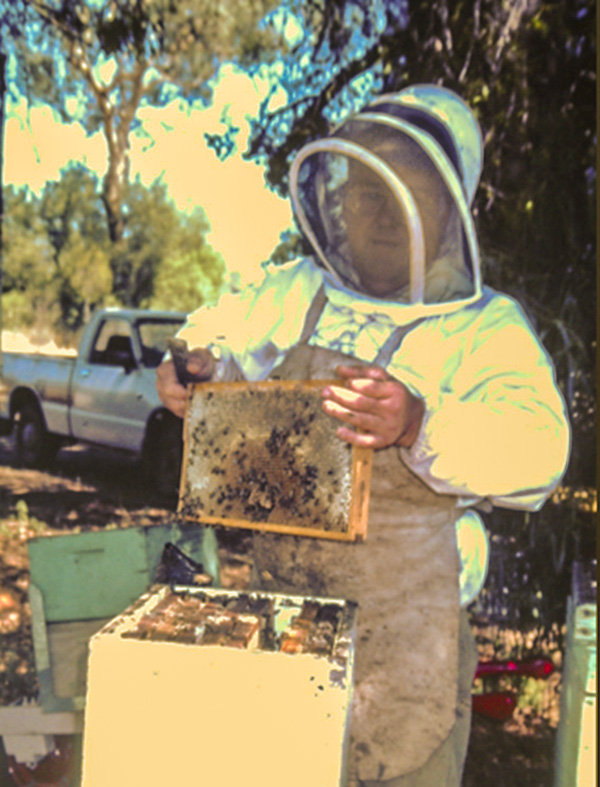
By the end of February, I extracted 260 pounds of honey, selling it at work for two shillings a pound in just two weeks. I was completely hooked on beekeeping.
I went on to complete a nine-week evening course at Ryde Agriculture College, taught by Mr. Alan Clemson, Head of the Department of Primary Industries. He had majored in Apiculture at Hawkesbury Agricultural College and wrote the beekeeper’s bible, Honey and Pollen Flora. His knowledge of bees and honey flora was second to none.
From then on, I attended every beekeeping event I could, learning from industry greats like:
- Joe Horner, Australia’s leading innovative queen breeder.
- Gretchen Wheen (now deceased), Australia’s foremost artificial queen insemination expert, who led the Eastern States Queen Breeding Program. I took seven weeks’ long service leave to work with her, learning how to collect drones from selected hives, extract sperm under a microscope, and inseminate virgin queens.
- Neville Cutts, who ran agricultural school beekeeping courses at Hawkesbury Agricultural College and trained many DPI officers, including Bruce White. I helped him run ABA field days at Hawkesbury.
My best mate, John Swan, educated me on all things trees. With his timber industry expertise and skill at removing hives from tree hollows, we hived around 150 colonies together.
At my peak, I built my operation to 50–60 hives, working as a successful sideline commercial apiarist for five years. I produced over a ton of honey every month, selling 25 tins (27 kg each) monthly. However, it eventually became too much hard work, and I stepped back to keep the pleasure in beekeeping.
The greatest influence on my beekeeping career came from Ian Dutton Snr. and Ian Dutton Jnr. of Wilgian Queen Apiaries in Manilla, NSW. They were both honey producers and queen breeders, and I enjoyed a ten-year “apprenticeship” with them, working during my holidays and any spare time. The skills and knowledge I gained from them were priceless. On one visit, Mr. Dutton asked if I belonged to the Amateur Beekeepers Association. When I questioned what they could teach me, he replied, “It’s not about what they can teach you—it’s about what you can teach them.”
I also took up competitive honey showing, learning from Bruce White and Neville Cutts through ten years of stewarding, questioning, and observing. I competed at Fairfield, Hawkesbury, Castle Hill, St Ives, and the Sydney Royal Easter Show—winning Most Successful Exhibitor and Champion Jar of Honey at each.
Although I no longer compete, I now judge at the Sydney Royal Easter Show and other honey competitions, sharing my expertise with clubs and members eager to learn.
I have been honoured with Life Membership in both the Amateur Beekeepers Association and my club, Parramatta Amateur Beekeepers, in recognition of my contributions.
With 57 years of beekeeping experience, I proudly wear the orange jacket at meeting nights as your support officer, ready to answer your questions and pass on the knowledge I’ve gained in a lifetime of working with bees.
— Arthur Garske