
Fire Ant Eradication - How and Why Beekeepers Should Help
As Australia’s largest biosecurity eradication effort, the National Fire Ant Eradication Program (the program) is working to eliminate one of the world’s most destructive invasive pests – fire ants.
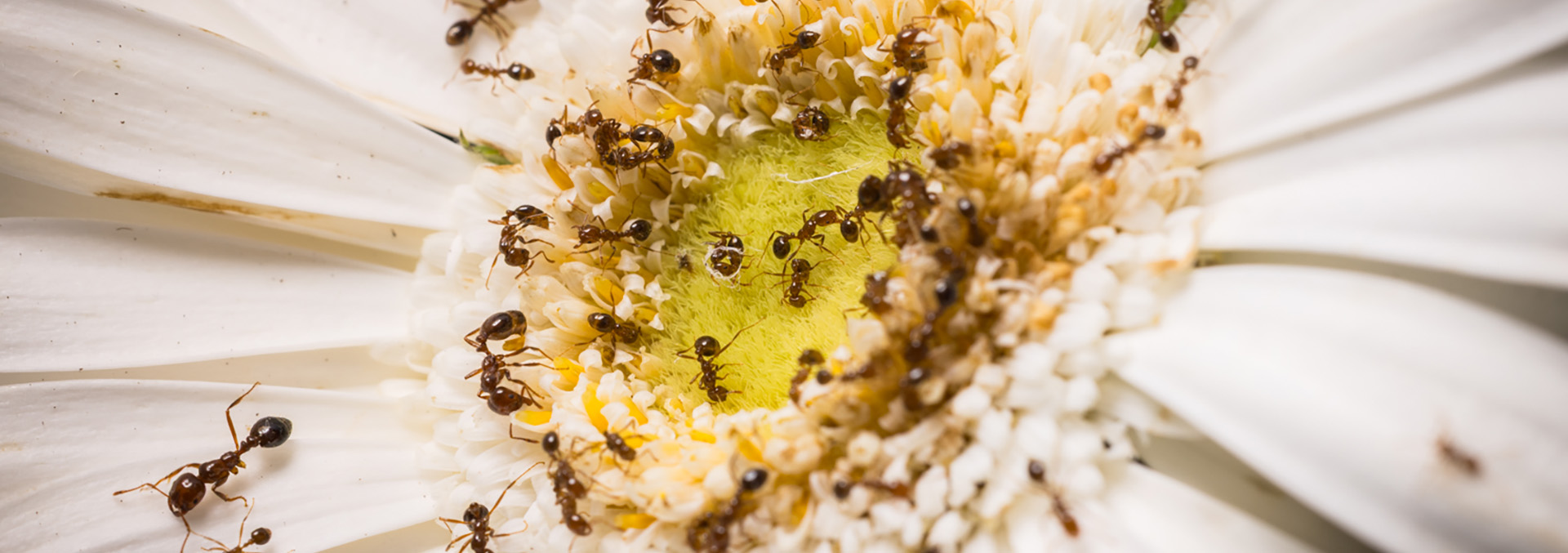
First detected in Queensland in 2001, fire ants pose a serious threat to our health, environment, economy, and outdoor way of life. They also pose a significant risk to bees and other pollinators, attacking hives and feeding on vulnerable life stages such as larvae and pupae, which can weaken colonies and, in severe cases, lead to hive collapse.
While fire ant eradication treatment plays a critical role in protecting bees and other pollinators from this invasive pest, understanding how the treatment interacts with hives remains an important consideration for many beekeepers.
Fire ant eradication treatment is not a threat to bees and other pollinators.
For many beekeepers, the question isn't whether fire ants are a problem for bees, but whether the treatment used to eradicate them is safe for hives.
The evidence says yes.
The treatment products used by the program are safe for bees, including European honeybees, blue-banded bees, and native ground-dwelling bee species and are approved by the Australian Pesticides and Veterinary Medicines Authority (APVMA). They are formulated and applied in ways that make them unattractive and largely inaccessible to bees. In fact, fire ants pose a far greater risk to bee populations than the treatments used to eradicate them.
By controlling and eradicating fire ants, the program helps these critical insects, supporting healthy ecosystems, food production, and an industry that contributes more than $2.89 billion to Queensland each year.
The science behind fire ant eradication treatment
The broadscale treatment used by the program consists of small pieces of corn grit soaked in soybean oil, which contains a low concentration of an insect growth regulator (IGR), either pyriproxyfen or S-methoprene.
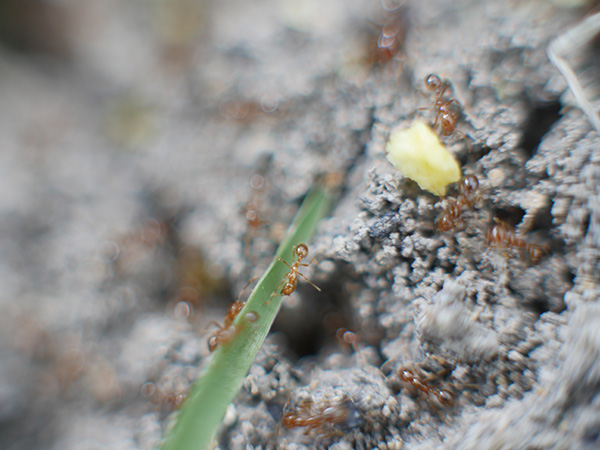
The treatment is specifically designed to attract fire ants, which are drawn to oils and proteins, unlike nectar-feeding pollinators which are drawn to substances high in sugar. Foraging fire ants collect the treatment granules and carry them back to their nest, where the oil carrying the IGR is removed from the granules and shared throughout the colony through a process known as trophallaxis. This process consolidates the effective dose of IGR inside the colony, reducing the risk to non-target insects and other animals.
Once ingested, the IGR prevents the queen from producing viable offspring with effects lasting for many weeks. Over time, the colony declines as existing worker ants die and are no longer replaced.
Fast facts about the active ingredients
- The active ingredient makes up only 0.5% of the product (5 g per kg):
- For a 500 m² block, 100 g of product is applied, containing just 0.5 g of active ingredient.
- For a 10 ac (4 ha) property, 8 kg of product is applied, containing 40 g of active ingredient.
- The program uses pyriproxyfen is used in most areas, while S-methoprene is used near waterbodies.
- Pyriproxyfen and S-methoprene are not classified as 'poisons' under the Therapeutic Goods (Poisons Standard) Instrument.
Bees aren’t attracted to fire ant treatment.
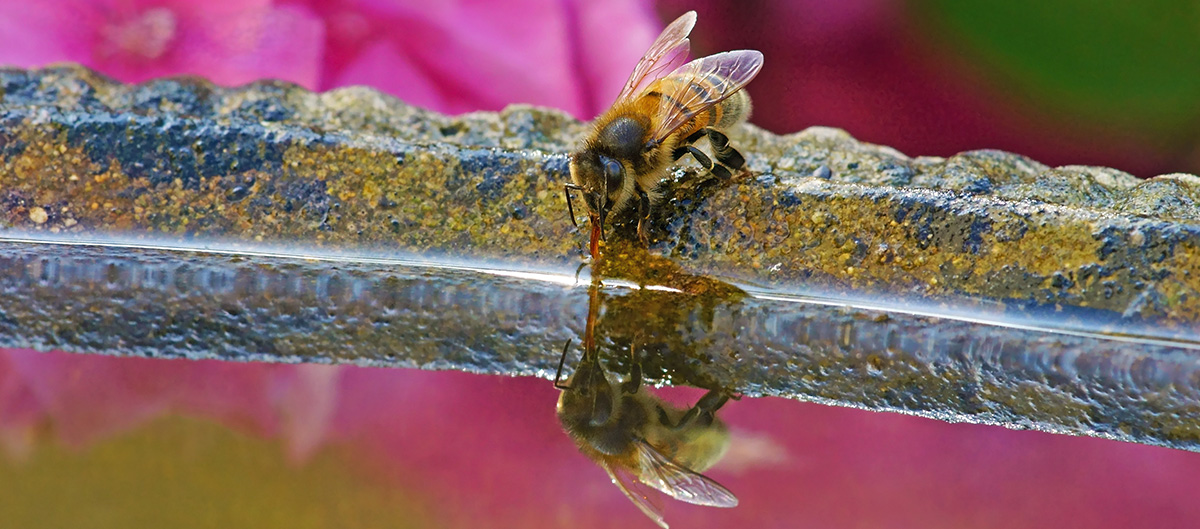
Bees are intelligent insects with an incredible sense of smell, using it to identify and collect nectar and pollen from specific sources.
The treatment contains soybean oil rather than sugar or nectar-like substances, making it attractive to fire ants while remaining unattractive to pollinators.
While foraging, bees collect pollen and store it in pollen baskets on their hind legs. The corn grit granules used in fire ant treatment are much larger than pollen grains, making them unlikely to be mistaken for pollen by foraging bees. They are also unlikely to stick to a bee's body or be collected and stored in its pollen baskets.
The granules are also too large for bees to consume with their straw-like mouthparts, further reducing the likelihood of any interaction with the treatment.
Even if a granule was returned to a hive, it would be unlikely to be used as food by the bees. The very small amount of active ingredient present on each granule would have negligible to no impact on the colony. This is supported by research, including a study by Chen et al. (2016), which found no developmental impacts on honey bees were evident when exposed to very low concentrations of pyriproxyfen under environmental conditions. At the product concentration found in fire ant treatments used by the program, there would be less pyriproxyfen present per fire ant treatment granule than the lowest concentration used in this study.
Can bees be exposed to treatment through water?
It's virtually impossible for a bee to collect a harmful dose of IGR from water following fire ant eradication treatment.
Treatment products are used in alignment with the instructions on APVMA approved permits and are not deliberately applied to waterways or dams. This results in very low concentrations over treated areas, minimising any potential impact on water sources.
This is supported by research, including a study by Tasei (2001), published in Apidologie, which concluded that IGR treatments are unlikely to harm adult bees when used as directed. Importantly, the study examined liquid treatments applied directly to flowering plants, where the risk of pollinator exposure is greater than with the granular fire ant treatment used by the program.
How beekeepers can help
Eradicating fire ants from Australia is the best way to safeguard bees, pollinators, and ecosystems from fire ants. Achieving eradication relies on a coordinated, whole-of-community effort. Beekeepers can do their part by:
- Regularly checking around beehives for fire ants and nests.
- Reporting any findings, whether fire ants are present or not, online or by calling 132 ANT (13 22 68).
- Reporting any adverse reactions to fire ant eradication treatment to the Australian Pesticides and Veterinary Medicines Authority's Adverse Experience Reporting Program.
- If your property is located within an eradication treatment area, completing your property information form (for properties less than 5 ha) or treatment information form (for properties more than 5 ha).
Visit fireants.org.au or call 132 ANT (13 22 68) for more information.
Reference:
Chen, Y. W., Wu, P. S., Yang, E. C., Nai, Y. S., & Huang, Z. Y. (2016). The impact of pyriproxyfen on the development of honey bee (Apis mellifera L.) colony in field. Journal of Asia-Pacific Entomology, 19(3), 589-594.