
The Hawk at the Hive Door
Yellow-legged hornet, Vespa velutina, will this be the next problem we have to deal with in Australia ?
By Doug Purdie Bee Biosecurity Officer NSW DPIRD

On a warm late-summer afternoon in southwestern France, a beekeeper stands a few metres from her hives and watches the entrance. Bees stream in and out as usual, but something is wrong. Some foragers return slowly, and many hang back near the landing board instead of leaving. Then a dark, wasp-like shape hovers a hand’s width from the entrance, almost motionless, facing the hive.
It is a hunter, and the bees know it. Over two decades it has gone from a curiosity to one of Europe’s most closely watched invasive insects. The past season in France has seen 30% hive loss to Yellow-legged hornet (YLH). To put this in perspective only 5% were lost to varroa mite so YLH is a huge concern.
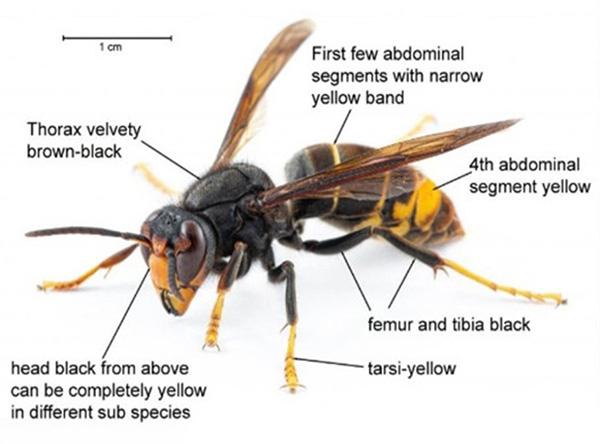
An Unplanned Passenger
Vespa velutina is native to Southeast Asia. The subspecies that spread in Europe, V. v. nigrithorax, is believed to have arrived in southwestern France around 2004, most likely as a founding queen hidden in a shipment of pottery or other goods from China. The entire European population is thought to descend from very few individuals, which makes its success all the more striking. Let’s just think about that for a moment… it’s possible a single queen has been able to colonise Europe.
The hornet has spread across Spain, Portugal, Italy, Belgium and Germany, and has been recorded on a ferry to the Channel Islands and in the United Kingdom, where it has triggered a rapid-response effort to find and destroy nests. The UK response, while strong, appears to be not enough. As of 15 October 2026 there have been 226 confirmed YLH sightings in the UK, resulting in the identification of 85 nests.
Rapid Growth
Each year a mated queen emerges from her winter shelter, builds a small starter nest, and raises workers. Once there are enough workers, that founding nest is abandoned and a new nest is started usually very high up in a tree. I Its workers are looking for protein, a lot of protein. It’s estimated a single nest consumes upwards of 12kg of insects in a season. That nest contains many thousands of individual wasps and shockingly can produce hundreds of new queens that go on to found their own colonies.
The Art of Hawking
Honey bees are an ideal target. They are abundant, predictable and concentrated at a hive entrance. The hornet’s technique is called hawking: a worker YLH hovers in front of the hive and snatches returning foragers out of the air, discards the head and carries the bee’s thorax, the protein-rich flight-muscle section, back to the nest to feed larvae.
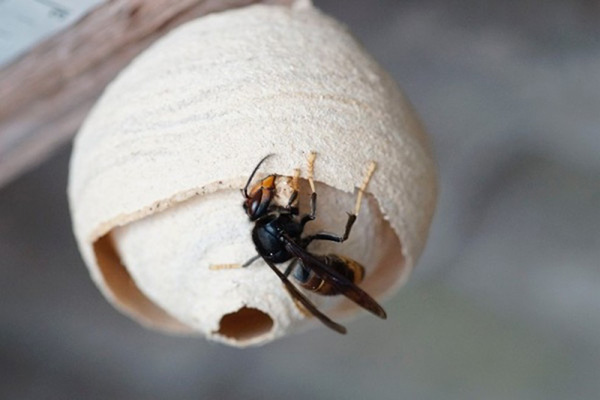
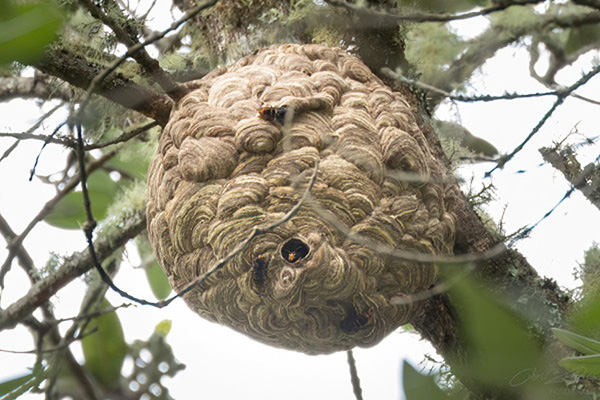
Bees that sense a hornet nearby tend to stop foraging and cluster defensively inside. Fewer foragers leave, less nectar and pollen come in, and a stressed colony can struggle to build the stores it needs for winter. In heavy attacks, hornets gather in numbers at the entrance, and the colony can become paralysed, weakened and eventually collapse.
Closer to home
In late 2025 YLH was detected in NZ which triggered a massive emergency response with hundreds of surveillance traps and many staff in a coordinated effort to eradicate the pest.
77 queen hornets and 133 nests were located and destroyed, with no sign of hornets since April 2026. Members of the public made a huge contribution to the success with more than 18,200 notifications of suspected sightings.
This is concerning for beekeepers here in Australia because we have considerable passenger and freight movement with New Zealand. Conceivably a single queen could hitchhike across within 24 hours and establish a colony here.
In June 2026 NSW Biosecurity officers added YLH monitoring traps to our regular surveillance activities to improve early detection of this pest.
What can beekeepers do?
There are a few things you can do to help early identification of YLH if it was to arrive here.
- Keep an eye out for wasps hovering around the entrances of your hives.I If you see something please don’t kill it. Instead take a photo and send it to It’s important not to kill it because we use live wasps to find the nests using a technique similar to bee lining.
- If you see a wasp that looks like YLH please once again take a photo and send it to us.
- Install a no kill wasp trap in your apiary and monitor it for YLH. There are traps available that are designed to trap large hornets only to save unnecessary killing of non target species. Once again report any suspicious findings.
With your help we can keep an eye out for this horrible pest of bee hives as early detection is key to eradication success.