
How to Prepare Your Bee Colonies for Winter
by Bruce White OAM
Illawarra and Cumberland Clubs

As a general rule, preparation for wintering your colonies should take place late March/early April, in most parts of Australia. Inadequate attention could have serious impact on the survival of your colonies to survive winter. By recording how your bees perform, this historic knowledge will help you to make smarter choices.
Individual conditions vary so much, so I will have to cover key principles for successful wintering of colonies. Amateur beekeepers mainly have fixed locations and management relates to the location, whereas commercial beekeepers can migrate hives to what they consider the best locations. Moving onto winter nectar and pollen flows, coastal areas or into cold areas where the bees rarely fly, but the hives have plenty of stored honey and pollen upon which to over-winter. In cold areas there is an added advantage of a brood break aiding Varroa control.
The prime consideration for over-wintering colonies is to keep them alive, with good numerical strength and stored honey. Going into spring, your management late March/April will be critical.
It is normal to winter hives as doubles so aim to leave a box of honey on the hive approximately eight frames of capped honey, or if a single, three or four frames of honey aiming to have all frames covered with bees.
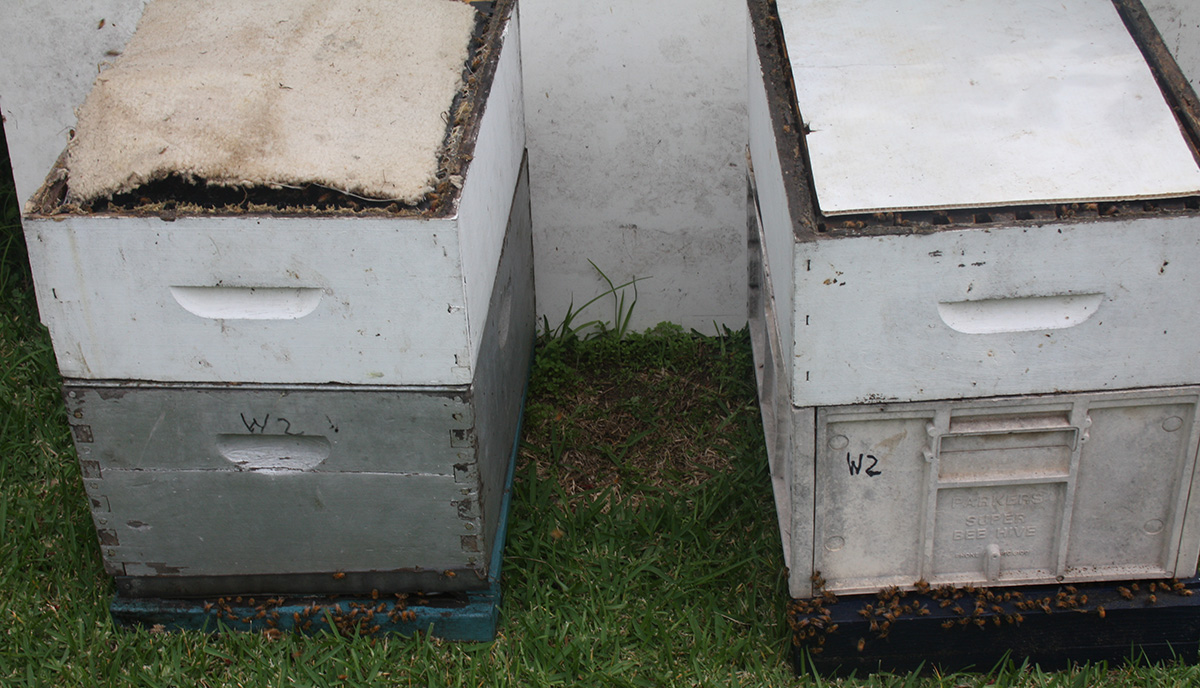
Hives prepared for winter with inner mats of carpet left hand side and corflute. Empty supers can be added above the mats for winter to save storing off the bees. Commercial beekeepers have cool rooms for storing excess supers.
Infra-red camera
These cameras are valuable to see the outline of the cluster in winter without opening the hive and enable corrective action to be taken.
Australia is unique within the world’s major beekeeping countries in that somewhere, nectar and pollen flows occur all year round and this is the main reason that the commercial industry is migratory.
Key Management Strategies
Location
Position hives in a sunny dry area preferring a north east aspect to maximize morning warmth so the bees can have cleansing flights, with entrances sloping forward. Any condensation can then escape. In urban backyards, don’t place hive entrances facing night lights, or have flight paths across cloths lines.
Hive entrance sloping forward
Entrances
Observe the entrance flight, strong colonies have bees across the whole entrance weak ones very few.
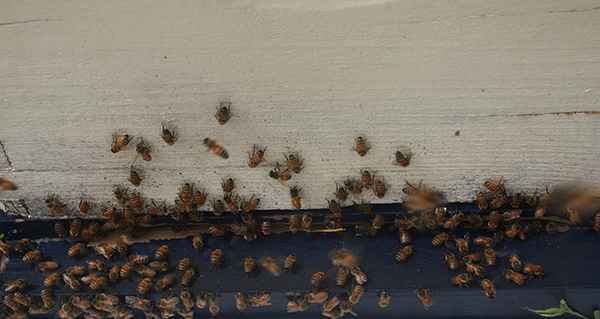
Entrance activity indicates strong colony.
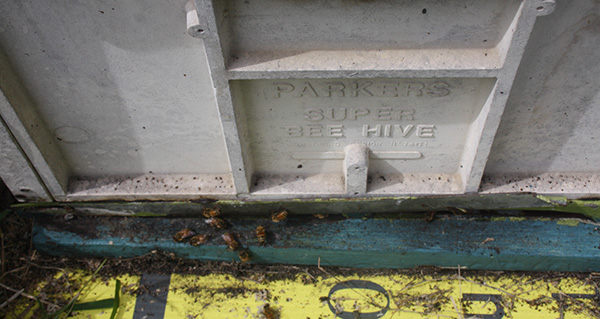
A weaker colony with few bees at the entrance
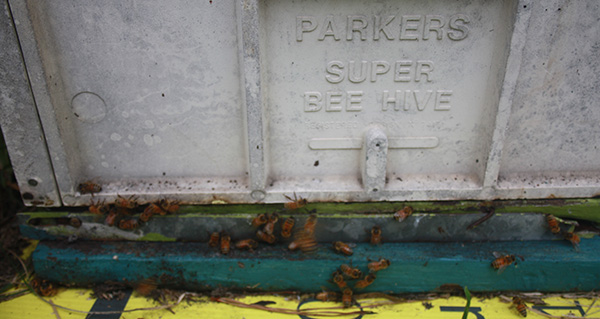
Entrance reduced to keep colony warmer
Ensure entrances are clear, placing corflute prevents grass and weeds growing blocking hive entrances. Entrances in weaker colonies can be reduced to 50-75 mms.
Entrance reduced to keep colony warmer and easier for the bees to guard with corflute under the cleat to stop grass and weeds.
Climate
In locations where winter nectar and pollen flows occur and warmer town areas, colonies often have brood, so winter deaths are being replaced to some extent.
In cold areas colonies go out of brood and because the worker bees are not foraging or rearing brood, they live much longer than the normal six to eight weeks, provided the colony has stored honey and pollen. Many commercial beekeepers use this method to winter apiaries. It also prevents Varroa breeding and will become more popular with the commercial industry.
Inspections
Open and inspect all colonies in late March, April on a warm sunny day preferably with no wind.
What to check during the inspection?
Queen
If eggs are present in early spring, the queen is present, try to find her to check her physical condition. Colonies in cold areas go out of brood with the queen present. In this case the colony is docile, but if the colony is queenless, it is more aggressive.
Excluders
For hives fitted with excluders - after packing down the hives leave them on top of the brood box.
Condensation
Condensation can occur in the hive during winter producing an undesirable environment. A hive mat under the lid placed on the top bars of the frames prevents drips of condensation dropping on to the bees. Vented lids also help. The mat can be corflute, Masonite, plastic or carpet, cut so the bees can get around the edges.
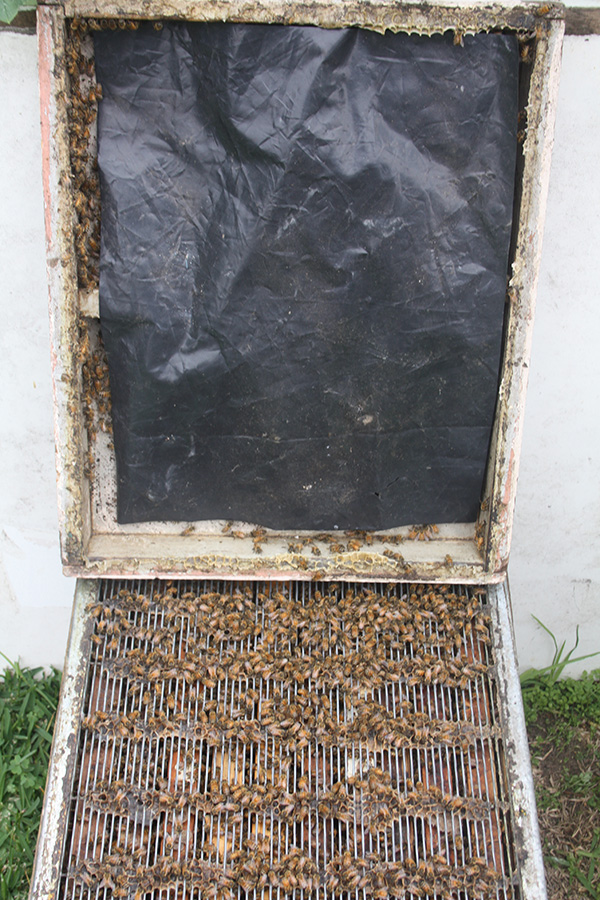
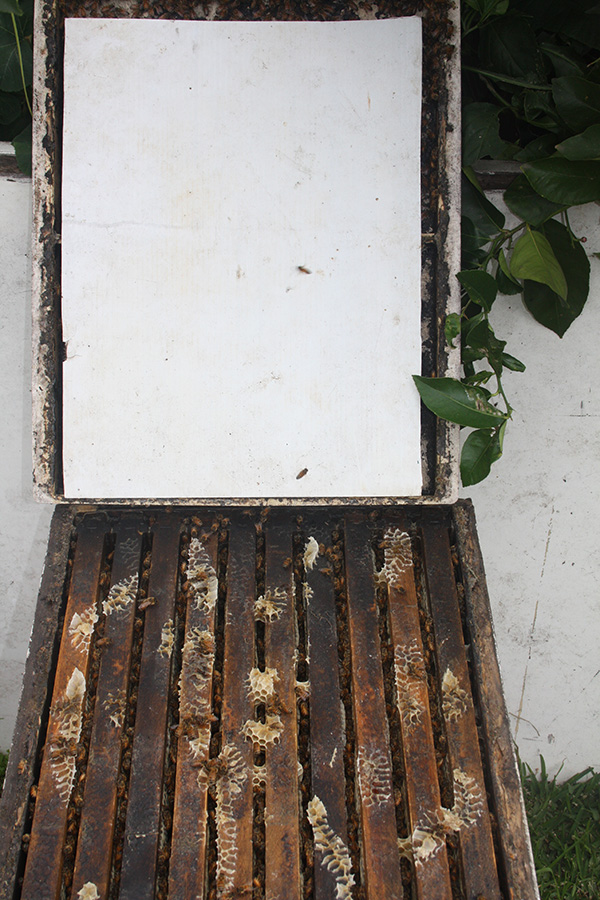
Hives with mats on the top bars of the frames to prevent condensation dripping on the bees.
Biosecurity
Shake all the bees from frames with brood in every hive and check for evidence of any brood disease and take any corrective action if symptoms found.
Do a Varroa wash and if the colony is over the threshold treat with an approved miticide that has a different mode of action than the previous one used.
Varroa thresholds 1st March to 30th November five plus mites in 300 bees.
Record all biosecurity inspections
Varroa checking equipment to do an alcohol wash
Numbers of frames covered with bees
Aim to have all the frames in the over wintered hive covered with worker bees, by removing excess supers or matting, this enables the colony to control temperatures and a healthy environment. Ensure sufficient stores are available to over winter.
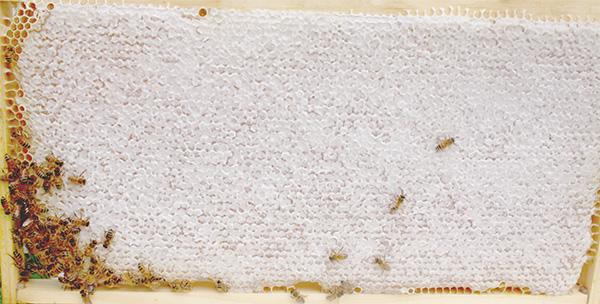
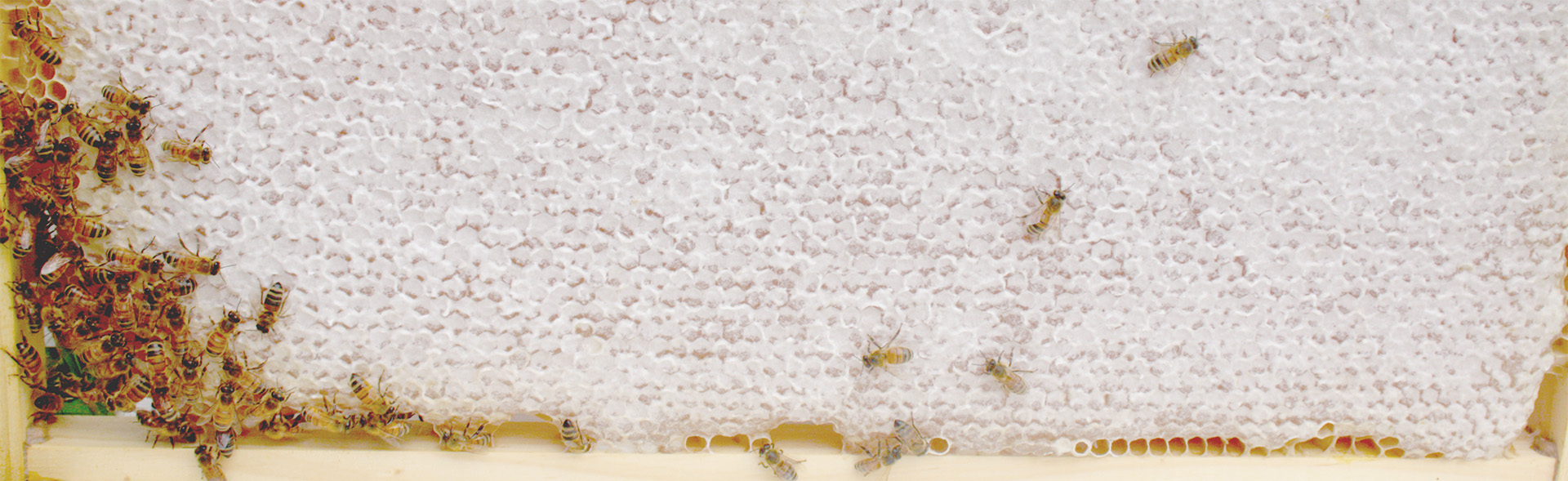
Frame of capped honey ideal for winter stores
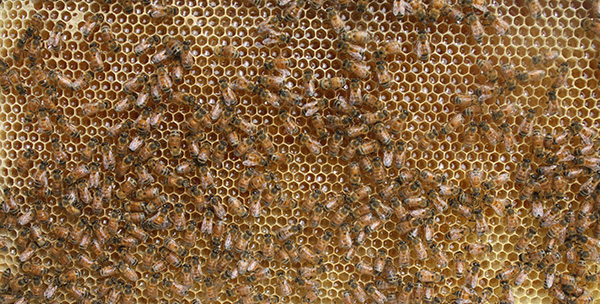
Frame of nectar to avoid using for winter stores as it can ferment.
Stored honey
Ensure double hives have eight frames of honey, single three to four. Avoid having uncapped nectar as it can absorb moisture and ferment.
Leaving insufficient frames of capped honey in the hive over winter can be a very serious error of judgment as starvation is a major cause of winter losses
Pollen stores
Very important if colonies working winter nectar flows. If no pollen, allow hives to collect honey stores and move to a new site. Pollen is essential for brood rearing and colony health -check wall combs in the brood nest for stored pollen.
Ideal brood frame going into winter honey, nectar, stored pollen
Weaker Colonies
If you have some other healthy strong colonies, you can transfer sealed brood and bees to the weaker colonies by shaking the bees from the brood frames, without the queen, at the entrance of the weak hive and then placing the brood frame in the weak hive. Nurse bees from the brood frame will stay at the weak hive. Honey frames can also be transferred.
Shake healthy bees from a brood frame at the entrance of a weak colony they will not fight
The best practice is to unite weak hives with each other by joining with newspaper.
Two weak colonies united with newspaper you can kill one queen to save them fighting.
Photo two weak colonies joined by separating with a sheet of newspaper. The bees chew the paper and join - one queen survives.
Matting and wrapping
Use a piece of plastic cut to size to fit between supers so bees can get round the edges or to wrap around a group of frames to hold in the heat of the cluster in a single box, but so the bees can get around the edges to control any pests on the frames not wrapped.
Plastic cut to size to keep the cluster of bees warmer during winter in this case six frames wrapped in a single
Strapping
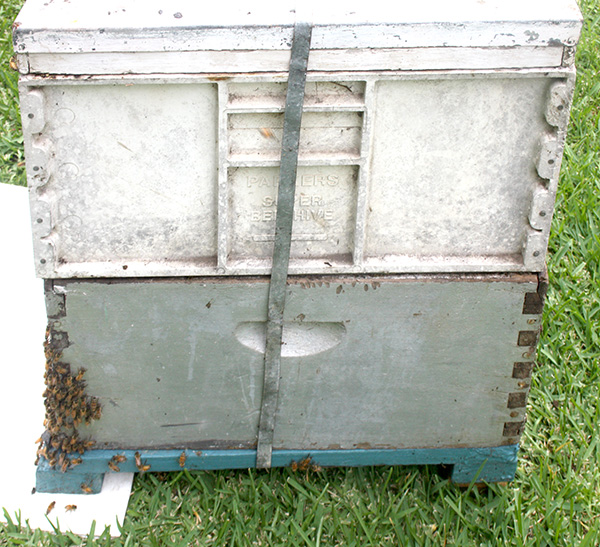
It is always a good idea to strap all hives during winter.
Winter
In colder areas. it is best not to open hives between May and August because the weather could be too cold, but to check the weight by lifting from the brood box hand hold and observing the weight. If you have an infra-red camera, check the cluster size.
If you have brood all year round continue with testing washes, monthly.
The exception is when winter honey flows occur.
If feeding is necessary in Winter
Use white sugar but not to stimulate breeding.
Two options
Sugar mixed up in hot water with a ratio of two sugar one water, so the bees don’t have a big job to ripen it. Up to 10 kg at a time in a feeder depending on the hive strength or two litres per week. Only feed sufficient for the bees to clean up in a week, otherwise it can ferment. 2.5 kgs of sugar is equal to one frame of honey.
Sugar syrup can also be added to drawn empty combs with the combs used as a feeder by raining the thick syrup into the cells.
You can place white sugar on the top of a hive mat and add a small amount of water.
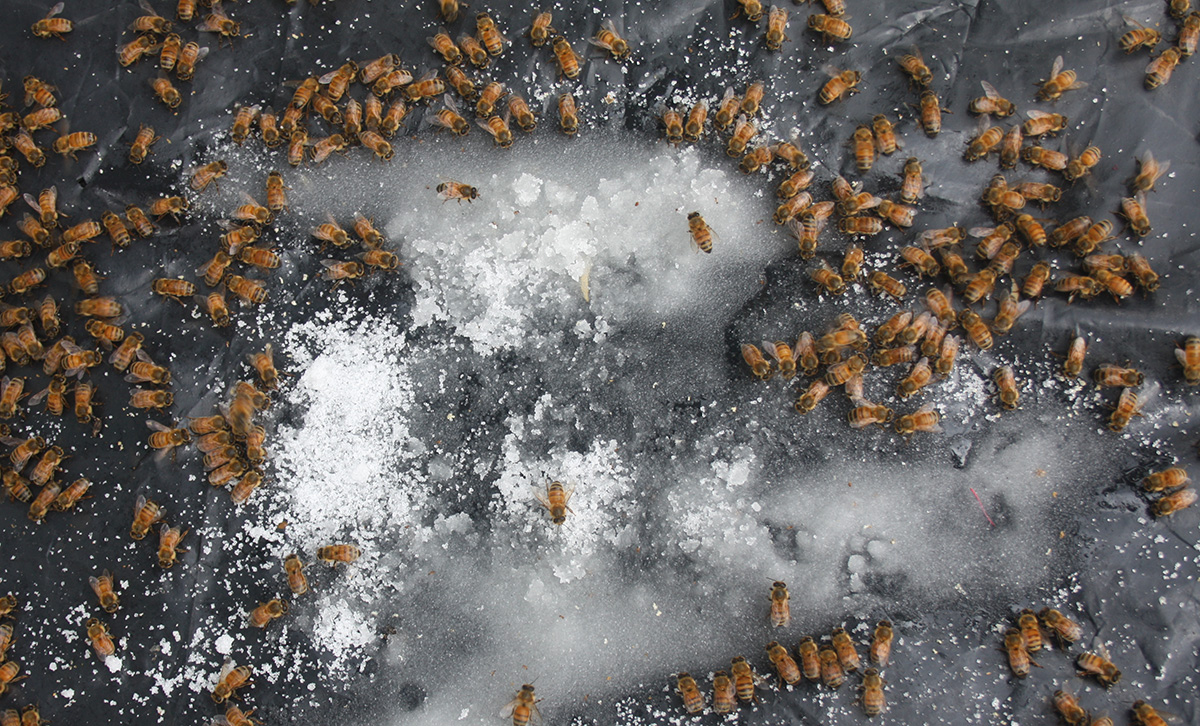
Coming into Spring
Early spring check your management results. If honey stores are low feed sugar syrup 50% water 50% sugar. This is the time when colonies can starve as the brood expands and pollen is often plentiful with little nectar available. Check Varroa numbers and treat if necessary. if over five mites in 300 bees.
Check all hives that die out over winter for symptoms
Colonies die for many different reasons but leave symptoms.
Starvation
No stored honey or nectar worker bees dead with heads in the cells, colony dead in a cluster.
Queen died
Most frames with stored pollen. Evidence of emergency queen cells on the face of brood combs
Brood Disease
Evidence of the brood disease in the cells - all brood diseases have different symptoms
Pollen deficient
No stored pollen in any cells. If colonies are on a pollen deficient winter nectar flow they can die out, full of stored honey.
Varroa
Colony absconds so no bees present and brood at different stages of development or bees walking away from the hive. Damaged brood, dead mites sunken chewed cappings, small crippled crawling bees impaired flight.
Ants and European Wasps
Predators often attack colonies and will be present.
Small hive beetles
Hive slimed out often not the prime cause.
Wax Moth present
Often not the prime cause.
If you cannot find a symptom irradiate the material to be sure it is safe to restock. Ants are experts at removing symptoms including American Foul Brood.