
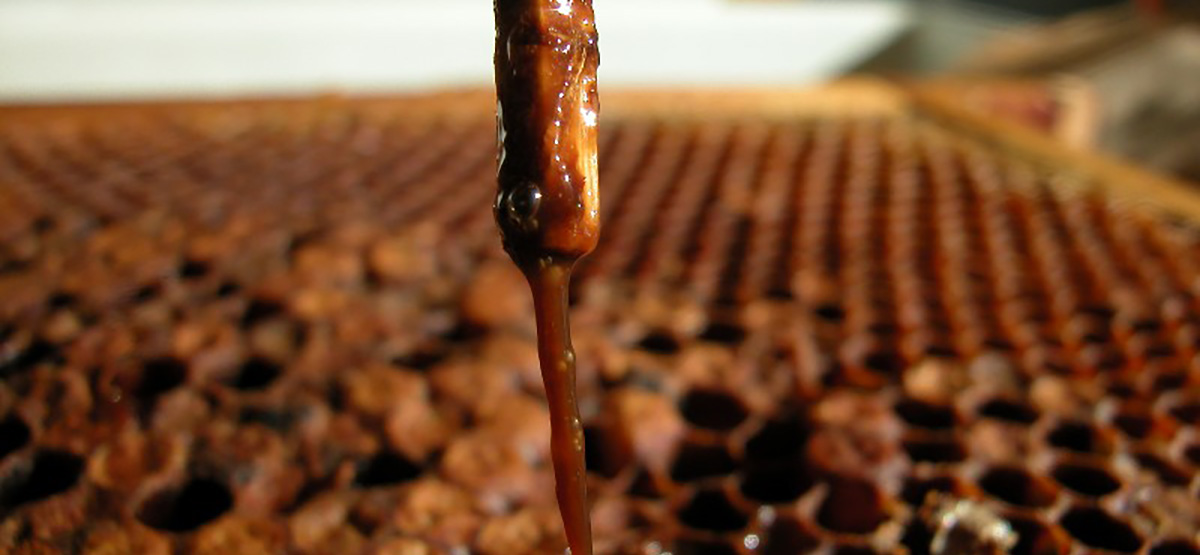
Image above and first four images below, courtesy The Animal and Plant Health Agency (APHA) Crown Copyright
American Foul Brood AFB
Bruce White Cumberland and Illawarra clubs
American Foulbrood is a highly contagious, fatal, bacterial disease affecting honey bee larvae in the brood nest of colonies. It is not a disease of humans or adult bees.
Suspect cases must be immediately reported to State Biosecurity Authorities. Only one bacterium is the cause, Paenibacillus larvae with spores remaining viable for over fifty years. If an affected hive is restocked in that time the disease can reappear.
Anyone's colonies can become affected. The beekeeper's responsibility is to eradicate the disease that is possible; some beekeepers find only one colony. I have come across others with two hundred or more before finding foulbrood..
The most significant outbreak of American Foulbrood in my time in NSWDPI was a commercial beekeeper who asked for an antibiotic to treat European Foulbrood, when on inspection his colonies had American Foulbrood.
His brood box management was to lift into the supers, wall frames without brood, with no barrier system, central extracting and spreading the American Foulbrood. The end result two full pantec semi-trailers full of hives, floor to roof, going for irradiation - every hive he owned!
Government Bee Biosecurity Officers are available to assist.
In 1964 I observed my first case of American Foulbrood at Khancoban in the Snowy Mountains and for the next forty one years helped beekeepers eradicate the disease from apiaries in my role in NSW DPI and have continued since retiring.
It is a disease that can be eradicated by destroying bees and material by burning or irradiating the material, the preferred option for sound material.
Visual Symptoms
Learn what healthy brood appearance looks like; pearly white in uncapped stages, dry, domed brown cappings with no perforations.
Only one symptom of American Foulbrood needs to be present for the disease to be present.
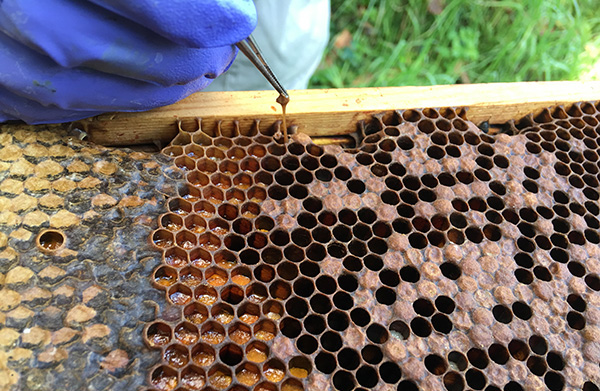
Rope Test
Could be the first symptom
Insert a match stick into a suspect cell running it along the bottom V of the cell as the symptoms occur on the bottom V of the cells don’t stir and slowly pull out if AFB is present a brown coffee colored sludge ,will stretch out into a thread or rope about 10 to 30 cm long
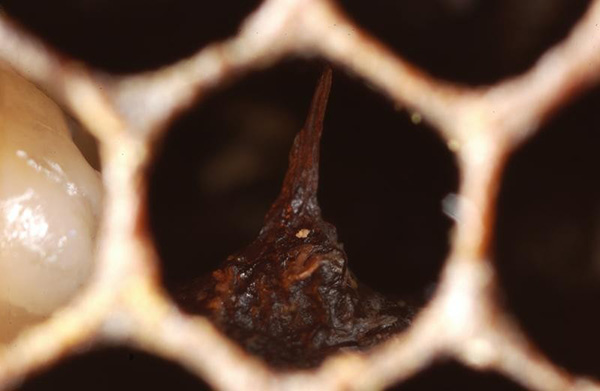
Pupal Tongue
Stage where decay of the pupa is affected results in the pupal tongue stretching from the bottom V of the cell to the top wall.
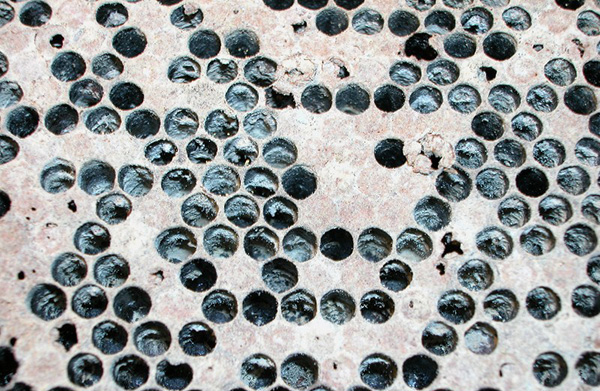
Scales
Hard scale on the bottom V of the cell the bees are not able to remove except till after irradiation one scale can contain 2.5 million highly contagious spores
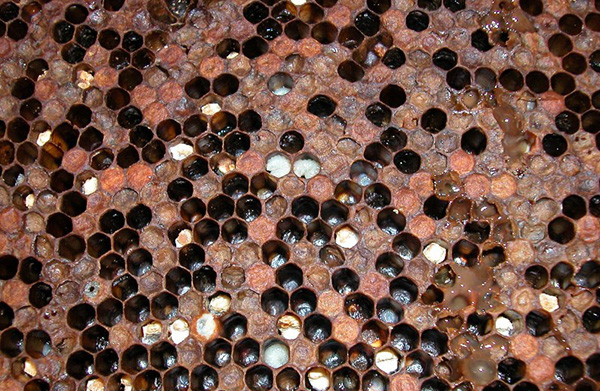
Irregular Brood pattern
Scattered capped blocks of brood not present exhibiting a pepperbox appearance with healthy and diseased brood cells capped and uncapped with many capped cell with perforated sunken caps
Smell
Often not present, not reliable.
In affected diseased colonies spores are found on adult bees, in honey bees honey stomachs, internal hive material, combs, lid, bottom board, inner mat, box walls and frames, and in any cracks. So if you had a single eight frame hive, diseased hive material could be spread twelve ways, plus by the drone and worker bees that drift.
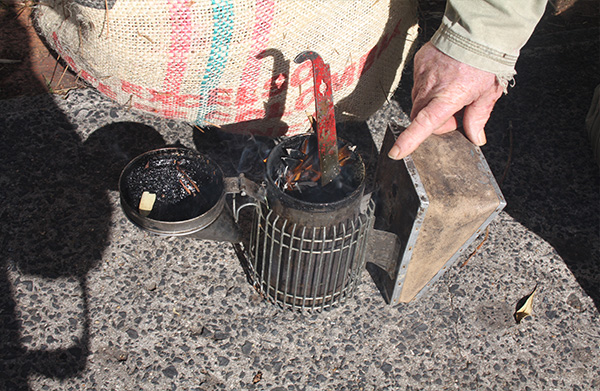
Other methods you can spread AFB in your apiary is by catching a diseased swarm. Sometimes AFB colonies abscond as a swarm, feeding honey, pollen, and second hand equipment not irradiated, and by using a hive tool and gloves with spores in wax or honey after working a diseased colony and not cleaning the hive tool. A good method for cleaning is to flame the hive tool in the smoker.
Minimum infective dose of spores
Each scale may contain 2.5 million spores.
Larvae 24 hours old are the most vulnerable stage. It requires only 6 to 10 spores to cause an infection.
Larvae 12 to 36 hours old 10 or fewer spores.
Larvae 2 days old susceptibility drops requiring 1,000,000 spores to infect .
Larvae 53 hours old are completely immune.
Regular Inspections
Play an active role in limiting the spread of all diseases by quick identification and by regular inspections at least three times a year. Every brood frame should be checked after shaking off all the bees at the hive entrance or back into the brood box. At every apiary visit check every colony with low flight activity and dead hives.
Always find out why colonies die out. Symptoms are always present and this will be covered in a later article. If in doubt, get the material irradiated.
Inspection for American Foulbrood
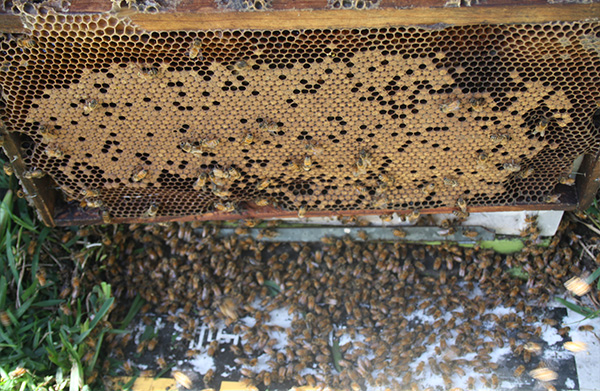
Inspect all brood combs after first shaking all the bees off the combs.
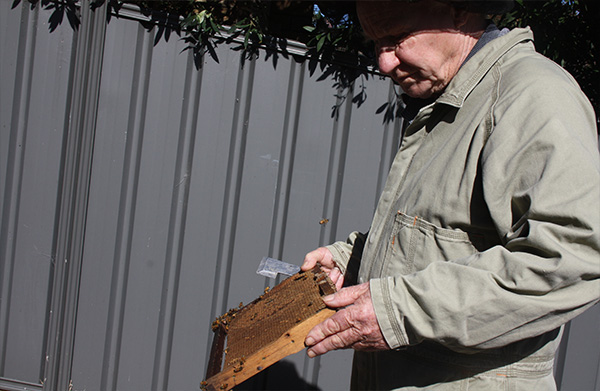
Hold the frame in good light at an angle so you can see all the possible symptoms, especially observing the cell's bottom V, from the top bar on both sides of the frame.
Preventing Spread
Adopt a barrier system where all material is kept in the same apiary or same colony. If disease occurs it is confined, saving hours of work.
If you suspect American Foulbrood get advice from your State or Territory government Department Bee Biosecurity Officers.
Treatment of American Foulbrood Hives
After reporting American Foulbrood, Biosecurity will give you instructions. It is critical all adult bees are killed at night, in the hive and no nectar or honey exposed to robber bees.
After Removing Diseased Hives
Regular inspections depending on conditions, at least no more than six weeks apart for first twelve weeks.
If possible extract all honey in the supers and scratch all capped honey in the brood box. This exposes all stored honey and if fed at the right dose rate the disease will be exposed.
Note the hive the sample was collected from.
Laboratory Diagnosis
Some beekeeping suppliers sell field diagnosis kits, a small amount of larval material is mixed with a buffer solution and drops onto a test device. Two lines indicate a positive result.
In Queensland cut a 10cm x10cm piece of suspect brood comb or honey sample. For contact and forms contact (07)37088762
New South Wales
Free for registered beekeepers
Fill out the official NSW Bee Disease Diagnosis Form
Samples
Larval smears on a glass slide. Place at least four suspect larvae showing active disease signs, use a match, mush up the larvae on the slide, smear in a thin layer and place excess back into the hive with the match.
Air dry, wrap and post between two stiff pieces of cardboard.
If you suspect scales only, cut out a piece of comb, free pack in newspaper and post.
Enclose diagnostic form that also has posting details.
Enquiries 1800675623
Northern Territory
Has eradicated all the reported outbreaks but keep it at that by being observant every brood inspection.
Testing can be by honey test or larval smear if you suspect an outbreak or get a positive test call 1800084881
In all states a bulk sample of honey a least 100 ml, (145 gm ) can be tested for American Foulbrood for a fee.