
Why Do I Need Education When The Bees Know Better Than I Do?
Fiona Fernie
TAB Editor

Apis mellifera has been around for millions of years and has survived well without beekeepers interfering. The monasteries were the great practitioners of the art of keeping bees. Honey for sweetening, mead, medicine and wax for candles. Often apothecaries in the abbeys were beekeepers, using herbalist skills and hive products for healing. All the products of the hive, propolis, royal jelly, and bee venom, along with honey and wax, were used efficiently.
These skills were passed down through the ages as the beginning of education, as we now know it. Brother Adam and the breeding of the Buckfast Honey Bee is just one example of the legacy we have inherited from our predecessor beekeepers.
These days, we have mentors in clubs who love to pass on their accumulated knowledge. This is a wonderful resource, so make good use of it, whilst you can. Formal education is also a valuable resource – imagine sitting exams and enjoying it!!!
The more you learn about honey bees, the more you realise how little you know. Every time you open a hive you learn something. Apiculture is an art and it is improved every time you read a beekeeping book or undertake formal training. Don’t be put off by terms like exams – the more you learn about beekeeping the greater will be your understanding of bees and their activities. Not all courses require exams at the end of them.
Often courses are advertised in TAB. Join them if you are able, because you make friends with like-minded beekeepers or others who may not
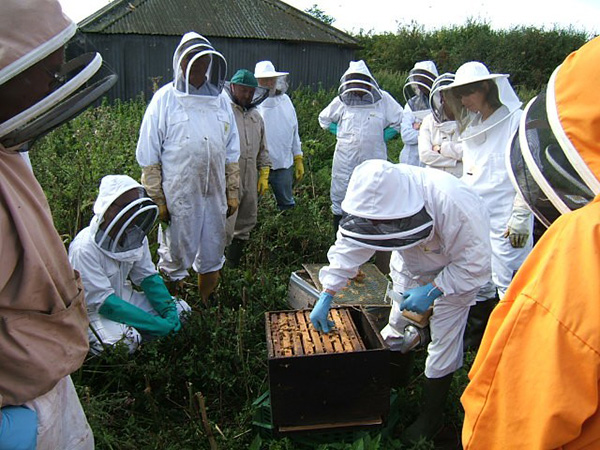
be beekeepers, but are keen to learn about making mead, queen rearing or microscopy. You may surprise yourself with acquired skills of which you never expected.
Competitions, like Col. Pulling and the Bruce White Shield awards are a great way to encourage the competitive spirit among the clubs. Testing your skills and learning what other clubs do, is a great way to diversify your knowledge. Exchanging ideas with other beekeepers is always a fun way to learn and to make friends.
October is American Foulbrood Awareness Month, in NSW. This is a polite reminder to all of our members, that Varroa destructor, is not the only health matter we are obliged to look for, as part of our honey bee husbandry.
Bruce White has written an excellent article about AFB, with detailed explanation of the symptoms and required actions. It is important to go looking for AFB, in a rigorous, methodical way. We need to search it out and eradicate it. It is a deadly, infectious bacterium and there is no cure. As Bruce explains, even a small amount of infected material goes on to contaminate whole apiaries.
All members were sent the new, updated Australian Bee Biosecurity Manual. There is a wealth of information contained therein – keep it handy and make use of the contents. There are many documents available on the internet. But, you do not need to look for lots of additional material. One document, from the UK, is a useful addition, but between what Bruce White has written in this month’s magazine and the Biosecurity Manual, you have all you need at your finger tips.
Look for disease every time you open a hive – that is good husbandry. Monitor for Varroa, Inspect for AFB and then enjoy your beekeeping. Have a great beekeeping month – we wish all members the best of luck in the Col. Pulling and Bruce White Shield competitions.
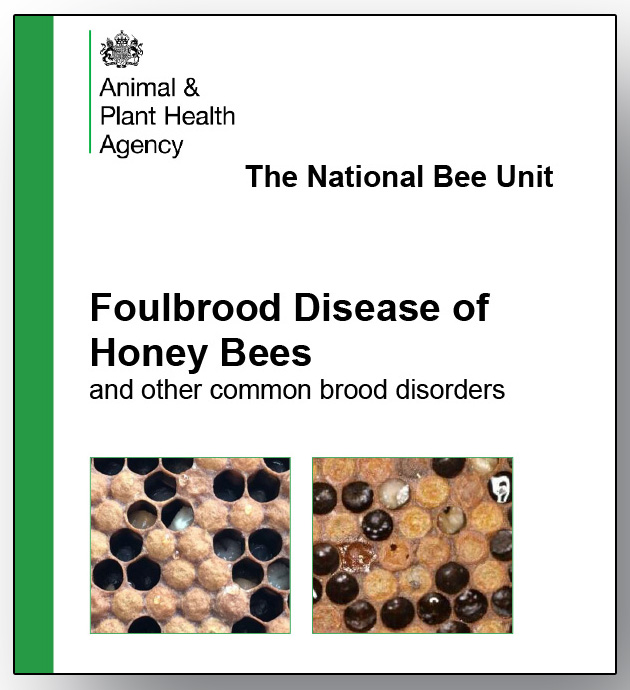
The UK Foulbrood booklet has some great images to help identify bee diseases. Click Here to download a copy