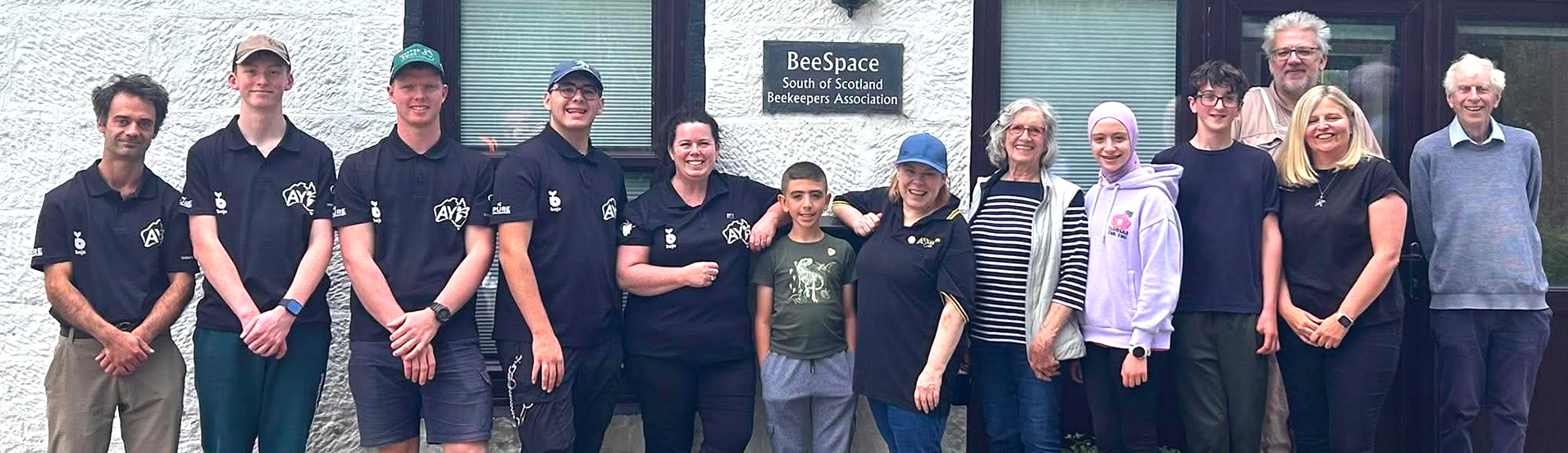
Australian Team with Scottish Beekeepers
Team Australia’s Journey to IMYB 2026
By Anita Long
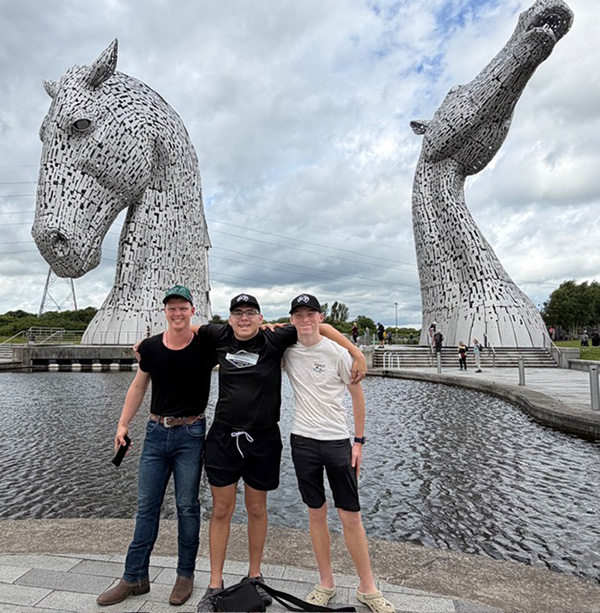
Patrick Napper from Tasmania, Josiah Dick from Queensland and Elan Meyer from Victoria recently travelled halfway around the world to represent Australia at the International Meeting of Young Beekeepers in Northern Ireland.
Together they formed the 2026 Australian Youth Beekeeping Team and became part of Australia’s third campaign to the international event.
They came from different states, backgrounds and beekeeping experiences. What united them was a genuine commitment to bees, a willingness to learn and the courage to step well beyond anything familiar.
Our aim was never simply to send a team overseas to compete. We wanted to broaden their understanding of beekeeping, connect them with young people and experts from around the world.
With Australia now facing the reality of Varroa, we also wanted Patrick, Josiah and Elan to learn directly from countries that have lived with the mite for decades and from researchers working towards better long-term solutions.
Most importantly, we wanted them to see what is possible.
Building Team Australia
This journey began long before we boarded a plane.
Applicants from across Australia completed a written application and interview process before being assessed by an independent national panel of industry leaders, professional beekeepers and past participants.
Their character, commitment, curiosity and willingness to contribute were considered alongside their existing knowledge.
Before departure, the team participated in online training, team meetings and presentation preparation. Living in Tasmania, Victoria and Queensland meant this happened online. The real work of becoming a team began when they finally met in person.
For Josiah, that started with his first-ever flight, from Brisbane to Melbourne to join Team Australia.
The day of departure was especially significant for Elan. That morning, he became an Australian citizen. Later the same day, he boarded a plane to represent Australia internationally. Days later, he would carry the Australian flag during the IMYB Parade of Nations.
From Melbourne, the team travelled through Hong Kong and London, avoiding potential conflict zones before arriving in Scotland after approximately 38 hours. We were exhausted, but the excitement of finally beginning the journey was unmistakable.
Supporting Patrick, Josiah and Elan was Team Leader James Horan, a commercial beekeeper and experienced youth educator. James brought practical knowledge, calm leadership and a quiet, measured presence. He knew when to offer guidance and when to step back and allow the team to work things out.
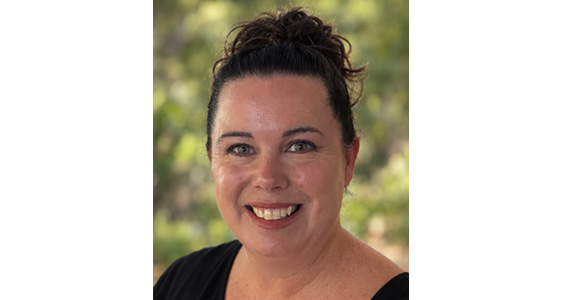
I travelled as Team Coordinator, responsible for developing the program and managing the planning, communication and logistics around it. Our role was to create the structure, keep everyone safe and make sure our young beekeepers had room to experience the journey for themselves.
Learning through Scotland
Before travelling to Northern Ireland, Team Australia completed a carefully planned learning program in Scotland.
Across several separate visits, the team explored youth beekeeping education, hive management, farming, business diversification and Varroa preparedness. Each experience offered something different and helped Patrick, Josiah and Elan build confidence as a team before entering IMYB.
This program would not have been possible without Michelle Berry from the Scottish Beekeepers Association.
Michelle and I first connected through the International Meeting of Young Beekeepers in 2019, with that relationship growing during my Churchill Fellowship visit to Scotland in 2023. Years later, it helped open doors for Team Australia.
Michelle understood what we hoped the team would gain and brought together educators, farmers, youth advocates and experienced beekeepers who generously shared their time and knowledge.
Passion alive at Baldragon Academy
At Baldragon Academy in Dundee, Fred Mollison introduced the team to a school where beekeeping has become a meaningful part of students’ learning.
Around 24 young people participate each year, working directly with bees while developing practical knowledge, responsibility and confidence. Baldragon, like most educational programs, does not have endless resources, but its passion for giving young people access to beekeeping is alive and thriving.
One of the most memorable parts of the visit was watching Patrick, Josiah and Elan support Scottish students who had never previously entered a hive. The shared Caramello Koalas went down a treat too.
Our team helped the students prepare, reassured them and stood beside them as they opened the colonies. Watching one group of young beekeepers help another experience bees up close was
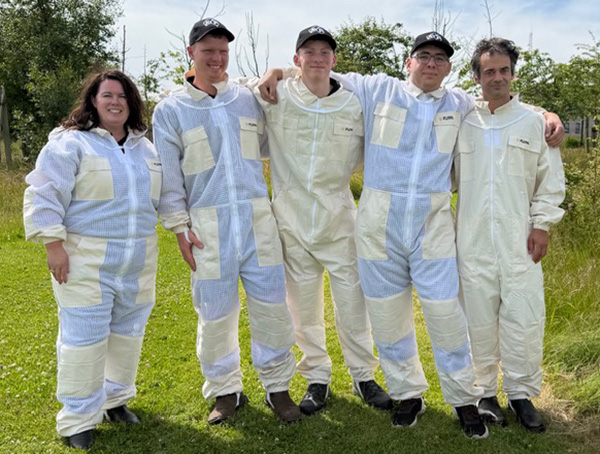
genuinely special. It captured the value of international youth beekeeping far better than any formal presentation could.
The Flow Hive protective suits, so generously donated by the team at FLOW and used by Team Australia throughout the trip were later sent back to Baldragon Academy, where they will continue helping students enter the apiary safely and confidently for years to come.
Beekeeping and Farming for Success,
On a separate visit to Kin Bees, Gail Wilkinson shared a practical and honest view of operating a beekeeping enterprise in Scotland.
The team explored wintering methods, hive management and diversification through hive sponsorship, value-added products and arrangements with landholders. Gail, who is quite the celebrity beekeeper in Scotland, ensured our young beekeepers got an in-depth look at beekeeping on a scale that is achievable, manageable and successful.
At Urquhart Farm, farmer Colin Fleming explained his holistic approach to agriculture and the importance of diversity to environmental health and farm productivity. Among the lambs and Highland “coos”, the team saw how varied pasture and thoughtful land management could benefit livestock, honey bees and other pollinators.
It was a practical demonstration of the close relationship between beekeeping, agriculture and food production.
Team Australia’s visit even made the local newspaper which was great to see.
Varroa Management and Education
Lorraine and Phil Johnston and the South of Scotland beekeeping community provided another important layer of learning. Lorraine’s knowledge as Scotland’s Varroa Coordinator, combined with her experience in youth education, gave the team valuable insight into the challenge of Varroa and the work required to help beekeepers prepare.
We were also joined by the Scottish IMYB team for a combined training and education session. We also shared home treats, local honey and exchanged gifts.
Patrick, Josiah and Elan joined Lorraine in her Apiary Officer role and undertook a methodical hive inspection, learning what to look for and how easily signs of pests or disease can be missed.
They also learned about surveillance, early intervention, beekeeper education and the important work being done to protect areas that remain free from Varroa.
Australia is still learning how to live with the mite, while Scottish beekeepers have managed it for decades. The visit gave the team a clearer understanding of monitoring, timing, record keeping, treatments, genetics and honest colony assessment.
Representing Australia at IMYB
The International Meeting of Young Beekeepers brings together young people from around the world for practical competition, education, cultural exchange and friendship.
The 2026 event welcomed participants from around 30 countries, each bringing different hive systems, equipment, languages and ways of managing bees.
The event gives both young beekeepers and youth beekeeping advocates the opportunity to learn from one another, embrace their differences, and form genuine connections through our shared passion for bees.
On arrival, the team nerves were understandably high, but they did not last long.
Connections began forming from the first evening through games of pool, shared meals and informal conversations. Language differences sometimes made communication difficult, but the young participants kept finding ways around them. Laughter, music, practical activities and a shared interest in bees created their own common language.
The official Parade of Nations brought the teams together, each carrying its flag and representing its beekeeping community. Elan carried the Australian flag, an especially proud moment given that he had very recently become an Australian citizen.
The competition tested practical skills, observation and problem-solving across hive management, honey bee biology, pests and diseases, honey assessment, equipment and broader industry knowledge. Unfamiliar hive types and management practices required participants to think beyond what they already knew.
Importantly, participants competed within mixed international teams. Success depended not only on knowledge, but on communication, cooperation and finding ways to work together across differences in language and experience.
The program also included a cultural visit to Stormont, home of the Northern Ireland Assembly. Participants were welcomed by the Deputy Speaker and helped plant a native garden to mark the gathering.
Behind every meal, transfer, competition station and activity were organisers and volunteers who had given their time to make the meeting possible. The welcome extended to Team Australia was generous, and the friendships created will remain long after the results are forgotten.
IMYB 2026 will go down as relaxed, friendly and with young people at the centre and focus of the event, as it should be.
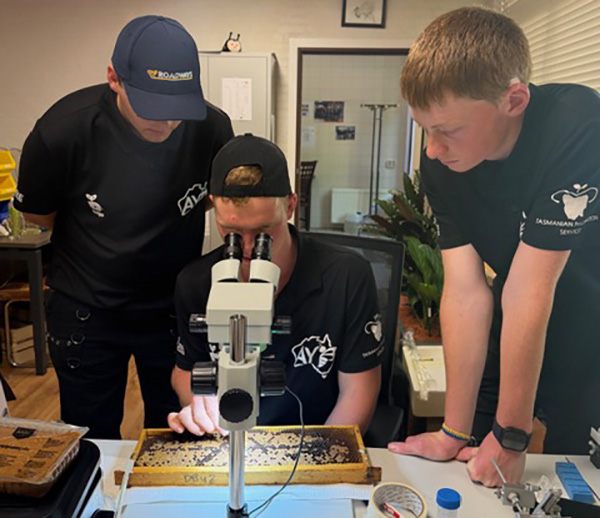
Patrick, Josiah and Elan
While IMYB is about far more than placings, the team’s results deserve to be recognised. Team Australia finished seventh overall.
Josiah finished second overall in the individual competition, an extraordinary result among young beekeepers from around the world.
His practical farm background and beekeeping knowledge were evident throughout the journey. He asked thoughtful questions, earned the respect of those around him and embraced every challenge, from his first flight to standing among the world’s best young beekeepers.
Elan’s mixed international team won the team section of the competition. The result reflected technical ability, but also communication, cooperation and leadership across cultural and language differences.
As Team Australia Captain, Elan was thoughtful, dependable and consistently engaged. His leadership was quiet but always present. He noticed when others needed help, made sure people were included and knew when to step forward. He was a steady and caring leader who could be relied upon throughout the journey.
Patrick achieved a top-12 individual result, an excellent performance in a highly competitive international field.
He brought enormous energy, warmth and character to Team Australia. Patrick has a natural ability to connect with others and was often the person making sure someone new or isolated felt welcome. His open and honest gratitude was one of his most endearing qualities. He thanked people with such sincerity and enthusiasm that nobody could doubt how much each experience meant to him. He never took the opportunity, or the generosity of those who created it, for granted.
Patrick, Josiah and Elan were not identical, and we never wanted them to be. Each brought something different to Team Australia. Together they represented their country with knowledge, humour, kindness and genuine enthusiasm.
From competition to global food production
After IMYB, the learning continued in the Netherlands with Bejo Seeds, our Platinum Sponsor.
The scale of Bejo’s operation was incredible. Until you walk through its facilities, it is difficult to comprehend the research, technology, people and carefully managed processes behind the production and international movement of seed.
Corrina guided the team through the facilities and explained the journey from breeding and seed production through cleaning, quality control, packaging and global distribution.
At Bejo, Patrick, Josiah and Elan could see where bees and pollination fit within the enormous international system that produces and distributes seed. The visit showed how research, agriculture, technology and international trade come together long before food reaches a farm, market or family table.
What made the experience particularly meaningful was the way the Bejo team welcomed us.
Even staff members encountered unexpectedly throughout the facilities recognised Team Australia and understood why we were visiting. Bejo’s internal communications had shared the team’s story, making Patrick, Josiah and Elan feel genuinely valued.
Beekeepers, Luuk and Paul took the team into Bejo’s apiaries for an extensive practical session. They explored Varroa management, queen mating and drone-building hives used within Bejo’s breeding work. They were able to examine the colonies, equipment and systems supporting the organisation’s bee research.
We even found a Tasmanian from Tasmanian Pollination Services working in the Bejo hives. It was a small moment that showed just how connected the international beekeeping industry can be.
The team also examined an Asian hornet specimen, another pest creating serious challenges for beekeepers.
Bee researcher Shaun introduced them to work being undertaken to breed bees with improved Varroa resistance. This was not a simplified presentation created for young visitors. It was a genuine discussion about current research, the complexity of selective breeding and the enormous time, patience and precision required to achieve meaningful progress. This highlighted to our young beekeepers that breeding for Varroa is much more than seeing what colonies survive.
Our team was also fortunate to catch up with Ger Beemsterboer, a member of the founding family at Bejo who has been a long standing and genuine supporter of both Tasmanian Junior Beekeepers and Australian
Youth Beekeeping. Spending time with Ger and exploring his remarkable vegetable and pollinator garden was therefore especially meaningful. After seeing the extraordinary scale, research and technology behind Bejo’s international seed production, the garden brought everything back to where it started: soil, seeds, plants, insects and people. Ger’s warmth, generosity and genuine belief in young people made this far more than another stop on the itinerary.
Bejo’s support extended far beyond financial sponsorship. As Platinum Sponsor, the organisation funded the team’s international flights and provided access to researchers, beekeepers, facilities and experiences that would otherwise have been out of reach.
We are also especially grateful to Mick Palmer from Tasmanian Pollination Services, whose relationships and support helped establish and strengthen these international connections.
A profound day at Arista Bee Research
The team’s final major learning experience was a day at Arista Bee Research.
BartJan, Marianne and their team gave Patrick, Josiah and Elan direct insight into breeding bees with Varroa Sensitive Hygiene, commonly known as VSH.
The team examined breeding colonies, conducted mite counts and identified Varroa at different stages of development. They saw the extensive work required to develop a desirable trait into a reliable breeding program.
Arista’s work is moving into exciting territory. Some of the research shared with us must remain confidential, but it was clear that significant progress is being made. The work being done at Arista will change the way the world can identify true VSH. Being trusted with an insight into that work was a privilege.
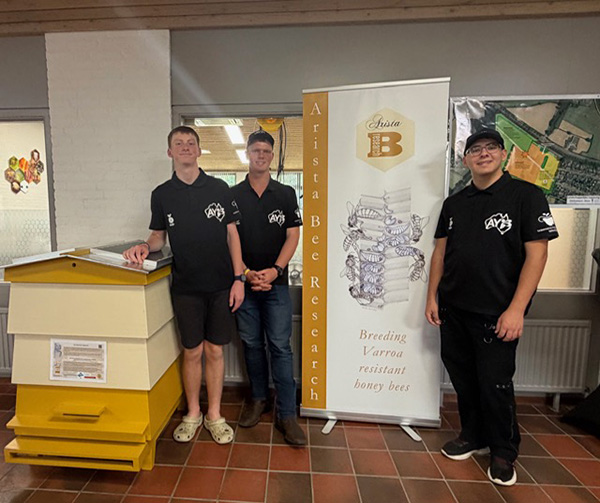
Patrick, Josiah and Elan did not stand at the back and watch. They participated, asked questions and contributed to discussions with people working at the leading edge of Varroa research.
The time in the Netherlands sparked some genuine interest from our young beekeepers to enter the research sector of beekeeping.
2026 IMYB Campaign, More Than Just a Competition.
The team returned to Australia without claiming to have all the answers. What they brought home was something more useful: a deeper understanding of the questions Australia now needs to ask.
This experience confirmed that young beekeepers are capable of engaging with complex industry issues when given genuine opportunities.
They do not need everything simplified. They need patient teachers, practical experiences, room to ask questions and adults who believe their contribution matters.
The journey was not always perfectly polished. Patrick, Josiah and Elan experienced nerves, tiredness and the ordinary pressures that come with weeks of international travel. The value lay in giving them responsibility, supporting them through challenges and allowing them to discover what they were capable of.
Whilst International travel is a privilege, most learning happens at home, beside local beekeepers, in family apiaries, clubs, schools and community programs. For our young beekeepers who got to travel internationally are able to do so because many people have already invested time in teaching, supporting and encouraging them.
The value of this experience will be seen in what Patrick, Josiah and Elan do next, in the knowledge they share, the people they encourage and the way this experience shapes their involvement in beekeeping.
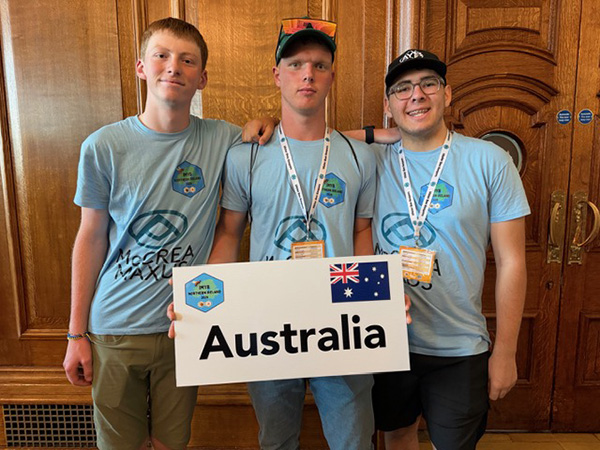
An Opportunity Made Possible By Many
No team represents Australia alone.
Whilst many countries attending IMYB envy the opportunities we give to our young beekeepers, the fact is Australia is a long way away to go to an event for 5 days. To attend IMYB 2026 and create the opportunities for our three young beekeepers for this campaign cost over $50,000 and many months of intense planning and development.
We extend our sincere gratitude to Platinum Sponsor Bejo Seeds; Gold Sponsor Tasmanian Pollination Services; and Silver Sponsors Pure Pollination and Flow Hive.
We also thank AHBIC, the NSW Apiary Association Sydney Metropolitan Branch, Tasmanian Beekeepers Association, Victorian Apiarists’ Association, Queensland Beekeepers’ Association, R. Stevens Honey,
Goldfields Apiaries, BeeHero, Roadways, Michael and Tanya Ford, Friends of Brenty Brae, and every organisation, business, community group and individual who contributed to make this campaign possible.
We thank Michelle Berry and the Scottish Beekeepers Association, Fred Mollison and the Baldragon Academy, Gail Wilkinson and Kin Bees, Colin Fleming and Urquhart Farm, Lorraine and Phil Johnston and the South of Scotland beekeeping community.
In the Netherlands, our sincere thanks go to Ger, Corrina, Luuk, Paul and Shaun, and the entire Bejo team, and to BartJan, Marianne and everyone at Arista Bee Research.
We also acknowledge the families who trusted us with their young people and supported the preparation required to make the journey possible.
James Horan deserves particular thanks for the precious time he took away from family, his calm leadership, practical knowledge and steady support throughout the trip, and for taking the boys hiking to experience the real side of traveling, whilst leaving me to explore the more relaxed sights in the very few moments of down time.
Finally, we thank the organisers and volunteers of IMYB 2026 and the international community that welcomed Team Australia so warmly.
Patrick, Josiah and Elan represented their country, but hundreds of people stood behind them.
They returned home with wider knowledge, greater confidence, international friendships and a clearer understanding of the part they can play in the future of beekeeping.
We are incredibly proud of them and deeply grateful to everyone who gave them that chance.