
AFB at McLeans Ridges
Why vigilance matters more than ever
By Jamie Martin ABA Education Officer

American Foulbrood is something every beekeeper hopes never to encounter. At McLeans Ridges, it has become a very real and difficult part of our beekeeping journey.
Our first confirmed case began with an inspection on 31 May 2026. Suspicious signs were recorded, the authorities were notified and a sample was submitted for laboratory testing. The result confirmed American foulbrood.
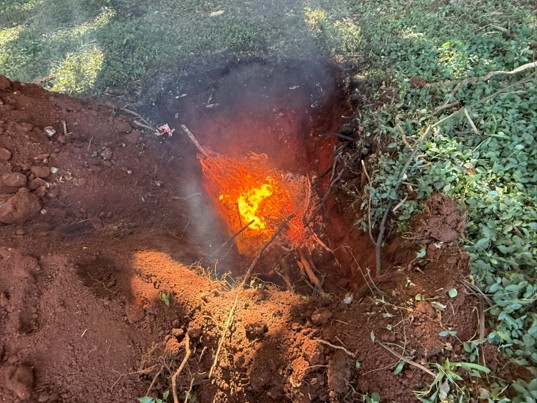
The affected colony could not be saved. The hive was destroyed and burnt on site to prevent contaminated material from remaining accessible to bees.
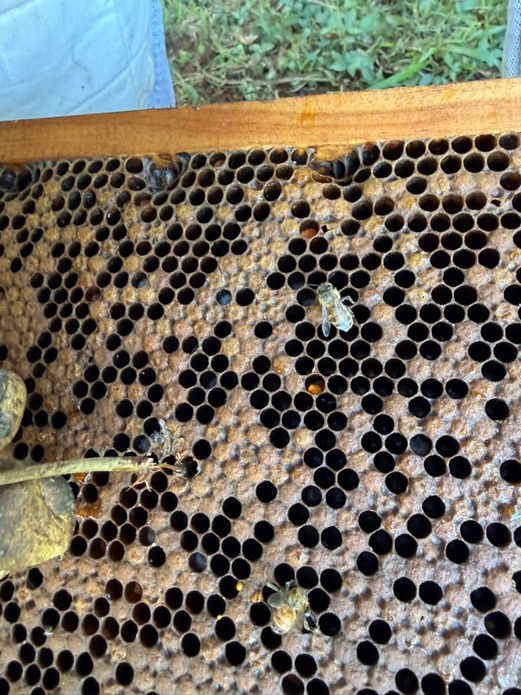
A brood frame from the affected apiary. Photographs help document observations, but confirmation of AFB relies on proper investigation and laboratory evidence.
AFB is caused by the spore-forming bacterium Paenibacillus larvae. Its spores can remain viable for many years in honey, wax, comb and beekeeping equipment. Infected material may spread the disease through robbing, drifting bees, contaminated tools or the movement of bees and equipment.
Destroying one affected colony therefore does not mean the risk has disappeared.
That lesson was reinforced when another McLeans Ridges colony showed AFB signs during an inspection on 25 July. Authorities were notified, another sample was submitted, and the second positive laboratory result was recorded in early August.
Two confirmed colonies at the same apiary within approximately eight weeks changed the way we think about monitoring. This was not simply an isolated incident that could be dealt with and forgotten. It demonstrated why every colony must remain under observation after a detection—even when the first affected hive has already been removed.
Destruction of the first confirmed AFB-affected hive at McLeans Ridges—a confronting but necessary biosecurity action to prevent infected material from being robbed or reused.
What our experience has taught us
AFB surveillance cannot depend on waiting for a colony to become obviously weak. Brood frames need to be examined deliberately and regularly, with bees moved aside so the brood pattern and individual cells can be seen clearly.
Beekeepers should watch for:
- irregular or “pepper-pot” brood patterns;
- sunken, darkened or perforated cappings;
- discoloured or decomposing larvae;
- larval remains that draw into a sticky thread;
- dark, firmly attached scales inside brood cells; and
- unexplained weakening of a colony.
These signs should be treated as reasons to stop, isolate the equipment and seek expert guidance—not as a basis for making a diagnosis from appearance alone.
Good records are equally important. Hive identity, inspection dates, observations, photographs, samples, laboratory results and follow-up actions must remain connected. Our records allowed us to reconstruct the sequence from the initial observations through notification, laboratory confirmation and destruction of the first colony. They also revealed that the later positive result involved a different colony.
Why monitoring matters now
AFB does not disappear when a hive is burnt. Its spores can persist wherever contaminated material has been carried, stored or exposed.
After more than one confirmed detection, complacency becomes one of the greatest risks.
Our response now is continued surveillance: inspect carefully, keep equipment bee-proof, avoid transferring suspect material between colonies and record every meaningful observation. If signs are suspicious, act early.
In NSW, American foulbrood is notifiable. Suspected cases must be reported within one working day. Even when you are uncertain, reporting allows the concern to be investigated.
Our experience at McLeans Ridges has been confronting, costly and deeply disappointing. But hiding AFB helps nobody. Careful monitoring, honest reporting and good records give us the best chance of protecting neighbouring apiaries and the wider beekeeping community.
AFB is a shared biosecurity problem. Vigilance in one apiary helps protect every apiary around it.
Further information
NSW biosecurity reporting: service.nsw.gov.au/transaction/report-a-biosecurity-concern
NSW Managing AFB guidance: dpi.nsw.gov.au/__data/assets/pdf_file/0011/558434/managing-afb.pdf