
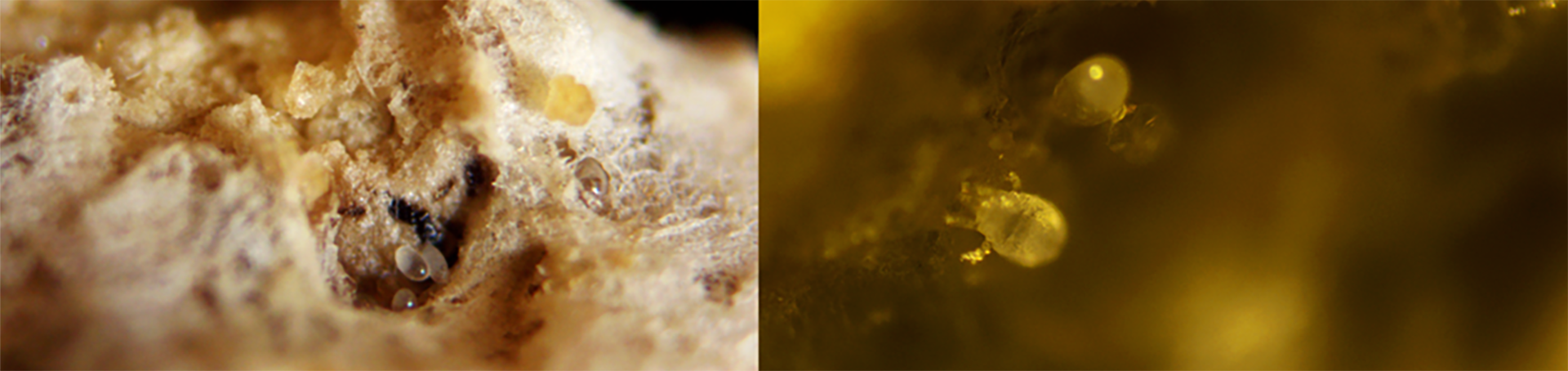
Fig 01 New juvenile mites emerging from eggs with fungal mycelium
The Other Mites In Your Hive
By Ray Baxter
(author of Bottom Up Beekeeping)

Introduction
I have developed a complicated relationship with mites. It is equal parts fascination and suspicion. Like many people of a certain age, my earliest impressions of these tiny animals came from school nit inspections. Memories of Nitty Nora the Bug Explorer, the dreaded queue outside the classroom, and the embarrassment of being sent home with a bottle of "special" shampoo left a lasting impression. Small creatures that lived on people or animals were, quite simply, bad news. The lesson was: if something tiny was living on you, it needed to be killed.
Beekeeping confirmed that belief. We quickly learn the names of the villains: Acarapis woodi, Varroa destructor, Tropilaelaps and others. Mites, it appears, are synonymous with disease, parasites and colony decline.
It wasn't until I began studying the debris that accumulates beneath my colonies, that this view started to change. Among the wax fragments, pollen grains and discarded brood remains were other tiny inhabitants—many other mite species appeared to be living alongside the bees without causing them any obvious harm. Rather than parasites, most mites seemed to be simply sharing the hive environment, quietly carrying out important ecological roles.
My first mites
Figure 01 shows the eggs laid by the first mites I found in the debris . Identifying adult mites from their tiny morphological features is challenging. These juvenile mites quickly developed into adults, about 0.4 mm long and rarely stayed still. Trying to photograph moving mites down a microscope makes you realise why they are described as the fastest known animals relative to their size (Mathhew Shepard, 2021). Although I am no acarologist, the Bee Mite ID key (USDA, 2016) suggests the parents were Carpoglyphus lactis.
The first mite discovery sparked an unexpected fascination. It turns out that honey bee colonies are not inhabited solely by bees and pests; they are miniature ecosystems supporting an astonishing diversity of organisms, many of which are rarely noticed. Some of these mites even play valuable roles in breaking down organic debris and recycling material within the hive. The more I read, the more fascinating the story became. Estimates of the number of mites vary. Bee Mite ID lists 90 taxonomic groups of mites that co-exist with bees and USDA (2024) says that “bees are associated with over 700 species of mites from 236 genera”. It’s also fascinating to learn that an estimated 97% of mite species living on planet earth have yet to be discovered (Shepard, 2021)
This month’s article tells the story of how a closer look beneath the colony floor led me to rethink what mites are and offers a few practical tips for anyone who would like to go on a mite hunt of their own.
Studying how mites live
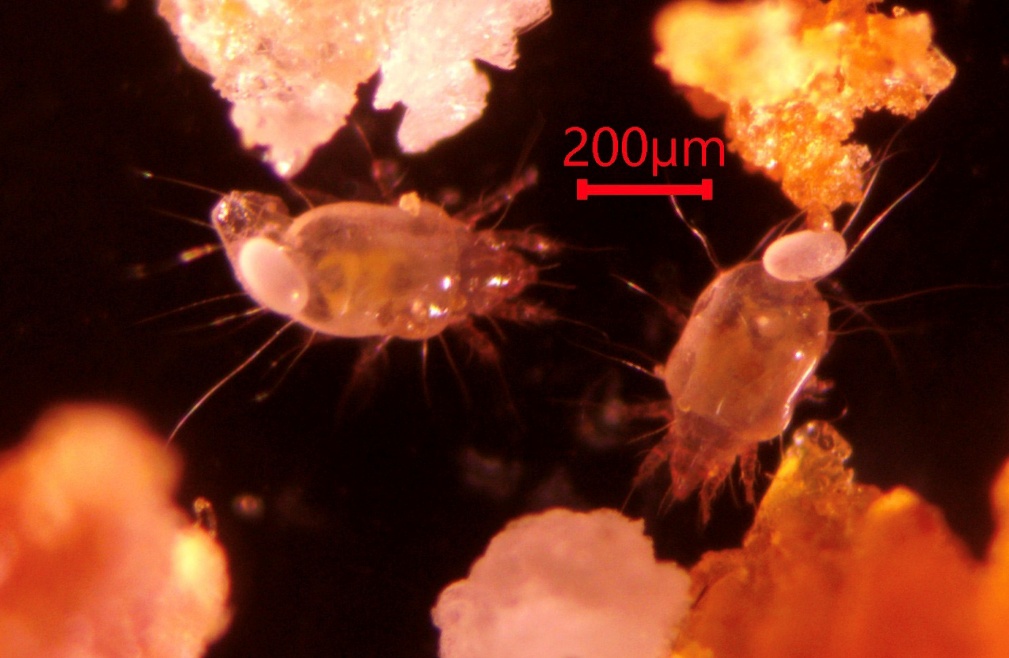
When I began studying bee debris, I hankered after access to DNA testing technology (I still do) to identify mites. Looking back, I am glad I didn't have it. Hours spent watching these mites has revealed far more about their ecology than a remotely obtained name ever could. I watched them feed, carry eggs, reproduce and produce several generations in small containers of hive debris. For example figure 2 shows a common find. Along with eggs, mites lift and carry a wide variety of material within the debris . Shepard (2021) also says that mites are also the strongest known animals relative to their size.
The mites described in this article are often referred to as 'pollen mites', a name that I now find misleading. It suggests that their role is simply to consume pollen, when in reality they contribute to a much wider range of ecological processes within the hive. Most of the mites I observed live amongst a wide diversity of hive debris, where they feed
on a complex mixture of decomposing organic matter. In doing so, they help recycle material that would otherwise accumulate within the colony.
Identifying mites in the debris
Since finding my first mite, I have identified several more species in hive debris and learned one important lesson: photographs are rarely sufficient for reliable identification. Most species require examination under a microscope, the use of an identification key and careful study of the underside of the body, where many of the distinguishing features are found. DNA-based techniques would undoubtedly provide greater confidence, but for now I am thoroughly enjoying the challenge of learning to identify these remarkable animals using microscopy. Figure 3 illustrates just a few of the mite species that I have found in my hives.
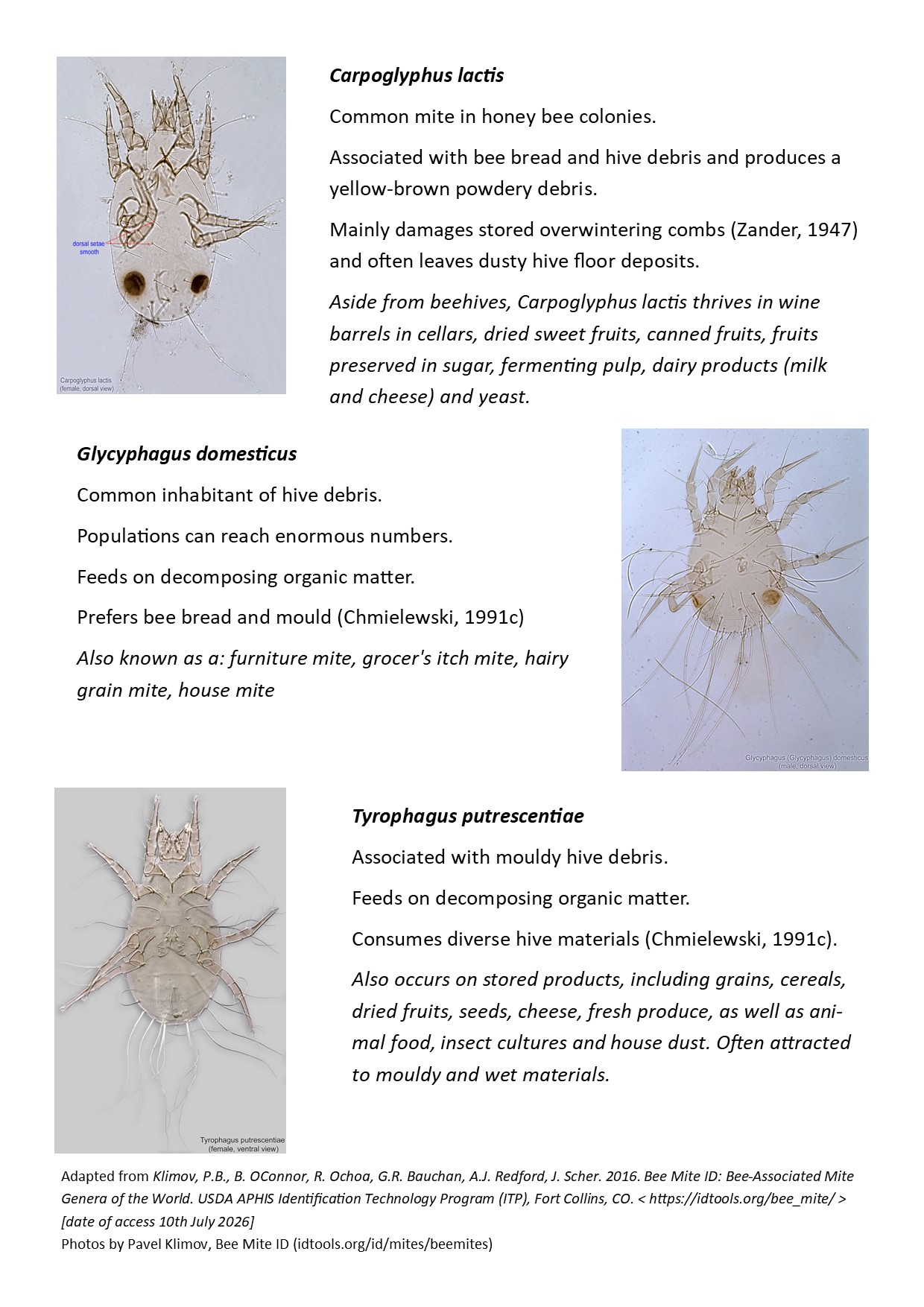
Fig 03. Three common mites in UK bee hives.
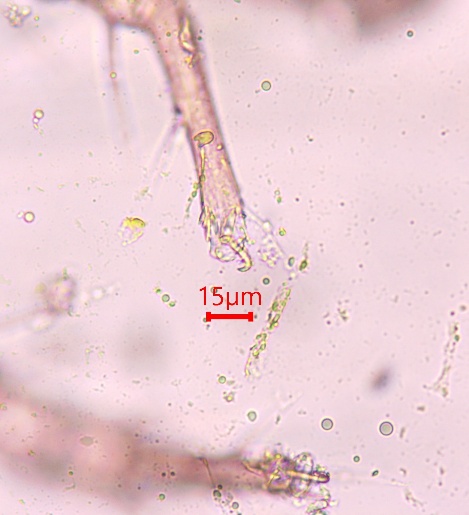
These three mite species also feature in a study by Clive Bowman (2023), which examined how differences in mouthpart structure ( see figure 4) relate to feeding behaviour. Bowman describes how the movable digits of the chelicerae—the jaw-like mouthparts—pivot to grasp, crush and saw food. By comparing the form and mechanics of these structures, he was able to infer the feeding strategies of different mite species.
Tyrophagus putrescentiae has the smallest chewing surface, measuring less than the diameter of most pollen grains. It appears well adapted to feeding on the smallest, softest food particles, including yeasts, fungal spores and mycelium. In contrast, Carpoglyphus lactis possesses larger mouthparts better suited to handling pollen grains and larger food fragments. This work highlights that different mite species occupy distinct feeding niches within the hive, allowing them to exploit different food resources rather than competing directly for the same material.
Identifying what you can’t see
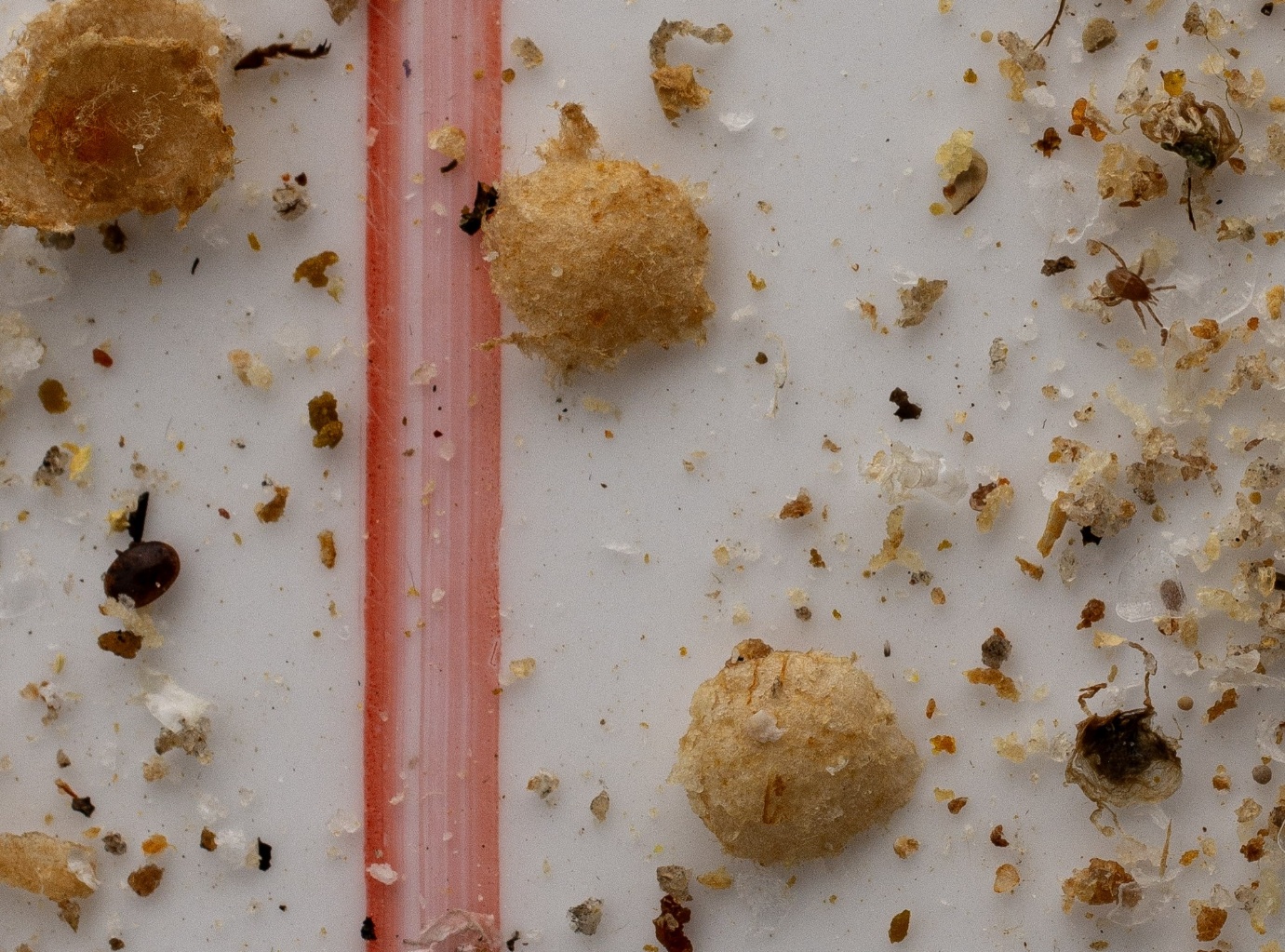
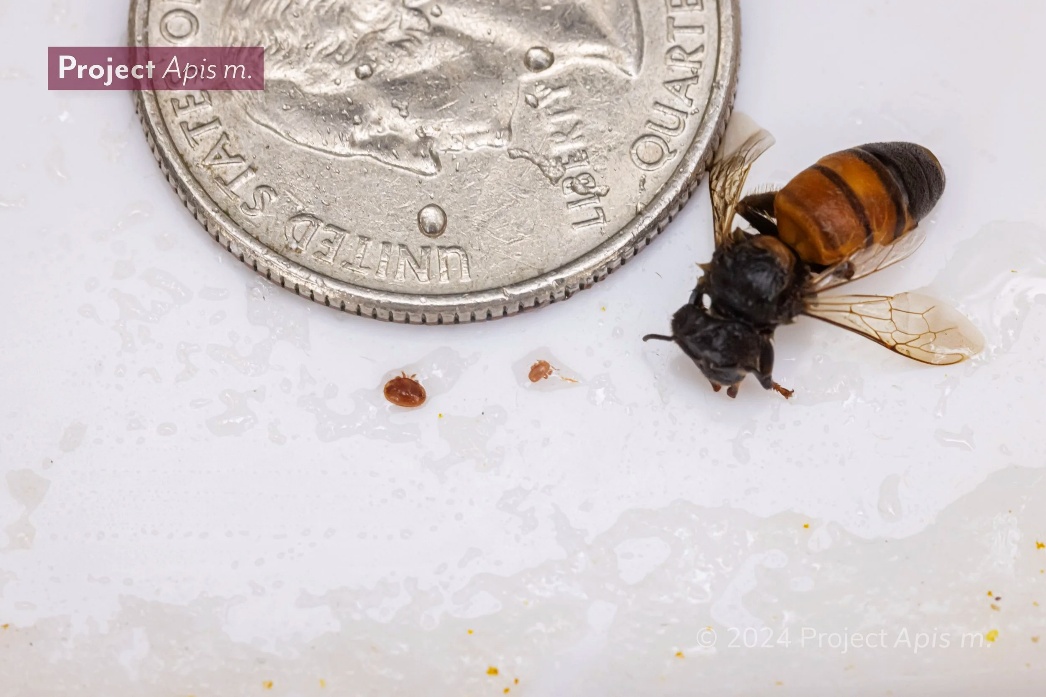
Figure 5 shows some of the difficulties trying to identify mites. The larger reddish-brown mite on the left is clearly Varroa destructor (see 8 o’clock). The smaller, elongated mite at 2 o’clock, with long front legs that resemble antennae could, at first glance, easily be mistaken for Tropilaelaps. If I had relied on this photograph alone, I might well have reached that conclusion. Comparing my photograph with the training image produced to help beekeepers recognise Tropilaelaps
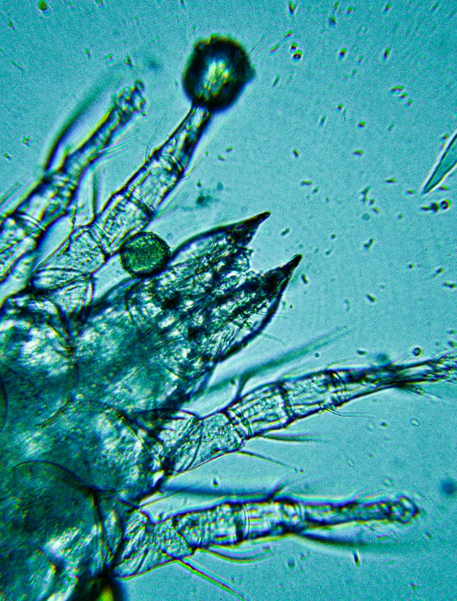
(see figure 6) shows just how similar different mite species can appear. It is a useful reminder that first impressions are not always correct.
Accurate mite identification depends on features that are invisible to the naked eye. Are the leg joints fused to the body? Are there suckers beneath the abdomen? How many claws are present on each foot? Are there bristles, respiratory openings or protective plates covering the mouthparts?
These tiny anatomical details are often the only reliable way to distinguish one species from another. Figure 8 shows a simplified key from my lab book created to help with identification. These physical characteristics, when used alongside a biological key, provide a powerful way to narrow mites down to genus—or sometimes even species. It’s worth emphasising that most of these mites are invisible to the naked eye, so a microscope isn’t optional—it’s essential
This experience of mite identification has made me much more cautious when naming mites. A photograph can raise good questions, but sometimes is not enough to provide a definitive answer. Compared with identifying an Asian or European hornet, telling one mite from another can make hornet identification seem almost straightforward.
Finding mites
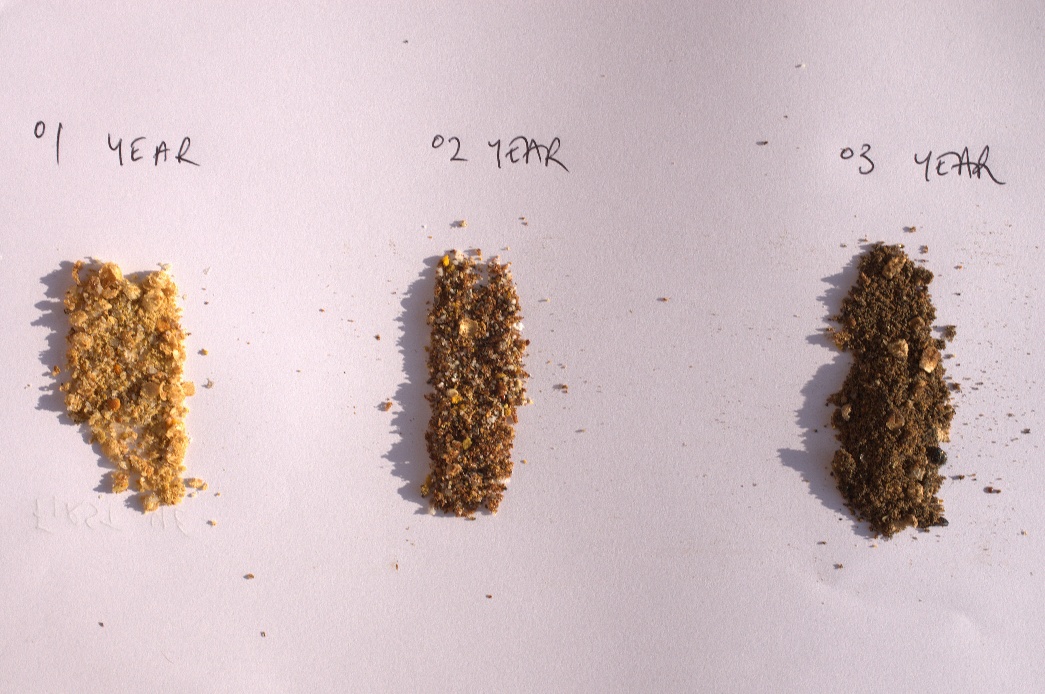
Finding mites is surprisingly easy. Figure 8 shows three debris samples collected during July 2026. The palest sample came from a colony with brood comb less than one year old, while the darkest was collected from brood comb that has been in constant use for more than three years.
One feature immediately caught my attention. The darkest debris had the appearance of a very fine powder, suggesting that the larger fragments of wax, pollen and organic matter had been broken down into much smaller particles. In my experience, this is often a
good indication of a large and active mite population. Examination under the microscope confirmed this impression: the darkest sample contained many thousands of mites, while the younger comb samples also supported mites, but in considerably lower numbers.
Although this observation is based on only a small number of colonies, it suggests that the texture/age of hive debris may provide a useful visual clue to the abundance of these often-overlooked recyclers.
Conclusion
Mites have acquired an unfortunate reputation among beekeepers. Much of this stems from the enormous body of research devoted to a small number of harmful species, particularly Varroa destructor and Tropilaelaps. This work is unquestionably important, but it also reveals an imbalance: we invest in understanding the mites that damage honey bee colonies, while paying comparatively little attention to the many other species that live alongside them.
More broadly, this reflects a research landscape shaped, at least in part, by bias. Studies tend to focus on the economically important honey bee rather than other pollinators and understandably prioritise species that cause harm. Such biases, however, influence not only what we study, but also how we think about mites and bees.
Many mites carry out ecological roles that extend far beyond parasitism. They graze on fungi, feed on decomposing organic matter and help recycle the pollen, wax and other organic debris that accumulate within a colony. By processing this material, they contribute to nutrient cycling and may even help maintain the balance of the hive's microscopic ecosystem. If we only look for harmful mites, it is perhaps unsurprising that this is all we find.
This perspective also raises an interesting question. Varroa treatments are intended to control parasitic species, but what effect, if any, do they have on the wider community of non-parasitic mites living within the hive? Could treatments alter the composition of this community, reducing species that play beneficial roles in recycling organic matter, or are these mites largely unaffected? I have been unable to find a definitive answer to these questions, however considering the widespread use of treatments such as Amitraz to control many mite species, ticks, and other pests across agriculture and veterinary care (Pomais, 2026), it seems plausible that treatments may also affect the non-parasitic mite community.
There are perhaps parallels with the history of soil ecology and gut microbiome research. Both were once viewed largely in terms of dirt or disease, yet are now recognised as complex communities that underpin the health of the entire system. Can we apply this learning to the honey bee colony? Rather than viewing every mite as an enemy, perhaps we should consider whether many are simply members of a diverse community, recycling the remains of daily colony life and contributing to the functioning of the hive.
This article was first published by The British Beekeepers Association in August 2026
By Ray Baxter
Bee writer and potter living up a windy hillside in Scotland
References
Bowman, Clive. (2023). Variation in the trophic morphology of Astigmatid mites common in UK beehives. Acarologia. 63. 4-16. https://www.researchgate.net/publication/372169257_Variation_in_the_trophic_morphology_of_Astigmatid_mites_common_in_UK_beehives [date of access 10th July 2026]
Project Apis m (2024), resources available at https://www.honeybeepests.org/tropi-resources [date of access 10th July 2024]
Shepard, M. (2021) Identifying Mites, Nature Spot, Microscope Club Online - Identifying Mites - Recording Scheme organiser Matthew Shepard available at https://www.youtube.com/watch?v=NN82bM2sN0s [date of access 10th July 2026]
USDA (2024) Tropilaelaps Mites, United States Primer: Where are we, what can you do and where are we going (https://www.honeybeepests.org/tropi-resources) [date of access 10th July 2026]
Klimov, P.B., B. OConnor, R. Ochoa, G.R. Bauchan, A.J. Redford, J. Scher. 2016. Bee Mite ID: Bee-Associated Mite Genera of the World. USDA APHIS Identification Technology Program (ITP), Fort Collins, CO. < https://idtools.org/bee_mite/ > [date of access 10th July 2026]
Pavel Klimov, Bee Mite ID (https:www.idtools.org/id/mites/beemites) [date of access 10th July 2026]
Pomais (2026) https://www.pomais.com/is-amitraz-safe-for-humans-pets-and-bees/ [date of access 10th July 2026]