
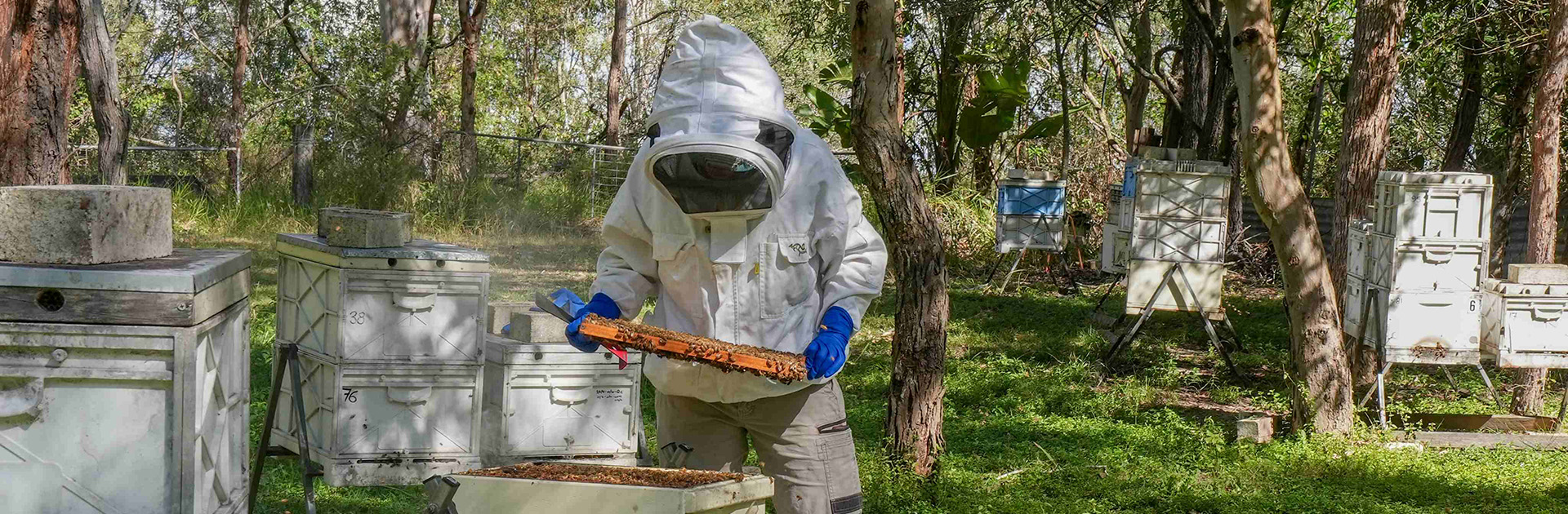
Spring management: preparing for the season ahead
As temperatures rise and floral resources increase, spring signals the start of a rapid growth period for honey bee colonies. Queens increase egg-laying, brood production expands, and colonies begin taking advantage of seasonal nectar and pollen flows. For beekeepers, spring is one of the busiest and most important management periods of the year.
The decisions made at the beginning of spring can have a significant impact on colony health, honey production, and the spread of pests and diseases throughout an apiary.
Start Spring with a thorough hive inspection
Every hive should receive a comprehensive inspection to assess its health and preparedness for the season ahead.
During spring inspections, check for:
- A healthy, laying queen with eggs and brood present
- Number of brood frames
- Swarm cells
- Adequate honey and pollen stores
- Signs of brood diseases
- Endemic and exotic pests
- Varroa mite levels and treatment effectiveness
- Small hive beetle activity
Strong colonies entering spring are better positioned to grow, produce honey, pollinate flowersand withstand pest pressures. Identifying problems early helps prevent them from spreading throughout your operation.
For guidance on conducting hive inspections, beekeepers can watch Biosecurity Queensland’s YouTube video, How to perform a disease inspection in a hive.
Monitor for varroa and miticide resistance
Regular monitoring for varroa mite is an essential part of spring management. Queensland beekeepers are encouraged to monitor for mites before, during and after treatments, report monitoring results through Bee123, and assess whether treatments are achieving the desired level of control. Varroa with resistance to synthetic miticides have also been detected in Queensland, highlighting the importance of monitoring treatment effectiveness and using integrated pest management strategies.
Spring is an ideal time to:
- Conduct regular mite monitoring
- Review treatment outcomes
- Rotate chemical groups where appropriate
- Monitor for signs of treatment failure or resistance
- Maintain accurate hive health records
Early detection and proactive management can help reduce colony losses and slow the spread of resistant mite populations.
Swarm management requires a proactive approach
Spring is the primary swarming season in Queensland. As colonies expand rapidly, hives can become overcrowded if additional space is not provided.
Swarming is a natural reproductive process, but allowing your hive to swarm can:
- Reduce honey production
- Result in the loss of bees and valuable genetics
- Spread pests and diseases as colonies move to new locations
- Increase biosecurity risks for neighbouring beekeepers
Look for common signs of swarming, including:
- Queen cells
- Congested brood nests
- Rapid population growth
- Limited space for brood or honey storage
Providing additional space, replacing queens and splitting strong colonies can help reduce the likelihood of swarming.
Splitting colonies safely
Spring is also the time many Queensland beekeepers choose to split colonies to increase hive numbers or manage swarm pressure.
Before making splits, ensure source colonies are healthy and have been thoroughly inspected. Moving brood, bees or equipment from colonies affected by pests or diseases can unintentionally spread problems across multiple hives.
Before splitting:
- Inspect colonies for brood diseases
- Monitor and assess varroa levels
- Check for adequate bee numbers
- Ensure equipment is clean and disease-free
- Keep records of colony movements and management actions
Strong biosecurity practices during splitting can reduce risk while supporting apiary growth.
Protect honey quality through good biosecurity
As nectar flows increase, honey supers begin filling quickly. Spring inspections are critical before harvesting and extracting honey.
If brood diseases are not identified early, contaminated frames and equipment can be introduced into the extraction process. Equipment moved between apiaries or returned to healthy colonies may contribute to disease spread.
To minimise risk:
- Inspect colonies before honey harvest
- Segregate suspect equipment
- Maintain clean extraction areas
- Use biosecurity barriers where appropriate
- Avoid transferring equipment between diseased and healthy hives
- Keep detailed apiary records
Strong hygiene and biosecurity practices help protect both honey quality and colony health.
Purchasing queens responsibly
Spring is a popular time to purchase queens and nucleus colonies. Introducing new genetics can improve productivity, temperament and colony performance, but it also presents a biosecurity risk if stock is sourced irresponsibly.
When purchasing queens or nucleus colonies:
- Buy from reputable suppliers
- Ask about health and biosecurity practices
- Understand any movement requirements that apply
- Inspect colonies after introduction
- Maintain records of purchases and hive movements
Queens, bees and equipment should only be moved in accordance with current state biosecurity requirements. Beekeepers should also consider the risk of spreading varroa and treatment-resistant mites between apiaries and regions.
Spring is a period of opportunity, but it is also a period of risk. Regular hive inspections, monthly varroa monitoring, proactive swarm management and strong biosecurity practices will help set colonies up for a productive spring and summer