
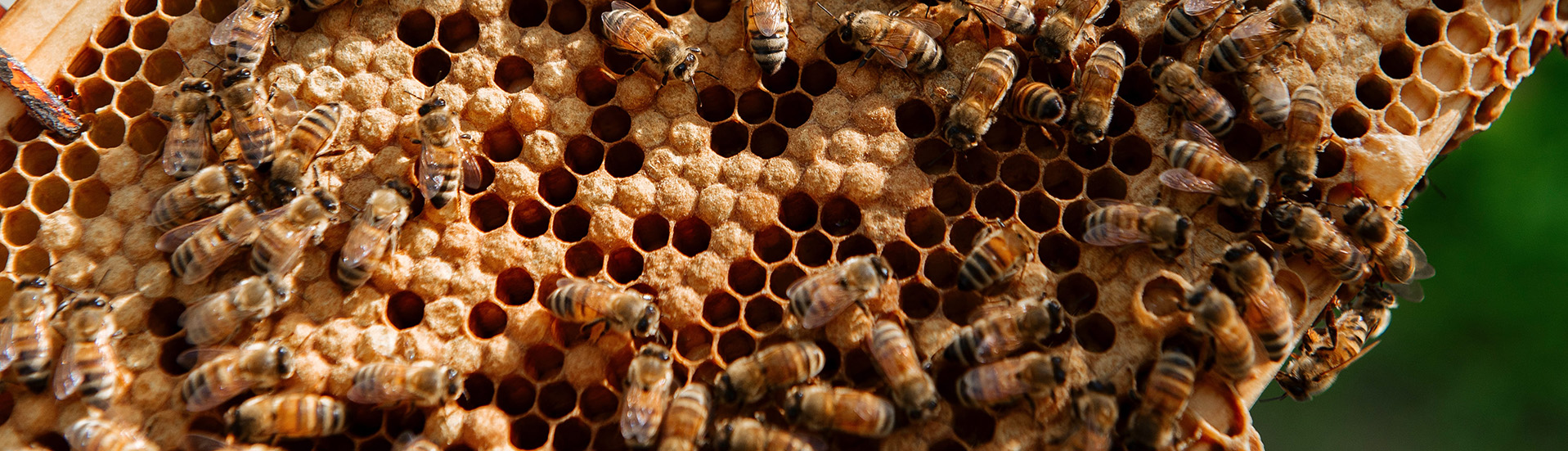
Drone brood provides varroa with a particularly fruitful reproduction site, but healthy drones are also essential to the mating population.
Are We Sacrificing Too Many Drones?
By Mike Allerton

Drone brood removal has long been promoted as a chemical-free method of slowing the growth of Varroa destructor. The reasoning is sound. Varroa mites are strongly attracted to drone brood, and the longer capped period of a drone cell allows a foundress mite to produce more mature daughters than she normally can in worker brood. Insert a frame of drone comb, allow it to be capped, remove and freeze it, and a substantial number of mites may be taken out of the colony.
However, Australian conditions have changed dramatically. Following the heavy reinfestation phase of varroa’s spread, I have noticed repeated supersedures and what appear to be poorly mated queens. At the same time, feral honey bee colonies have disappeared from many districts. This raises an uncomfortable question: in our determination to remove mites, are we also removing drones at the very time the wider bee population needs them most?
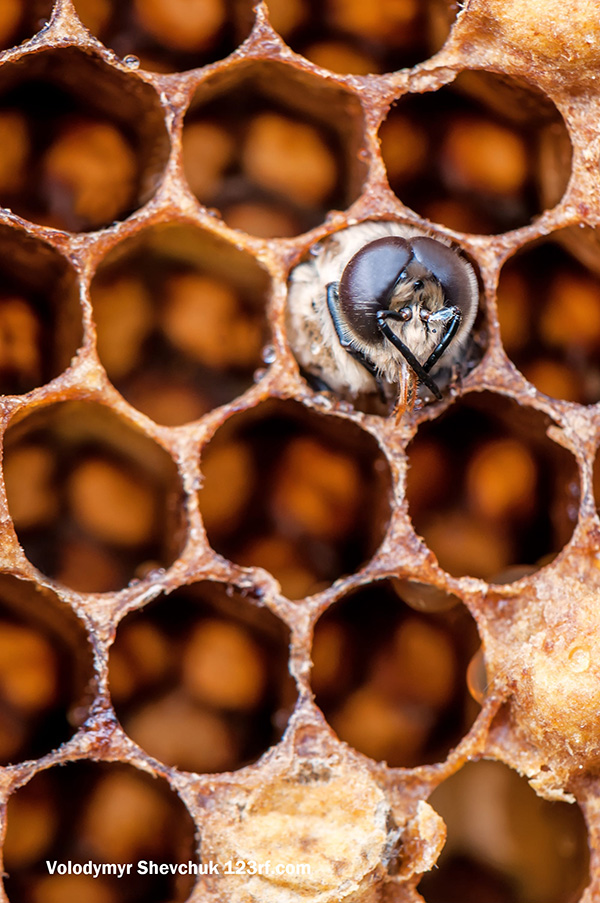
Where have all the drones gone?
Before varroa, Australia’s managed apiaries existed within a large, mostly invisible population of feral colonies. These colonies supplied drones to congregation areas, adding both numbers and genetic diversity. Varroa was expected to destroy 95 to 100 per cent of susceptible unmanaged European honey bee colonies within several years of reaching an area.[1]
The disappearance of feral colonies therefore does more than remove free pollination. It may also remove a major source of drones.
Virgin queens are generally credited with mating with approximately 12 to 20 drones, but this figure is largely derived from genetic testing of ordinary workers. More recent research found rare paternal lines among emergency-reared queens that were almost absent from worker samples. Between 34 and 77 patrilines were detected per colony, suggesting that some queens may store sperm from several dozen drones.[2,3]
Observed patrilines, effective paternity and the actual number of copulations are not identical measurements. Nevertheless, the research indicates that testing a relatively small sample of adult workers can substantially underestimate a queen’s mating history. A queen must encounter sufficient sexually mature drones during a limited period of suitable weather and store enough viable sperm to support egg production for the remainder of her reproductive life.
Research has shown that queens in some low-density populations still achieve adequate mating, so low colony density does not automatically cause mating failure.[4] Queens and drones can fly several kilometres, and established congregation areas can draw drones from a wide area. Nevertheless, there must be a lower limit. If feral colonies collapse across an entire district, and managed beekeepers are simultaneously removing drone brood, the pool of available mates must eventually be reduced.
At present, I have found no Australian study demonstrating that varroa-driven feral colony losses are causing poor queen mating.
My observation must therefore be presented as a credible hypothesis, not a proven conclusion. However, the biological mechanisms supporting it are real.
The issue may involve drone quality as well as quantity. Drones parasitised by only one or two varroa mites during development were found to produce 24 and 45 per cent fewer sperm respectively, while also showing reduced flight performance.[5] Drones may therefore emerge from heavily infested colonies but contribute little to successful mating.
Varroa-associated viruses, pesticide exposure, heat stress, adverse mating weather and poor queen rearing can also impair reproductive performance. Regular supersedure is not proof of inadequate mating, but a shortage of abundant, healthy and genetically diverse drones is one plausible contributor that deserves investigation.
The case for drone brood removal
None of this means drone brood removal is ineffective. Varroa preferentially enters drone cells, and its reproductive success is generally greater there. Modelling has found that correctly timed drone brood removal can greatly suppress mite population growth.[6]
Drone brood removal also spares the worker population. A colony can survive without most of its drones, at least when viewed in isolation, while sacrificing thousands of developing workers reduces its future workforce, foraging capacity and ability to recover.
The difficulty is that colonies do not exist in isolation. Drones are a regional resource. A beekeeper removing drone brood may protect one colony while marginally reducing the mating resources available to neighbouring queens.
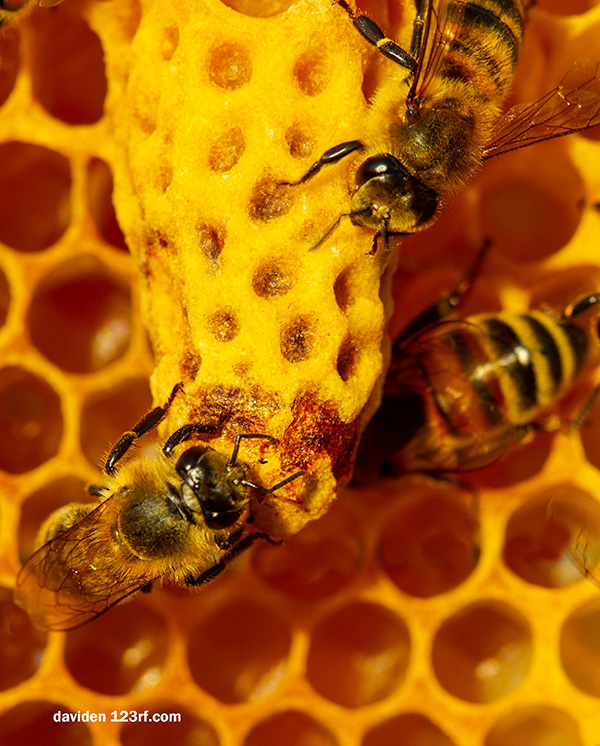
One colony makes little difference, but thousands of managed colonies subjected to the same practice may matter after feral colonies have disappeared.
We should distinguish between removing a deliberately provided drone trapping frame and routinely cutting out nearly every patch of natural drone brood. The first is a targeted control technique. The second may unnecessarily suppress a colony’s reproductive contribution.
Worker brood is not innocent
The emphasis on drone brood can also obscure a basic fact: varroa reproduces successfully in worker brood. Worker brood comprises most of the brood area, so even a lower mite preference and slightly lower reproductive output per cell can produce an enormous number of mites.
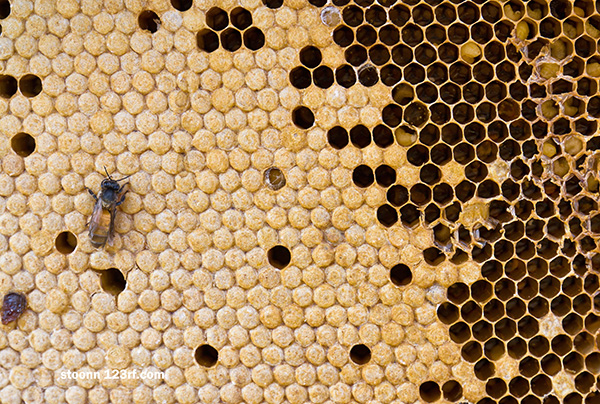
A well-filled Langstroth deep frame can contain approximately 7,000 worker cells across its two sides. If every capped cell contained one foundress mite, removing that frame would theoretically remove about 7,000 foundresses. Three such frames could therefore hold as many as 21,000.
That is a theoretical ceiling, not a likely field result. Infestation will never be distributed evenly at 100 per cent, and actual numbers must be estimated by uncapping brood or using another reliable assessment method. At 10 per cent infestation, for example, a 7,000-cell frame would contain approximately 700 singly infested cells, with some cells potentially holding multiple foundresses.
The maximum should not be confused with the probable result. Nevertheless, the principle remains valid. Removing heavily infested worker brood can extract a large proportion of the reproductive mite population, including foundresses concealed from treatments that cannot penetrate capped cells.
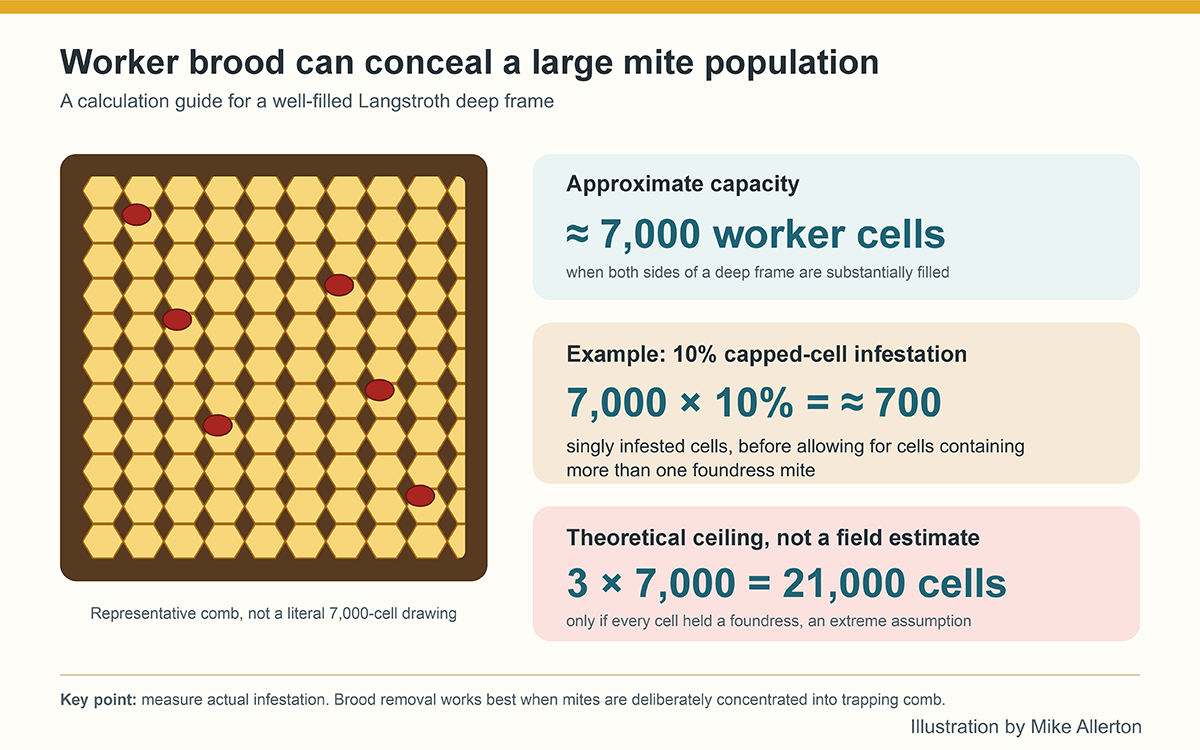
Worker brood – the numbers
Worker brood removal is already recognised within varroa integrated pest management. Total brood removal, trapping-comb systems and queen caging have all been studied. Total brood removal combined with oxalic acid treatment of the resulting broodless colony has produced substantial mite mortality.[7] A forced brood break combined with oxalic acid vaporisation has also been shown to increase mite mortality dramatically compared with vaporisation alone.[8]
The most efficient method is not simply to remove random worker frames. It is to confine the queen so that worker brood of the correct age becomes the principal available reproduction site. Mites enter this brood, the comb is removed once capped, and the colony is left broodless for an effective follow-up treatment. This concentrates mites rather than merely hoping that the removed frames contain them.
Destroying worker brood is undeniably harsh. However, allowing a mite population to overwhelm the colony is harsher. If sacrificing part of one brood cycle prevents colony collapse, the loss may be justified, particularly when mite levels are dangerously high.
Killing the mites, not the brood
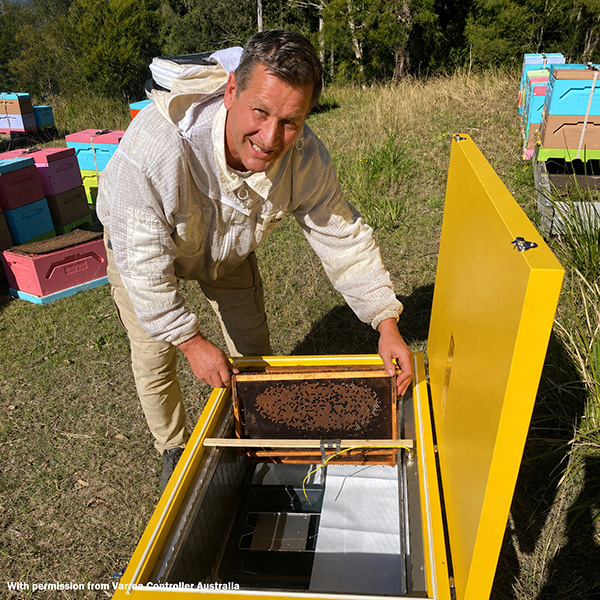
Hyperthermia offers a better version of this strategy. Devices such as the Varroa Controller heat capped brood frames within a controlled temperature range intended to kill or disrupt mites while allowing the brood to survive. Research into brood hyperthermia indicates that temperature and exposure time are critical. Excessive heat can kill brood or damage drones, while carefully controlled treatment can suppress mites without the same losses.[9]
Hyperthermia is not a magic solution. Equipment is expensive, treatment takes time, adult bees must generally be removed from the combs, and mite levels still need to be monitored afterwards. Field evidence is promising, but performance depends on the device, treatment protocol and colony conditions.
Its great advantage is that heavily infested worker brood can be treated and returned to the hive. The colony retains thousands of developing bees while many mites inside the capped cells are killed. For a small beekeeper willing to invest the time, this changes brood removal from sacrifice into rescue.
A more balanced policy
Drone brood removal remains a useful tool, but it should not become an unquestioned ritual. In districts where feral colonies have collapsed, beekeepers should consider retaining some healthy drone brood, especially in strong colonies with desirable genetics.
Drone-producing colonies must be monitored and treated carefully so that they distribute valuable genetics rather than mites and viruses.
We also need Australian research measuring drone abundance at congregation areas, queen mating frequency, stored sperm quantity and viability, and early supersedure rates before and after feral colony collapse. Without that work, we are managing a transformed reproductive landscape largely by assumption.
Varroa management is a series of compromises. The best choice may sometimes be targeted worker-brood trapping followed by an effective broodless treatment. Where equipment is available, hyperthermia may preserve that brood.
Drone brood removal still has a place, but the Australian bee population may no longer be able to afford the indiscriminate destruction of every drone we can find.
References
- Plant Health Australia, “Effect of Varroa on plant industries.”
- Arundel, J., Oldroyd, B.P. and Winter, S. (2012), “Modelling honey bee queen mating as a measure of feral colony density,” Ecological Modelling 247:48–57.
- Withrow, J.M. and Tarpy, D.R. (2018), “Cryptic ‘royal’ subfamilies in honey bee (Apis mellifera) colonies,” PLOS ONE 13(7): e0199124.
- Tarpy, D.R., Delaney, D.A. and Seeley, T.D. (2015), “Mating frequencies of honey bee queens in a population of feral colonies in the northeastern United States,” PLOS ONE 10(3): e0118734.
- Duay, P., De Jong, D. and Engels, W. (2002), “Decreased flight performance and sperm production in drones slightly infested by Varroa destructor,” Genetics and Molecular Research 1:227–232.
- Schödl, I. et al. (2022), “Simulation of Varroa mite control in honey bee colonies,” Journal of Pest Science.
- Gregorc, A. et al. (2017), “Brood removal or queen caging combined with oxalic acid treatment,” Apidologie.
- Berry, J.A. et al. (2023), “Inducing a summer brood break increases the efficacy of oxalic acid vaporisation,” Apidologie.
- Sandrock, C. et al. (2024), “Efficacy and trade-offs of an innovative hyperthermia device to control Varroa destructor,” Journal of Pest Science.