
Issue: September 2026
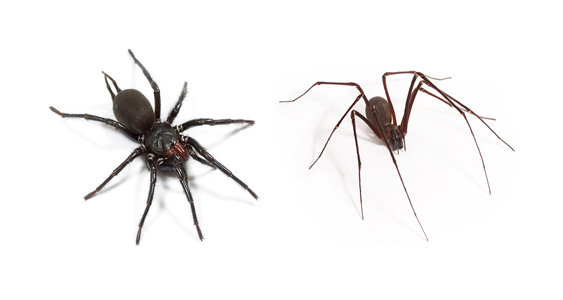
Spider venoms – an unlikely ally for honeybees
The next weapon against varroa mites might come from an unexpected place - the venom of spiders. Our latest research suggests two tiny molecules from spider venoms could become a new tool to help Australian beekeepers manage varroa mites. Spiders have spent hundreds of millions of years evolving ways to capture insects, but they are rarely considered as potential solutions for honeybee conservation. Read More:
Are Varroa resistant honey bees the long-term solution to the varroa problem?
When in 2022 ‘Varroa’ arrived in Australia and the subsequent attempted eradication failed, most beekeepers quickly started using chemical miticides to control their mite populations. Australia is currently in a unique situation since as of yet, the honey bee Deformed Winged Virus (DWV) has not been detected. This is very important since this alters greatly the number of mites required to kill a colony and provides an excellent opportunity for you to help your honey bees adapt to the mite. Read More:
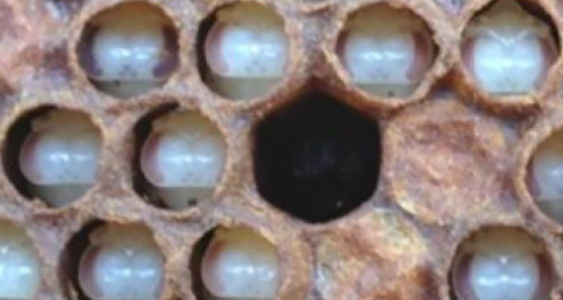
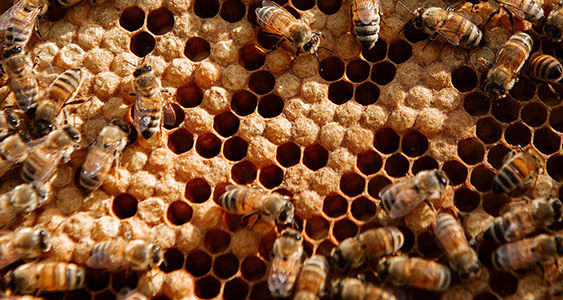
Are We Sacrificing Too Many Drones?
Drone brood removal has long been promoted as a chemical-free method of slowing the growth of Varroa destructor. The reasoning is sound. Varroa mites are strongly attracted to drone brood, and the longer capped period of a drone cell allows a foundress mite to produce more mature daughters than she normally can in worker brood. Insert a frame of drone comb, allow it to be capped, remove and freeze it, and a substantial number of mites may be taken out of the colony.
Read More:
NSWAA and Cumberland Beekeepers present two workshops
Hygienic Behavior is one way in which honey bees reduce the impacts of disease in the hive. It is a type of social immunity behaviour which means that the bees work collectively to reduce the effects of pathogens and parasites in the colony.
Pollen Microscopy Curious about which flowers your bees are visiting, or which ones they prefer during your spring honey flow? Learn how to extract pollen from fresh flowers and honey and how to prepare pollen slides for identification. Read More:

September 2026 TAB Quiz
Find out how much you really know about bees and beekeeping!
This month's questions are from TAB Editor Fiona Fernie. Fiona is definitely trying to test your knowledge of bee biology, behaviour and good beekeeping. Good luck!
Honey bee pollination and varroa mite
New South Wales had some of the highest densities of feral honey bee colonies in the world until varroa became established across the state. With an abundance of nutritious native plant species to provide nectar and pollen throughout the year and a diversity of hollow-forming trees, unmanaged honey bee colonies were present across many landscapes. The pollination each feral colony would’ve undertaken disappears when the colony dies out due to varroa. Read More:
COP - What has changed for Amateur Beekeepers?
With the advent of varroa into Australia the amount of work required to keep a hive alive has also increased dramatically, so as part of the Transition to Management Program (T2M) the Code was given an upgrade (along with the Biosecurity Manual) to align with the new challenges beekeepers are facing (or soon may be) in much of Australia. So, what are the main changes from the original Code, and why do they matter?
Read More:
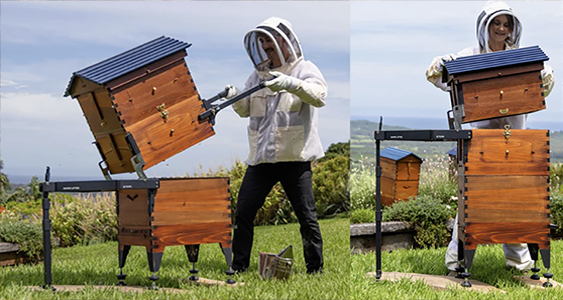
Flow Super Lifter
One of the ‘joys’ of getting older is that you find that you can no longer do the things you used to do when you were younger, like lifting heavy honey supers to do disease inspections of the brood. But then lo and behold Flow came along with their latest invention – The Flow Super Lifter! This innovative device looked too good to be true!
Read More:
Far North Coast Beekeepers
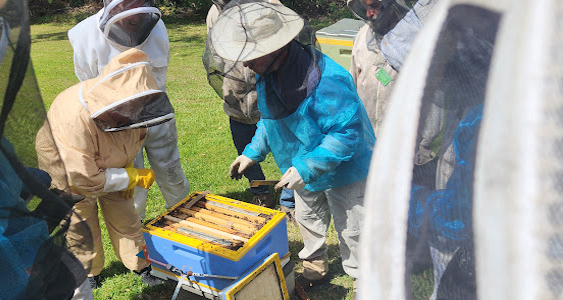
Far North Coast Beekeepers is a regional club supporting practical, informed beekeeping across a large and diverse area of northern New South Wales.
Re-established in 2018, the club has grown to more than 60 beekeepers with members located from the Queensland border to near Yamba in the south and inland towards Tenterfield.
Read More:
Colonel Pulling and Bruce White Award Update
Alex Nelson, Secretary of Cumberland Beekeepers, who is coordinating this years Colonel Pulling and Bruce White Awards reports all is ready from his perspective. He requests clubs intending to compete this year register with him by 26th September. We have included a complete competition schedule.
As for what else is happening at Tocal this year, your guess is as good as mine. Despite multiple requests for information and multiple promises of a schedule we have run out of time. Fingers crossed. Don't hold your breath! Read More:
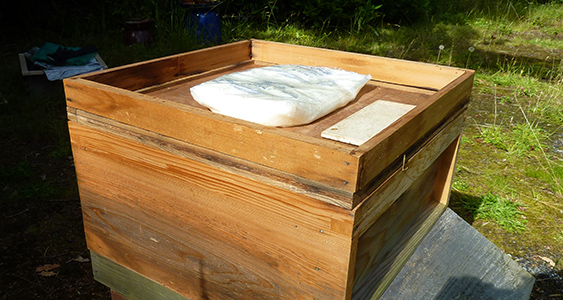
What is an EKE?
In hive hardware terms, an EKE is a spacer. It allows certain manipulations to take place, in a confined space, by making a temporary “extra space”. Will the bees fill this extra space with burr comb? Yes, in time, they will indeed fill the void. An EKE is intended to be a temporary increase to allow an extra activity, by the beekeeper.
Are you including checks for other Bee diseases when you inspect for Varroa?
Our problem, as beekeepers, is that Varroa destructor has become so all consuming, that we have forgotten about, American Foulbrood, Chalkbrood, Sacbrood, etc. Every time you open your hives, use all of your senses, your hands, your eyes, your ears, your nose and, yes, your sense of taste! Taste and smell are inextricably linked.
Read More: