
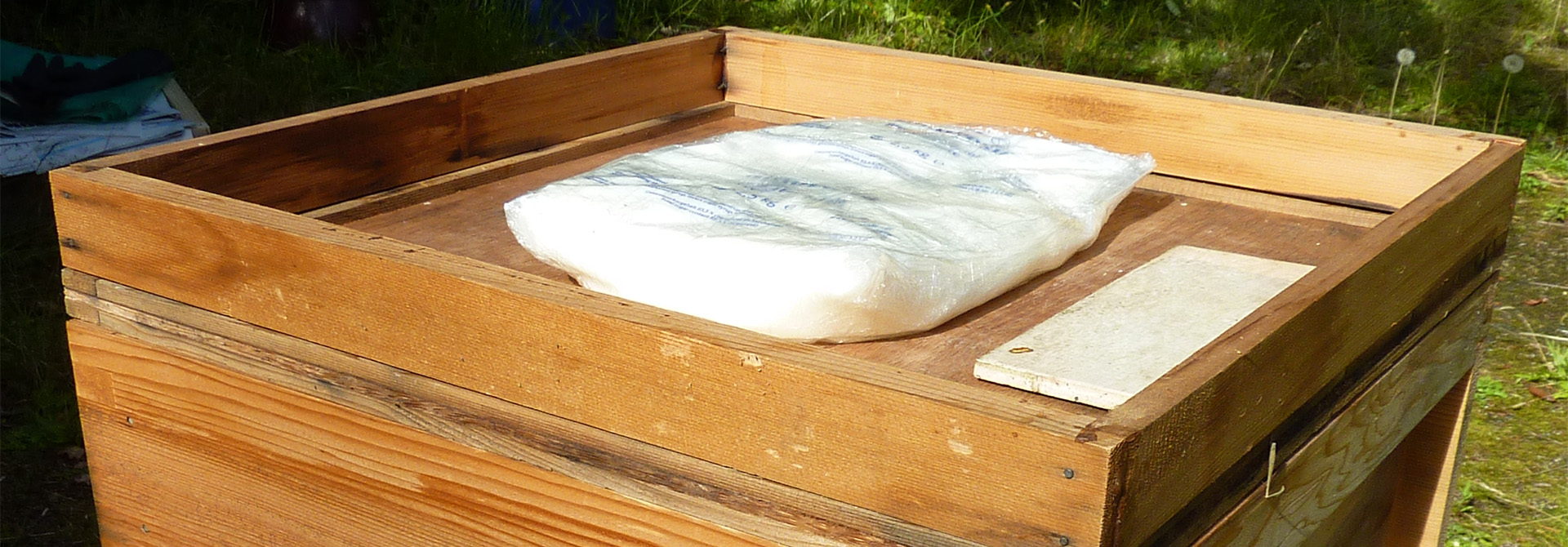
In colder climates an Eke is used to allow fondant feeding of bees in winter, without the extra volume of an empty super.
What is an EKE?
In hive hardware terms, an EKE is a spacer. It allows certain manipulations to take place, in a confined space, by making a temporary “extra space”.
Will the bees fill this extra space with burr comb? Yes, in time, they will indeed fill the void. An EKE is intended to be a temporary increase to allow an extra activity, by the beekeeper.
The photo above is an EKE! The more observant of you will realize that this Eke is square. This is where my northern hemisphere beekeeping comes out. Yes, they are square and sized for the UK National Hive.
They are usually between 5mm and 20mm in depth. – most often, Ekes are used to create space to feed fondant to hives over the winter. But, they have another important use in varroa treatment. Apiguard requires an additional space for the bees to disperse the Apiguard through the hive. Other varroa treatments could also use an Eke, if they require extra space.
Australian Langstroth hives are traditionally bottom bee space. This means that there is about 7-8mm space between the bottom of the frame and the bottom of the bee box. For Varroa treatments like Apiguard or Formic Pro, which are designed to sit on top of the queen excluder, an eke will provide extra space.
An Eke for Apiguard is ideal as the treatment is done supers off and the eke provides the space above the queen excluder to fit the tray. With Formic Pro the treatment is done supers on, but it is important to stop the queen coming in direct contact with the treatment pad which is just laid on the queen excluder. The eke allows the inclusion of a shallow tray to seat the Formic Pro pad.
If you are using Api-Bioxal vaporization with an Insta-Vap (or similar equipment), using an Eke will allow insertion of the vapour tube higher in the hive ensuring better coverage of the vapour.
The frying pan method of vaporization is often done through the front entrance. Another way of administering this vaporization is to use an adapted honey super. Sealing the top with a polycarbonate sheet, you can introduce the frying pan into the side of the super, and it is placed on top of the brood box. You can then watch the vaporization and the activity as the phoretic varroa mites are treated.
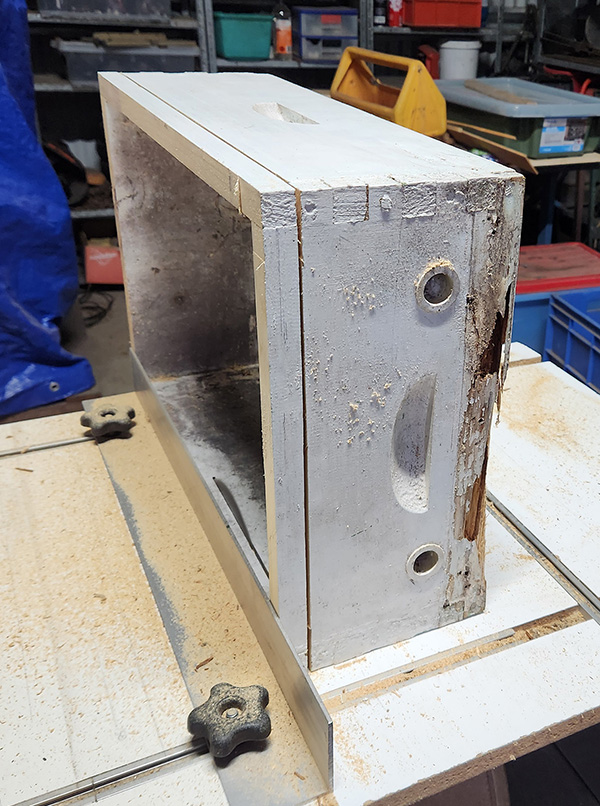
Using a table saw to make a series of Ekes from an old bee box
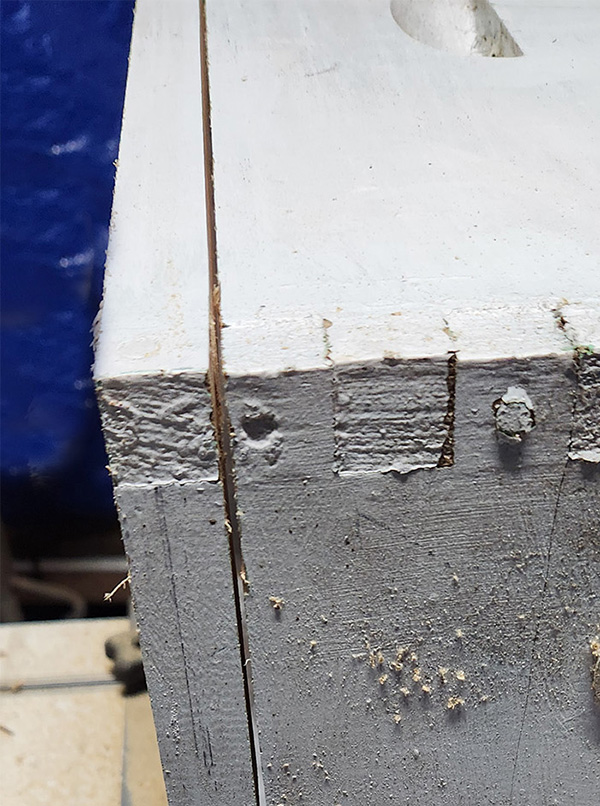
Set the saw fence so that the cut aligns exactly with the thickness of the finger joint
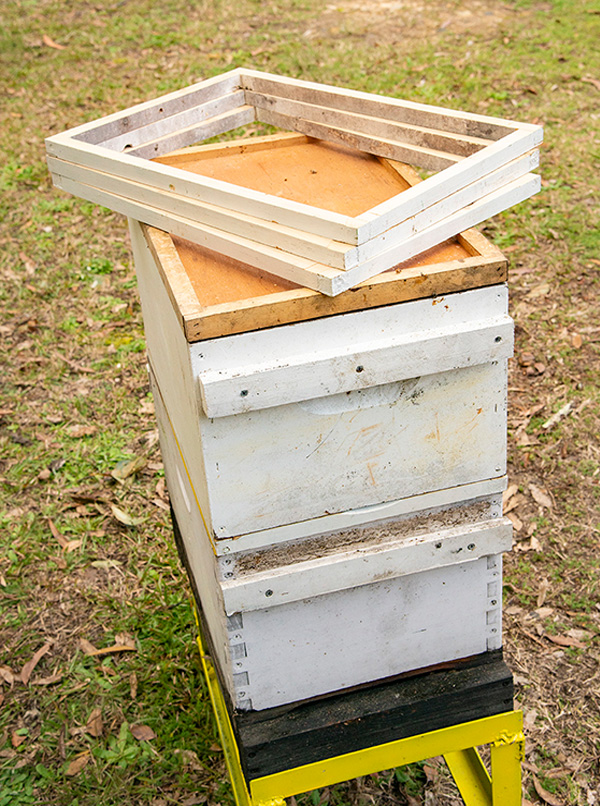
This is a great way to recycle an old bee box that was damaged beyond repair.
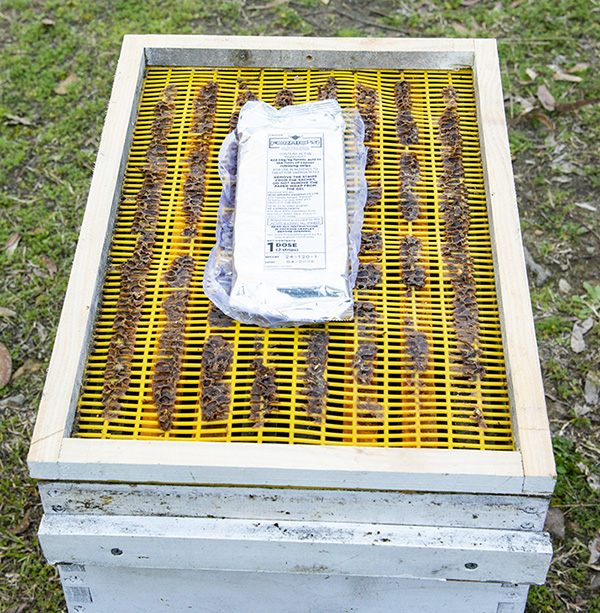
The 20mm eke creates a very useful space. you can use a cut down supermarket chicken tray to hold a Formic-Pro pad. This stops the possibility of the queen coming into contact with the formic pro, which could be fatal.
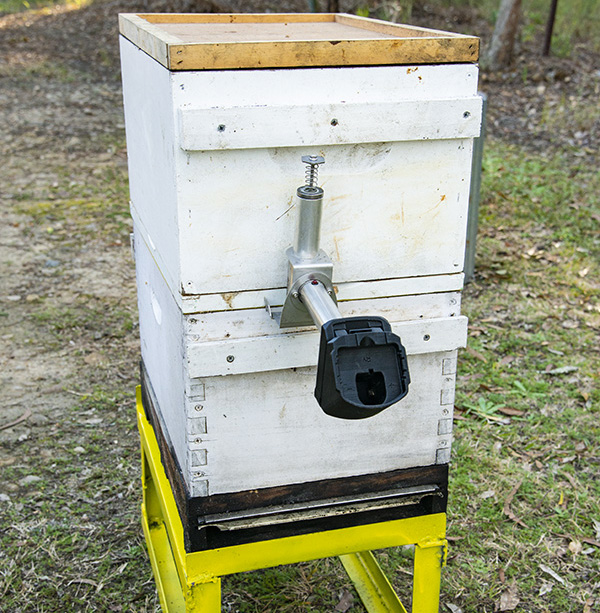
A 6.5 mm hole drilled in the eke allows the placement of instavap Instavap above the queen excluder. This set up with the hole in the back of the hive.
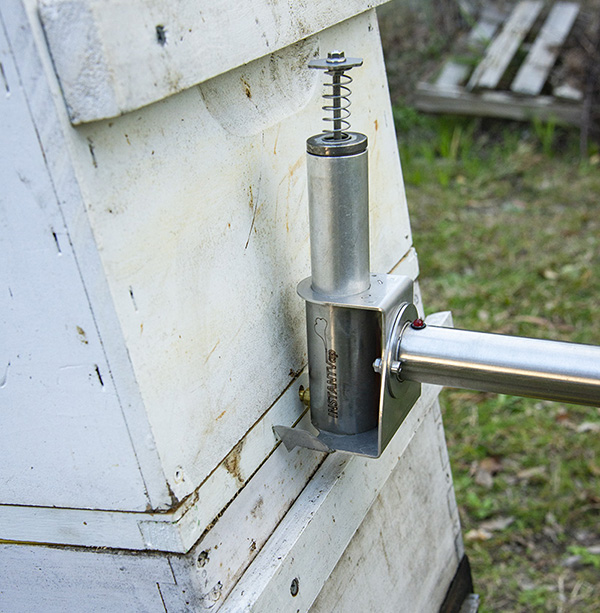
The Instavap hole points slightly upward to give better OA vapour distribution. You may need to move the cleats on your bee box to allow the Instavap to seat properly