
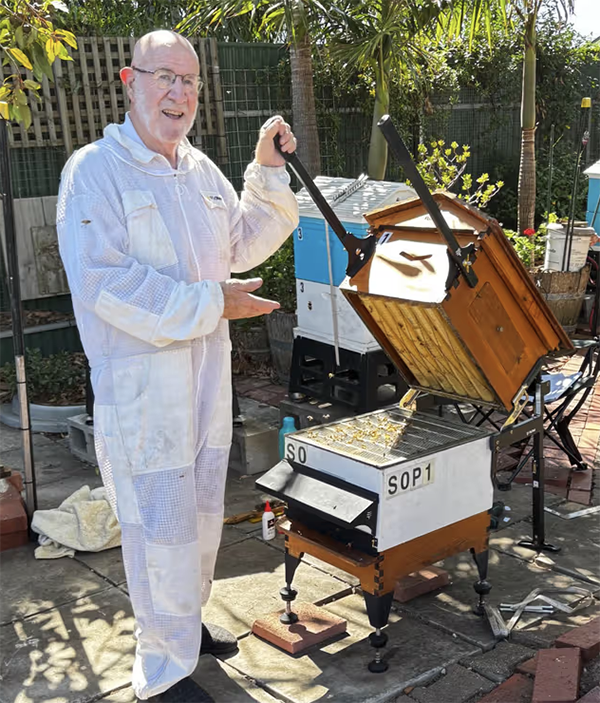
Flow Super Lifter
by Drew Maywald
Gold Coast Regional Beekeepers
Photos courtesy of the Flow team.
One of the ‘joys’ of getting older is that you find that you can no longer do the things you used to do when you were younger, like lifting heavy honey supers to do disease inspections of the brood. So, I thought why not build a long hive so that the most I will have to lift is one frame. And it worked a treat. I could check on my brood easily without having to lift off a heavy super. But I had been warned by club stalwart, the late Mike Hynes, that I would not get as much honey. And as always Mike was right. The bees in my long hives had no trouble moving across the brood section, but when it came to moving across to the honey super they seemed to stop at the queen excluder. So, I went back to the standard Langstroth configuration with the honey super on top of the brood.
But then lo and behold Flow came along with their latest invention – The Flow Super Lifter! This innovative device looked too good to be true as it seemed to easily lift the honey super off the brood box making it very easy to access the brood with minimal disruption to the bees. Could this be the saviour for my injured back?
I saw some of the advertising about it and I was initially rather sceptical about it as I was concerned that by swinging a honey super through 90O, honey would pour out of the cells.
However, after talking to the Flow team I was assured that did not happen as the super lifter lifts the honey super in the same plane as the honey frames.
Our Club decided to give them a try, so we bought some. We ordered the deluxe kit which includes the super lifter, front lifting handles, screws, latches and a storage bag. To set up the lifter all we had to do was to install two of the specially provided screws into the back of the brood box and honey super and on the front of the honey super to fit the handles.
We invited co-inventor of the Flow hive and Super Lifter, Stu Anderson, to come to a GCRB meeting to show members how to use the super lifter effectively.
With the leg of the lifter pointing towards the hive, Stu attached the lifter to the two screws on the brood box as illustrated below.
The lifting mechanism was then attached to the two screws on the honey super, as can be seen below.
The adjustable leg of the lifter is then turned back to support the super and the best thing about doing this is that this action cracks the brood box and honey super apart, as shown below.
The leg is then rotated so that it stands at 90O to the ground. The leg is very easily adjustable to suit the height of the hive from the ground. It is then a simple matter of lifting the front of the honey super up so that it sits on the back of the hive lifter.
To make it easier to lift the super, lifting handles can be attached to the front of the honey super using the two screws inserted for that purpose, as illustrated below.
Once lifted off the brood box, the honey super will sit on the lifter fully exposing the brood box, allowing inspections of the brood to be carried out, as illustrated below.
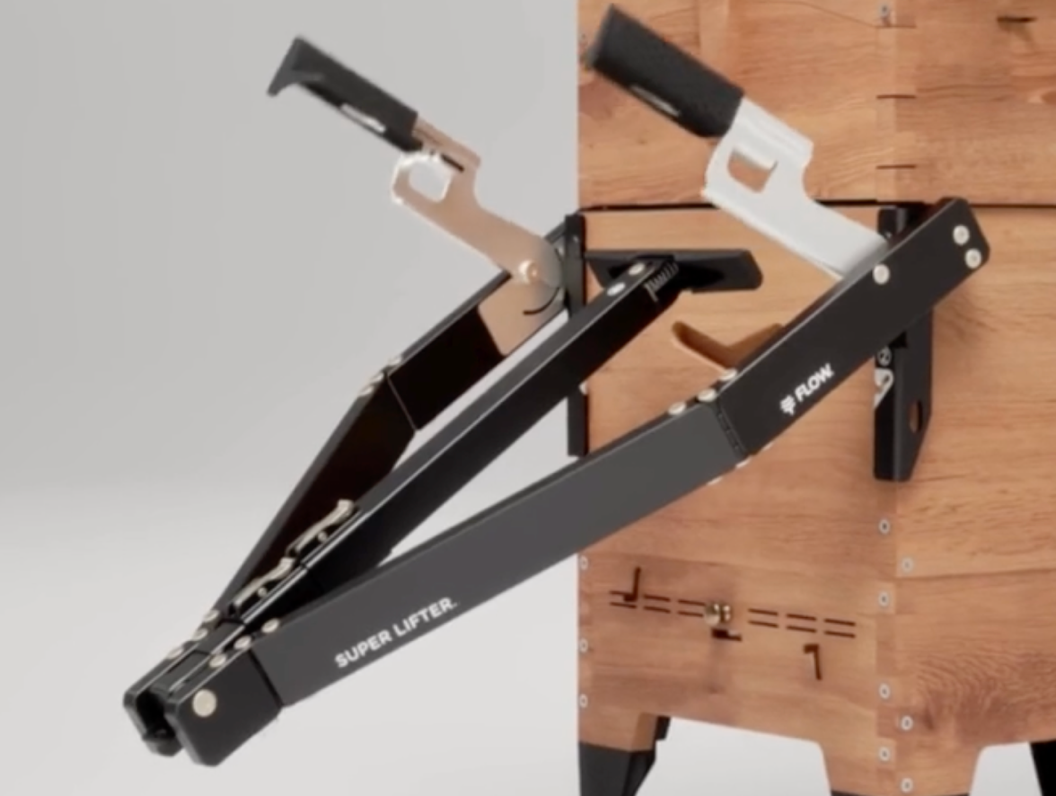
With the leg of the lifter pointing towards the hive, Stu attached the lifter to the two screws on the brood box as illustrated below.
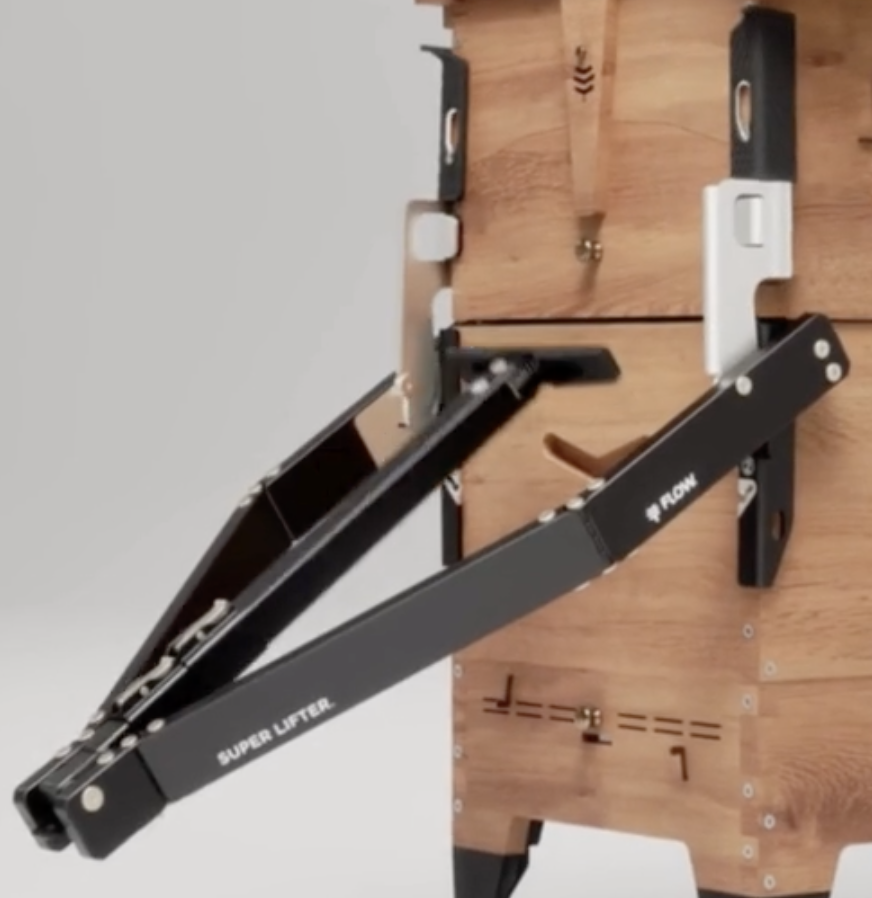
The lifting mechanism was then attached to the two screws on the honey super, as can be seen below.
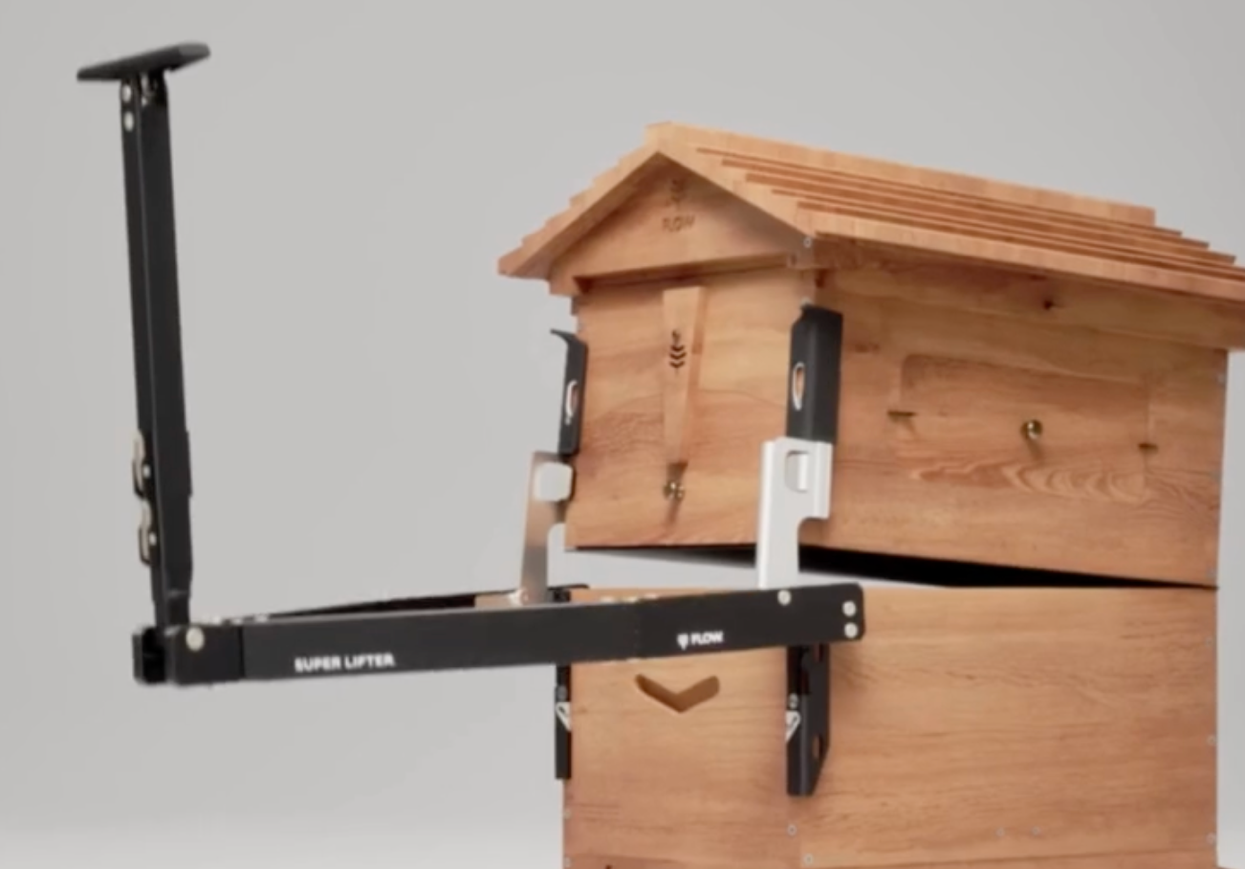
The adjustable leg of the lifter is then turned back to support the super and the best thing about doing this is that this action cracks the brood box and honey super apart, as shown below.
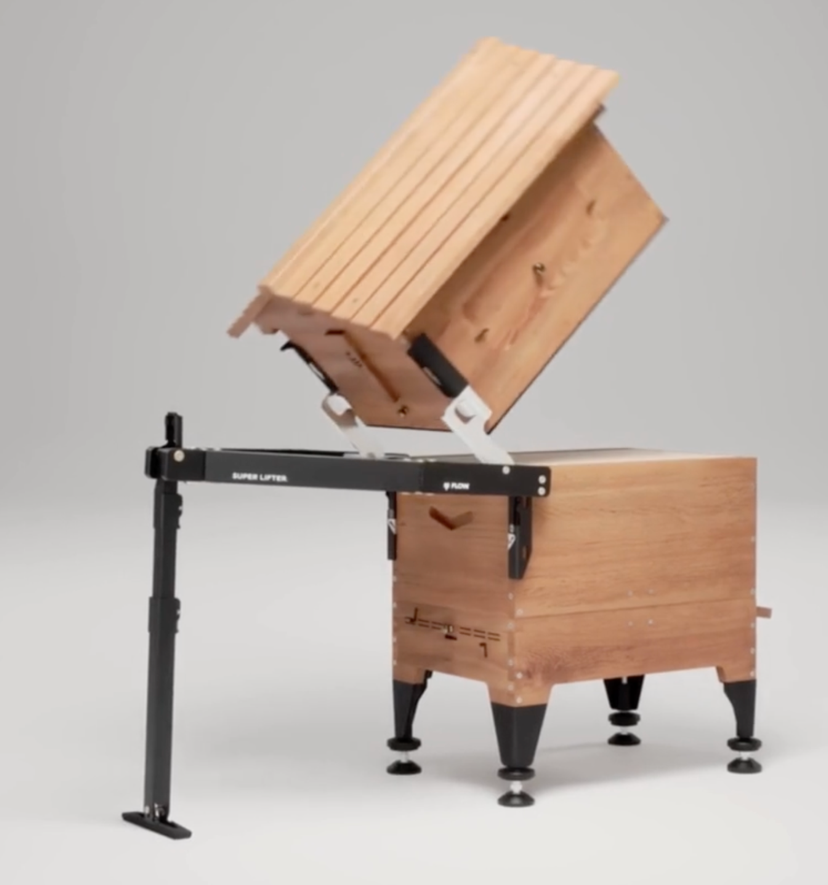
The leg is then rotated so that it stands at 90O to the ground. The leg is very easily adjustable to suit the height of the hive from the ground. It is then a simple matter of lifting the front of the honey super up so that it sits on the back of the hive lifter.
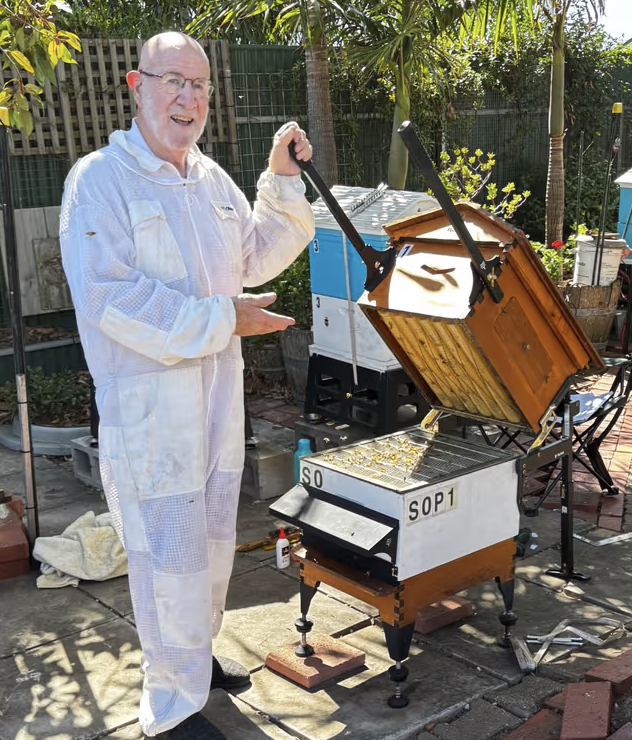
To make it easier to lift the super, lifting handles can be attached to the front of the honey super using the two screws inserted for that purpose, as illustrated below.
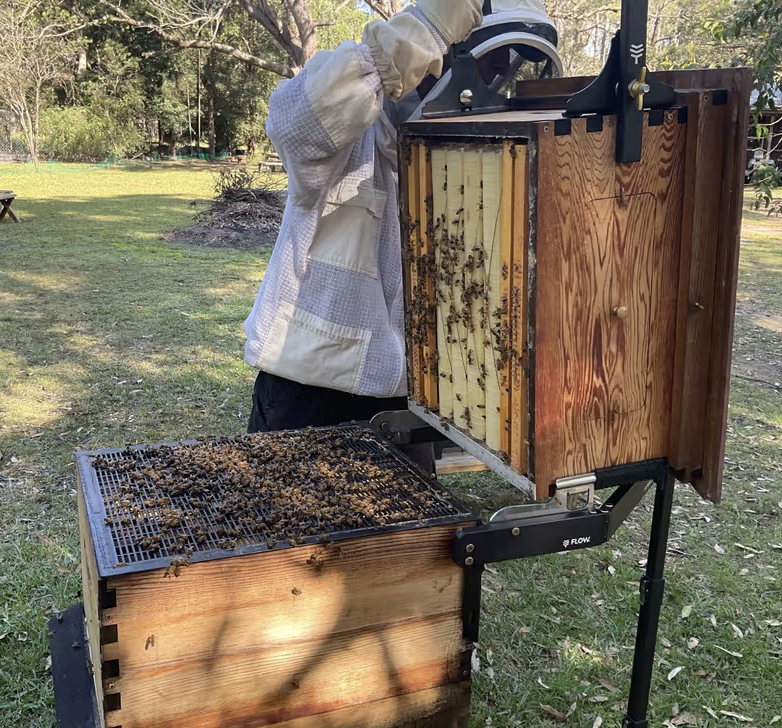
Once lifted off the brood box, the honey super will sit on the lifter fully exposing the brood box, allowing inspections of the brood to be carried out, as illustrated above.
The great thing about the hive lifter is that it can be used on any 8 or 10 frame Langstroth hives and is not restricted to simply flow hives, although you may not be able to insert the screws on the plastic boxes. If you have more than one super on your hive you can simply attach the supers together with a latch each side and it will then lift both supers from the brood box, as illustrated below left.
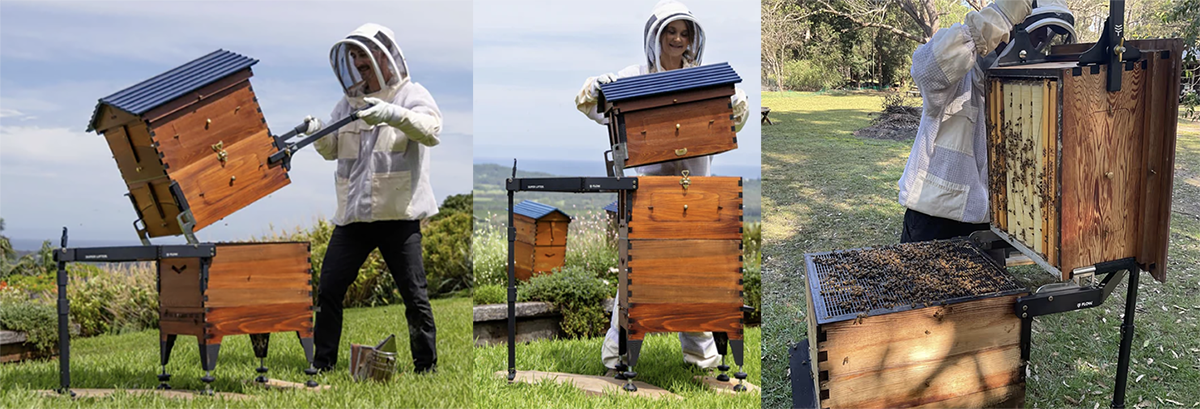
As can be seen in the photo, above right, the hive lifter leg can be adjusted to varying heights to cater for various uses and terrains.
I found that if the hive roof was not attached securely to the super that it could fall off during the lifting process so it may have to be removed before using the lifter, or attached to the super using a couple of latches.
Unfortunately, the screws that are used to attach the lifter and handles to the hives are specifically designed for that purpose and are only available from Flow, but you do get 8 screws in a pack + the driver fitting, which is enough for two hives excluding the two screws for the handles.
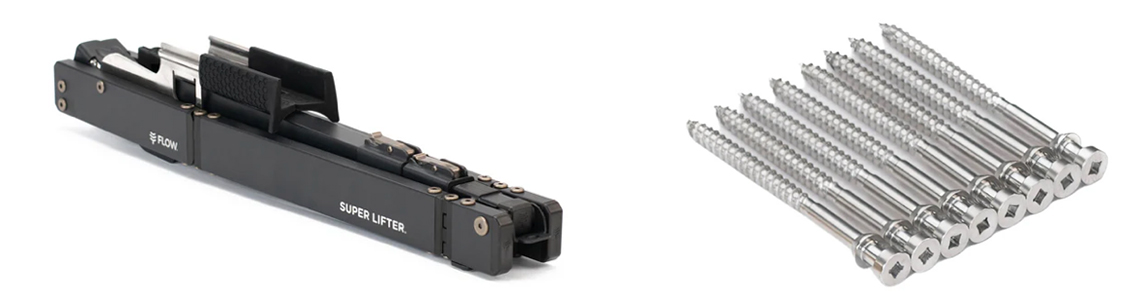
Once you have finished using the lifter it folds up very compactly and takes up little storage space, as seen in the photo above right.
The Flow Super Lifter is an amazing piece of engineering finished to a very high standard and while it is not cheap, it’s much cheaper than having back surgery. Some of the GCRB members that have used it rate it as a better innovation than the flow hive itself, and I know of several members who have bought a lifter together significantly reducing the cost.
With the fantastic super lifter I no longer have to lift heavy supers and crack open hives – it is all done for me by this innovative invention by two Australian beekeepers in Northern NSW.