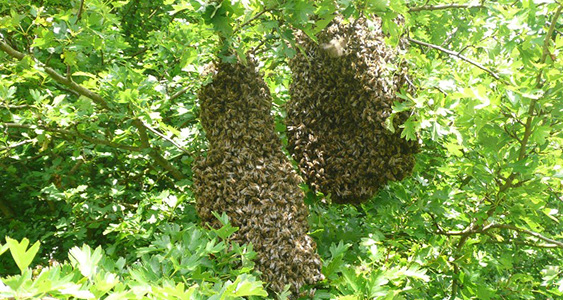

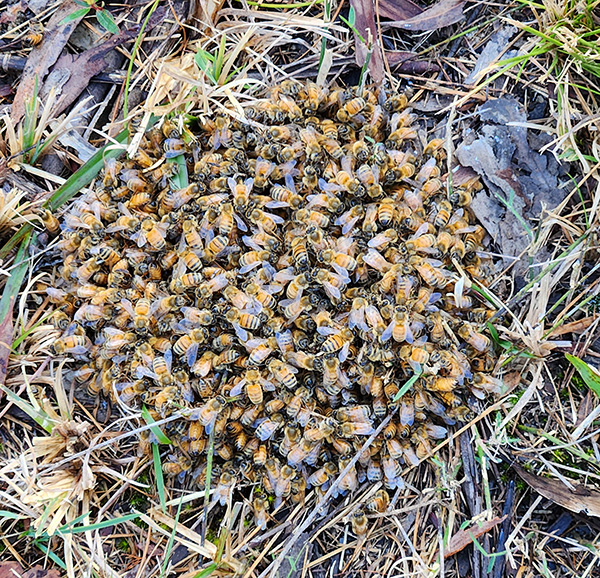
What is driving the strange swarming behavior?
In late 2025 Cynthia Faulkner, President of Orange Beekeepers, asked if other beekeepers were experiencing a much higher incidence of swarming than normal. The answer is of course, a resounding YES! Many beekeepers in NSW, mostly in areas with established Varroa, are experiencing continuous swarming from at least some of their colonies.
This TAB Swarm feature is designed to highlight:
- The reality that in many places swarm season may now last 12 months of the year.
- Experienced beekeepers are struggling to manage the swarm behavior. You are not alone.
- At this point there are lots of theories but no certain solutions.
- From a Biosecurity perspective good swarm management is also good Varroa management. Don't stop because you are frustrated or confused. Keep up the swarm mitigation and management.
We intend to keep the swarm subject alive in the coming issues of TAB. Hopefully we can get some clear insights form the bee behaviour specialist. In the meantime, please share your swarm experiences with TAB. Please include Your location, a description of your swarm experiences, when the unusual swarm behaviour started, the Varroa status of your colonies, including when Varroa was first identified. Email stories and images to editor@beekeepers.asn.au
Quite a few beekeepers have expressed more than a little frustration with never ending swarms. Jacqueline Lea's comment below sums up the situation beautifully.
"We've tried all sorts of things. One swarm of ours, that we caught, wanted to swarm again within a short period of time. We knocked off all the swarm cells and checked again 5 days later. Queeny was still there but lots of swarm cells again, so we knocked them off again and put her in the 2-frame queen excluder. Went back in 4 days later and they had produced more queen cells. So, we split it. The split eventually swarmed. That's just one colony this season. We've opened another hive up to find it filled with queen cells that were hatching. Lost count at 17! I think I need a counselor!"
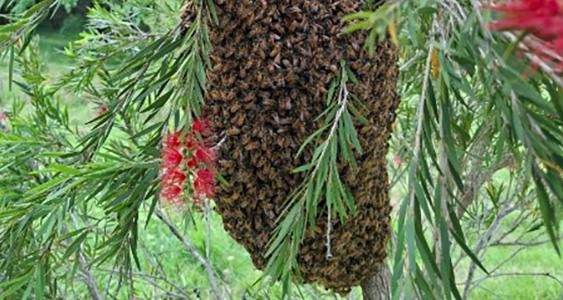
So You Think Your Bees Won't Swarm!
Jacqueline and Edward Lea talk about nearly two years of swarming at Kurrajong.
Despite doing everything that we can to mitigate against swarming, the new normal is for the colonies to sneak in a spontaneous swarm every couple of months, or replace their queen every couple of months. A couple of recent swarms, I have to admit, have been own goals as we weren’t quick enough to add additional supers when the nectar started to flow. At the end of the day, the bees know what they are doing and we are just along for the ride. Read More:
Orange Beekeepers Swarm Report
Orange Beekeepers have a club swarm catcher who has been flat out for 4 months. The swarm behaviour in Orange is summed up by Orange Biosecurity Officer, Geoff Mitchell. "..hives swarmed more than once. Not just primary swarms, followed quickly by secondary swarms, but a primary swarm followed a few weeks later by a second primary swarm – young queens swarming. Young introduced queens also swarmed much to my chagrin." Read More:
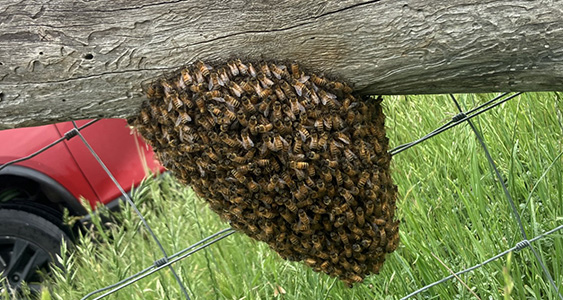
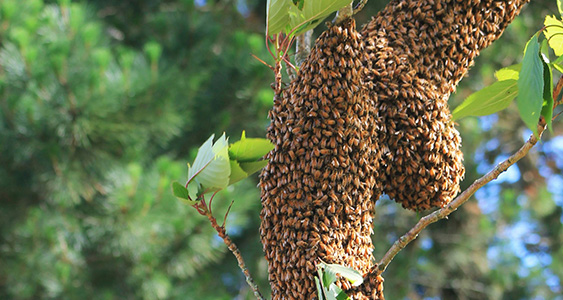
Letting colonies swarm in Australia’s Varroa era:
A helpful reset or future headache?
Before varroa, Australian beekeepers could treat swarming as mostly a productivity issue, lost honey, annoyed neighbours, and a smaller workforce for pollination. Now that we’re transitioning to long-term management nationally, the question changes. In a varroa landscape, swarming can look like a “free” brood break and a genetic pressure valve, but it can also be a mechanism that re-seeds mites and viruses into places you thought had settled down. Read More:
A Scottish Perspective on Swarms
A swarm in May, is worth a load of hay
A swarm in June, is worth a silver spoon
A swarm in July, is not worth a fly!
This medieval saying sums up the value of swarms to a beekeeper, in the colder regions of the Northern hemisphere. If a swarm is early enough in the year, then the bees have sufficient resources to make up the colony strength before winter. Read More: